
You’ve been there.
Three coats in, the swatch looked perfect at the store, and somehow the wall still reads flat, or muddy, or nothing like the photo that started this whole project.
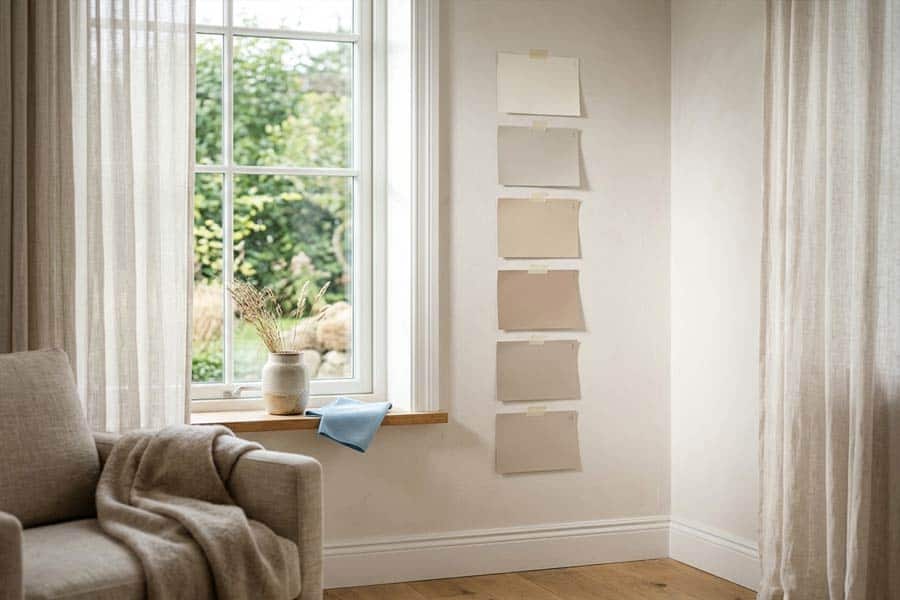
Before you blame the paint, look at the window.
It’s doing more to shape how that color reads than almost anything else in your room, and it’s the one variable most makeovers never think to check.
What This Article Covers:
- Why the same paint color looks different in every room: light direction (north = cool/consistent, south = warm/variable) plus window size and frame width all shape how color actually reads
- Window size isn’t the only light factor: frame width, glass condition/age, and number of glazing layers all affect how much natural light actually gets through
- Free/cheap fixes to try before blaming the paint: clean the glass, swap heavy drapes for sheer panels, paint trim a reflective white
- How to tell if the window, not the color, is the real problem: drafts near the glass, fogging between panes, or a yellowed/warped frame are signs paint can’t fix
- A simple pre-paint checklist: test swatches near the window at three times of day, clean the glass first, and inspect the frame before committing to a color
Why Does the Same Paint Color Look Different in Every Room?
The same paint color looks different from room to room mainly because of how much light reaches your wall, and what kind of light it is.
A north-facing window delivers cool, consistent light all day, which can make warm colors look muted.
A south-facing window floods a room with warm, changing light that can make the same color look brighter and more saturated by the hour.
Window size and frame width change this too.
A small window with a wide frame lets in less total light than a large window with a narrow one, even in the exact same wall and orientation.
I think this is why a color you loved at a friend’s house can feel like a stranger in yours.
You didn’t choose wrong. You just moved it into a different light.
How Much Does Window Size Actually Affect Natural Light?
Window size affects natural light more than most makeover guides admit, but it’s not the only factor, since frame width, glass clarity, and window age all play a role too.
A wider frame blocks part of the opening that would otherwise be glass.
That means two windows of the same overall size can let in noticeably different amounts of light, depending on how much of that size is actually frame versus glass.
It’s worth knowing this before you spend on new textiles or art.
Every soft finish you bring into a room, from linen to limewash to a velvet cushion, only shows its texture when light rakes across it.
Why Older Windows Let in Less Light than They Used To
Older windows often let in less light than they did when new, mainly because of clouded or scratched glass.
Frames also swell, warp, or get painted over so many times that the opening has effectively shrunk.
None of this shows up in a quick glance.
It shows up as a room that photographs darker than you’d expect it to.
I’ve seen people restyle a room three times chasing that feeling.
The furniture was never the issue. The light coming in had quietly changed over the years.
Table 1: What Actually Affects Natural Light in a Room
| Factor | Effect on Light |
| Window size (overall opening) | Bigger opening, more potential light |
| Frame width | Wider frame blocks more of the opening |
| Window orientation | North = cool, consistent; south = warm, variable |
| Glass condition/age | Clouding or scratching reduces clarity and light |
| Number of panes/glazing layers | More layers can slightly reduce total light transmission |
Illustrative guide based on general industry sourcing.
Can You Fix Bad Light without Replacing Your Windows?
Yes, in many cases you can improve how a room feels without touching your windows at all.
Clean the glass thoroughly, inside and out, since years of buildup on window glass quietly cuts down on light more than people expect.
Swap heavy drapes for sheer or light-filtering panels that don’t block the frame when open.
Paint the window trim and sill a bright, reflective white to bounce more light into your room instead of soaking it up.
None of these fixes will turn a genuinely small or aging window into a large, high-performance one, but they’ll get you real, visible improvement before you consider anything bigger.
I’d start with the drapes, honestly.
Sheer panels give you that soft, diffused glow that makes a room feel calm and unhurried, and guests read that mood before they notice a single thing you bought.
How Do You Know if the Problem Is Really the Window, Not the Paint?
The problem is usually the window, not the paint, if your room still looks dim or dull after you’ve tried a lighter color and cleaned the glass.
Paint can only reflect the light that’s actually reaching your wall.
It can’t create light that isn’t there to begin with.
If you’ve already gone lighter and brighter with your color choice and the room still feels flat, you’ve likely hit the ceiling on what paint alone can fix.
Three Signs Your Window, Not Your Paint, Is the Problem
A window is likely the real issue if you notice a visible draft near the glass on a calm day, or condensation and fogging between panes.
A frame that’s visibly yellowed, warped, or hard to open and close is another clear sign.
These signs typically point to seal failure or frame breakdown, problems no amount of fresh paint will solve, and ones that tend to get more noticeable, not less, over time. It’s exactly the kind of wear that steel-reinforced, multi-chamber frames from manufacturers like OKNOPLAST are built to resist longer than standard vinyl.
There’s a comfort angle here too.
A drafty window makes the seat next to it unusable half the year, and a room where you can’t sit in the best spot never quite delivers the warmth you were decorating for.
Does Window Size Change How Big a Room Feels?
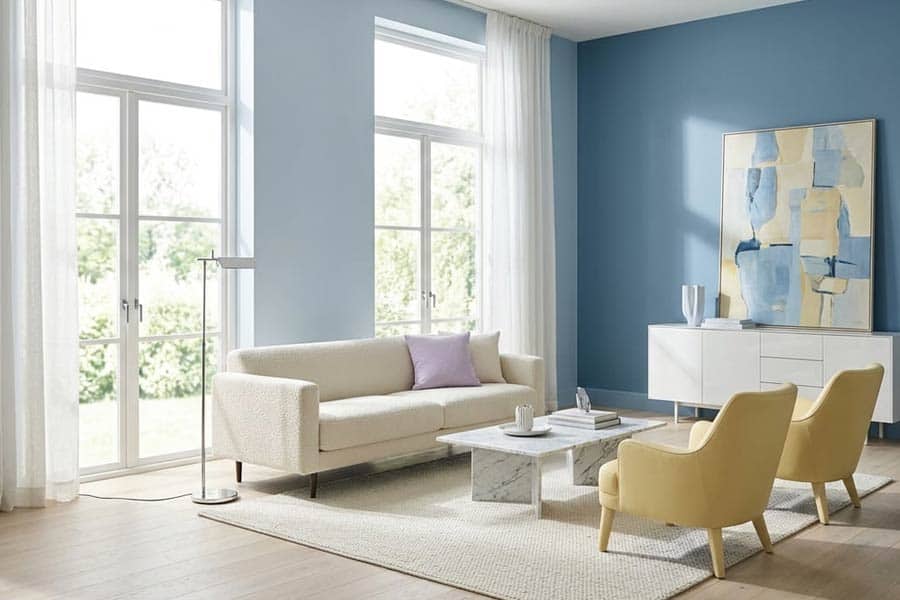
Window size genuinely changes how big your room feels, not just how bright it looks.
A large window visually stretches a room by connecting it to the outdoors, which reads as more space even when the floor plan hasn’t changed at all.
A small, deeply recessed window does the opposite.
It can make an otherwise spacious room feel boxed in, because the eye reads the wall as solid rather than open.
Proportion matters here too.
A window that’s small relative to its wall can leave a room feeling unbalanced no matter what color surrounds it, while a well-proportioned window tends to make your color choices look more intentional and considered.
I’d treat the view itself as part of your palette.
Whatever sits outside the glass, green leaves or brick or open sky, becomes a permanent color in your room, and the best schemes tend to shake hands with it rather than fight it.
Is Replacing a Window Worth It for a Small Room Makeover Budget?
Replacing a window is rarely the first move for a small makeover budget, but it’s worth genuine consideration if your windows (https://oknoplast.us/windows/upvc-windows/)are already showing real problems, not just dated style.
A cosmetic refresh with paint, trim, hardware, and cleaning should usually come first, since it’s cheaper and reversible.
If that refresh doesn’t fix the light or draft issues, the window itself is likely the actual limiting factor, and no amount of extra paint or decor spending will change that.
Table 2: Refresh First, or Consider Replacement?
| Signal | What It Usually Means |
| Room feels dull even after lighter paint and clean glass | Window may be the real limiting factor |
| Visible frame damage, warping, or yellowing | Cosmetic fixes won’t resolve this |
| Draft or condensation near the glass | Points to a window issue, not a paint issue |
| Room just feels outdated, but performs fine | Cosmetic refresh is likely enough |
If you’re weighing this decision, slim-profile systems such as OKNOPLAST’s PIXEL line are worth a look specifically for smaller rooms, since a narrower frame leaves more of the opening as usable glass.
What Should You Check before You Buy Paint Swatches?
Before buying paint swatches, check your room’s actual light source and condition, not just the wall color you’re picturing in your head.
Tape swatches directly on the wall near the window, not in the middle of the room, and look at them at three different times of day.
Clean the glass first, since a dirty window will make even the right color look off.
And if the frame shows signs of wear or reduced performance, work that into your plan before you commit to a color.
Table 3: Pre-Paint Checklist
| ✓ | Step |
| ☐ | Clean the window glass, inside and out |
| ☐ | Tape swatches near the window, not mid-room |
| ☐ | Check swatches at morning, midday, and evening light |
| ☐ | Inspect the frame for warping, yellowing, or drafts |
| ☐ | Decide: cosmetic refresh, or window issue to address first |
Start with the Window, Then Pick Your Color
The paint swatch was probably never the problem.
It’s easy to blame color when a room doesn’t come together, but light, frame width, and window condition are doing more work than any single shade ever could.
Check your window first.
The right paint color has a much easier job once you do, and the room finally feels the way you pictured it.

Leave a comment