
If you spend your weekends perfecting a curated outdoor space, whether it’s a container garden styled to match your patio furniture or a lush border that sets off your home’s freshly painted exterior, few things are more deflating than walking outside to find ragged holes chewed through your hostas.

Or worse, a glistening trail across your porch steps.
At KnockOffDecor, I talk a lot about the details that make a home feel finished, and a thriving, well-tended yard is part of that equation just as much as the right paint color or a clever DIY accent piece.
Snails and slugs don’t care about your design vision, and left unchecked, they can undo weeks of your careful planting in a matter of nights.
The good news is that stopping these pests doesn’t require constant vigilance or harsh chemical warfare once you understand what draws them in.
Snails and slugs are creatures of habit, drawn to specific conditions of moisture, shelter, and temperature.
When you adjust those conditions in your favor, you interrupt their lifecycle before it becomes a full-blown infestation.
I’ll walk you through the proactive habits that keep your yard inhospitable to these mollusks in the first place, with remediation tactics offered only as a backup plan for when prevention alone isn’t enough.
Understanding Your Enemy: Why Snails and Slugs Thrive in Your Yard
Snails and slugs are soft-bodied mollusks that rely almost entirely on external moisture to survive, which is why they gravitate toward shaded, damp corners of your yard during the day and only venture out to feed once conditions turn favorable again.
They prefer cool, humid environments and become most active at night, particularly in spring and fall when temperatures sit in a moderate range and rainfall keeps the ground consistently wet.
Damage typically shows up as irregular holes in leaves, chewed seedlings, and the telltale silvery slime trails left behind on pathways, pots, and foliage.
Because they can travel farther than most homeowners assume, a favorable patch of mulch or leaf litter can become a launching pad for damage across your entire garden bed.
If you want a deeper dive into targeted removal tactics, I’d recommend this breakdown of 10 easy and effective ways to get rid of snails in your yard, which pairs well with the prevention-first approach I’m outlining here.
Recognizing the scale of the problem also helps put prevention into perspective.
A single slug can lay around 30 eggs at a time, and in damp conditions it can cover up to 25 feet in an hour, meaning a small population left unmanaged can spread across your yard faster than most people expect.
Multiply that reproductive pace across an entire season, and it becomes clear why catching the problem early, or better yet, never letting the habitat form, matters so much more than reacting after the damage appears.
It’s worth thinking about your yard the same way you think about the inside of your home.
You wouldn’t let clutter pile up in a corner and call the room finished, and the same logic applies outside, where a tended garden bed is really just an extension of the same care and intention you bring to your living room or entryway.
Prevention Habit #1: Eliminate Hiding Places and Daytime Shelter
Snails and slugs spend daylight hours tucked into cool, shaded hiding spots, which means the single most effective prevention habit is denying them that shelter in the first place.
Rake up fallen leaves, spent mulch, and decaying plant debris regularly instead of letting it accumulate along fence lines or under shrubs.
Thick mulch layers feel like an obvious landscaping choice, but pulling mulch back a few inches from stems and keeping the layer thinner in problem areas reduces the moist, dark pockets these pests rely on.
Ground covers, dense low-growing plants, and stacked garden materials like pots or bricks left in shady corners all function as five-star accommodations for slugs unless you make a habit of clearing them out every week or two.
It also helps to look at your yard from the mollusk’s point of view rather than your own.
Areas that feel pleasantly cool and shaded to you during a summer afternoon are exactly the spots that stay damp and undisturbed long enough for a colony to establish itself.
Trimming back overgrown groundcover, raising potted plants off direct soil contact, and maintaining a tidy perimeter around your garden beds all remove the daytime refuge these pests depend on to survive the heat of the day.
Consistency matters more than intensity here, since a single thorough cleanup won’t have lasting effects if debris is allowed to pile back up within a few weeks.
I think of this the same way I think about keeping a home feeling welcoming.
A tidy, well-edited garden bed reads as intentional the same way a decluttered entryway does, and that sense of order outside your door sets the tone for how your whole home feels the moment guests arrive.
Prevention Habit #2: Control Moisture and Irrigation Practices
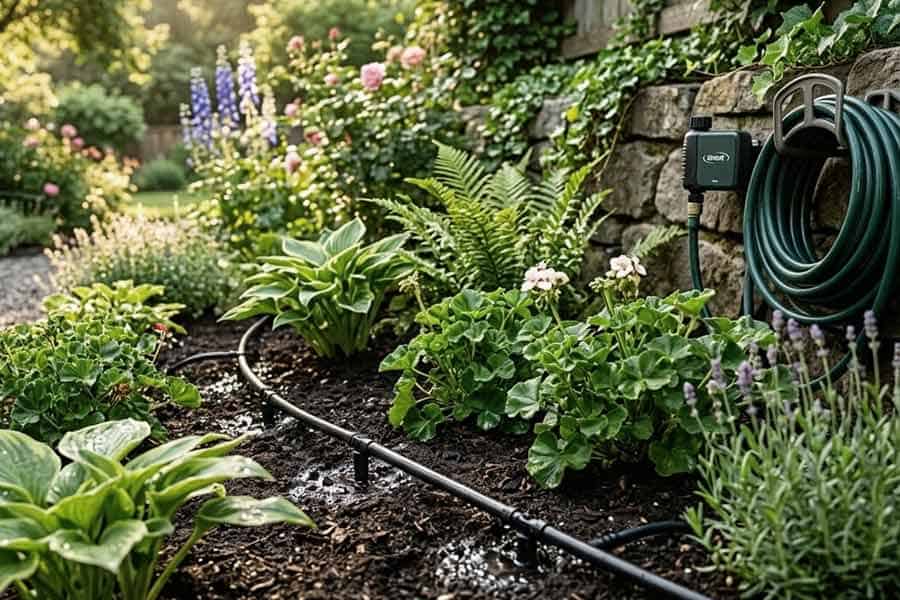
Because snails and slugs are so dependent on moisture, adjusting how and when you water is one of the highest-leverage prevention steps available to you.
Overhead sprinklers that run in the evening leave foliage and soil surfaces wet all night long, which is precisely the window when these pests are most active and feeding heavily, especially once temperatures climb above 50 degrees Fahrenheit with low wind and high humidity.
Shifting your watering schedule to early morning instead gives the ground and plant surfaces time to dry out before nightfall, cutting off the extended damp window that slugs and snails depend on.
According to Ipm, switching from sprinkler irrigation to drip irrigation reduces humidity and moist surfaces, making the habitat less favorable for slugs and snails, and irrigating near sunrise reduces the amount of time foliage and ground remain moist.
This kind of adjustment doesn’t require major landscaping changes, just a rethink of the timers and delivery methods you likely already have in place.
Pairing drip irrigation with a morning watering schedule is one of the simplest, lowest-cost prevention upgrades you can make, and it pays off across the entire growing season rather than as a one-time fix.
There’s a nice parallel here to how you might think about lighting or ambiance indoors.
Just as you’d choose warm, soft lighting to create a cozy feel in your living room rather than something harsh and overdone, choosing the right irrigation approach creates a healthier, more balanced environment outside, one that supports your plants without inviting problems you didn’t intend to create.
Prevention Habit #3: Create Physical Barriers and Monitor Regularly
Once shelter and moisture are under control, physical barriers add another proactive layer of defense around your most vulnerable plantings.
Copper tape or mesh placed around raised beds and pot rims creates a mild electrical deterrent that snails and slugs avoid crossing, while a ring of diatomaceous earth around vulnerable seedlings dehydrates their soft bodies on contact.
Simple beer traps or overturned citrus rinds can also be checked every few days as an early warning system, letting you catch a population increase before it turns into visible plant damage.
Routine yard walks, especially in early spring before the peak damage season through first frost really ramps up, let you spot egg clusters and remove them before they hatch into the next generation.
| Statistic | Detail |
| Slug reproduction rate | Can lay 30 eggs at a time |
| Slug crawling speed in damp conditions | Up to 25 feet per hour |
| Peak damage season | Spring through first frost, most active in spring and fall |
| Feeding activity window | Nights above 50°F with low wind and high humidity |
| Economic impact in Oregon seed industry | Over $50 million annually in losses and control costs |
Keeping Your Outdoor Space Beautiful All Year Long
Monitoring isn’t a one-time task but an ongoing habit that pairs naturally with the other prevention steps I’ve already covered.
Checking your barriers periodically for gaps, refreshing diatomaceous earth after rain, and staying alert during the wetter shoulder seasons keeps you ahead of population booms rather than scrambling to respond to one.
When prevention habits slip and damage does appear, targeted remediation options remain available as a secondary layer, but they work best as a backstop rather than your primary strategy for a yard you want to keep looking its best all year.
At the end of the day, a well-kept garden is just another room of your home, one without a roof.
Taking the same intentional care outside that you’d bring to styling a shelf or arranging a mantel is what turns a yard from an afterthought into a true extension of the beautiful home you’ve worked so hard to create.
Leave a comment