
Walk into any home built before the age of mass production and you’ll notice something right away.
The wood feels different.
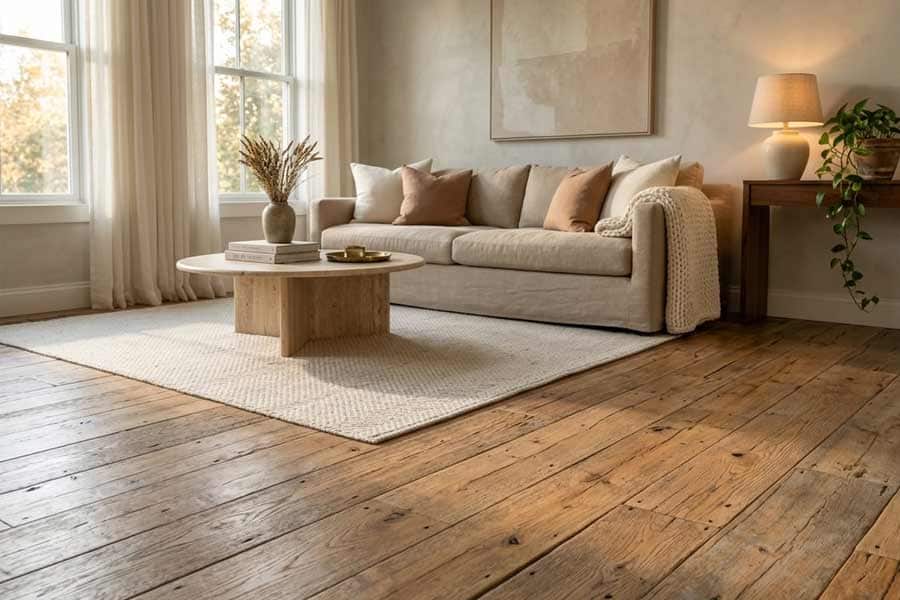
It has weight, texture, and a history you can almost read in its grain.
That quality is exactly why so many homeowners and designers are turning back the clock and choosing reclaimed materials for their floors instead of freshly milled boards.
Your floor covers more surface area than anything else you’ll choose, so it sets the mood of a room before a single piece of furniture arrives.
What Makes Reclaimed Wood Different
New timber, no matter how well it’s sourced, hasn’t lived a life yet.
Reclaimed wood has.
It comes from barns, factories, warehouses, and old homes, often having spent decades absorbing moisture changes, temperature shifts, and daily wear.
This process makes the wood remarkably stable once it’s repurposed.
Boards that have already expanded and contracted through countless seasons are far less likely to warp or crack after installation compared to freshly cut lumber that hasn’t gone through that natural conditioning.
That stability matters to you every day, since a quiet, solid floor underfoot is part of why a room feels settled rather than temporary.
There’s also the matter of density.
Trees felled a century or more ago often grew slowly in old-growth forests, which produced tighter grain patterns and harder wood than much of what’s commercially available today.
That density translates directly into durability underfoot, something that matters enormously in a material meant to handle decades of foot traffic.
I’d argue it also frees you up to actually live in your rooms, because a floor you’re not anxious about is a floor you’ll gather friends and family on.
Character That Can’t Be Manufactured
Manufacturers have gotten remarkably good at replicating the look of aged wood, adding artificial distressing, staining techniques, and embossed grain patterns to mimic a lived-in appearance.
But there’s a difference between a floor that looks old and one that actually is old.
Nail holes, saw marks, subtle color variations, and the slight unevenness of hand-worked boards all tell a story that no factory process can fully replicate.
I’ve found that character gives the rest of your room permission to relax, since your newer furniture and cleaner lines read as intentional against a floor with genuine age.
This is part of why Reclaimed oak flooring has become such a popular choice among people renovating older properties or building new homes with a traditional feel.
Oak in particular tends to age with a rich patina that’s difficult to fake convincingly, and its natural hardness makes it well suited to heavy use in kitchens, hallways, and living spaces.
That warm patina also flatters almost everything you’ll put on top of it, from a pale wool rug to a linen sofa to aged brass and stoneware.
Practical Considerations before Choosing Reclaimed
- Sourcing matters, so wood salvaged from demolition sites should be properly treated and inspected for structural soundness.
- Expect natural variation in color and texture between boards, which is part of the appeal rather than a flaw.
- Your installation may require more careful handling than new flooring, since board thickness can vary slightly.
- Ask about the wood’s original use, since some reclaimed timber may have been exposed to chemicals or treatments over its lifetime.
One more thing I’d keep in mind, that board-to-board variation reads best when the rest of your palette stays calm, so let the floor be the pattern in the room.
An Environmental Argument That Holds Up
Beyond how it looks, there’s a practical sustainability case to be made.
Using reclaimed timber means fewer trees need to be harvested, and it keeps usable material out of landfills.
Given how long it takes for hardwood trees to mature, reusing existing wood is one of the more sensible ways to reduce the environmental footprint of your renovation or new build.
Companies specializing in this kind of material, such as Historisch Hout, often work directly with demolition projects and old structures to recover timber that would otherwise be discarded, giving it a second functional life rather than letting it go to waste.
There’s a quiet satisfaction in knowing the beauty underfoot didn’t cost a forest, and I think that knowledge becomes part of how a home feels to you.
Why This Floor Earns Its Place in Your Home
Choosing reclaimed flooring isn’t simply a design decision, it’s also a practical one rooted in durability, authenticity, and resourcefulness.
Wood that has already proven it can last a hundred years tends to earn its place in a home for another hundred more.
And that’s really what you’re after with every choice you make, rooms that feel gathered over time rather than ordered all at once.

Leave a comment