
The choices you make for your home’s siding are going to affect the sort of aesthetic style that your entire home’s exterior has.
When you’re aiming to develop any sort of style in the design of your home’s exterior, siding is something you’ll want to take into consideration.
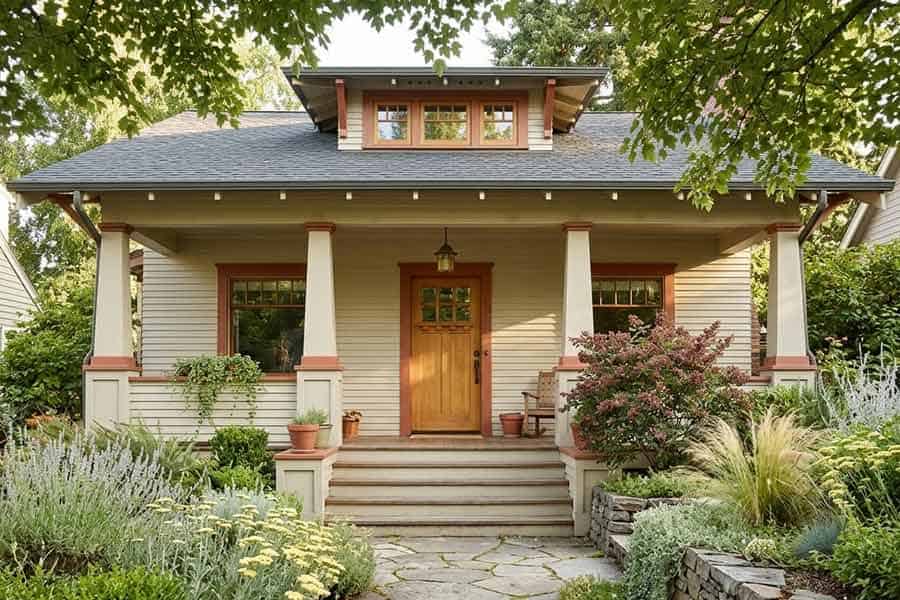
When you’re walking or driving around a neighborhood, the first thing you see of any home is the exterior, and that’s true when people see or visit your home as well.
That first impression can set up their expectations for what they’ll find inside and for the sort of stylistic choices you’re making.
I think of siding as the outermost layer of your decorating, the part that greets guests before your entry table or your lamplight ever gets the chance.
When you’re making intentional home exterior design choices, the type of siding you choose matters for more than simply protection from the elements.
Whatever sort of exterior style you’re aiming at, there are exterior siding styles that will support that overall look.
From boho to clean contemporary designs, the right siding material will support and improve any aesthetic you’re going for, and it’s just a matter of choosing the right one.
Let’s look a little closer at some of the different popular home exterior styles and the siding trends that often support them.
Boho Style Relies on Natural Texture and a Relaxed Atmosphere
Home exteriors reaching for a boho-inspired style are likely to be embracing more natural-seeming materials, earthy tones, and presenting themselves as being more relaxed and effortless.
Trying to engage with this style is likely to involve siding that gives you a high degree of visual texture in order to achieve what’s commonly considered a lived-in sort of character.
That lived-in quality is the same thing you’re after indoors with your nubby throws and aged terracotta, so your siding becomes the first chapter of that story rather than a separate one.
One of the more obvious choices here is to use wooden siding.
The existence of natural grain and variation in fused bamboo siding and other natural cladding siding types helps them to seem more organic.
This type of siding is also often paired with decking, greenery or stone features.
If you don’t want to use actual wood, but still want the curb appeal that the boho aesthetic offers, siding products that give the appearance and coloration of wood can work as well.
One of the main ideas is to make sure your home’s exterior isn’t perfectly uniform, but instead has complementary colors and textures.
Minimalism and Clean Lines Are the Cornerstones of Modern Style
If you’re aiming for a more modern home exterior style, then you want to go for simplicity and minimalism.
Large windows, simple architectural lines, and a consistent appearance are the things that modern minimalist style is all about.
Siding made of metal, cement and other similarly smooth siding materials are all relevant for this sort of aesthetic.
Those large windows do double duty for you, since they pull daylight deep into your rooms and make whatever’s inside feel airier.
The coloration of siding is particularly important for those of you interested in cultivating a modern aesthetic style.
You want to use neutral whites, charcoals, blacks and grays for the most part, only using bold colors strategically.
I’ve always liked how that restraint outside gives your interiors room to speak, letting a clay vase or a single olive branch carry real weight.
One advantage that the modern aesthetic style has is that it typically uses low maintenance siding materials, so it’ll require less upkeep than other stylistic choices.
The Welcoming Farmhouse Style
If you’re looking to create a curb appeal that’s very welcoming, you need look no further than the farmhouse style.
If you’re chasing this comfortable aesthetic, board-and-batten siding or traditional lap siding is the way to go, along with wood-look products.
Board and batten works especially well, as its strong vertical lines add character without disrupting the simple, welcoming feel of farmhouse style.
Brighter whites and creams paired with dark trim complete the look.
Pairing brighter whites and creams with dark trims is typical here.
That same cream-and-charcoal pairing carries beautifully through your front door and into your kitchen, which is how a house starts to feel like one continuous thought.
Many people who choose this aesthetic style will also improve it by adding natural wooden doors, landscaping and simple lighting fixtures.
Warm porch lighting is the quiet hospitality piece here, since a soft glow at dusk tells your guests they’re expected before you’ve opened the door.
When in Doubt, Traditional Style Is Timeless
If you find that none of the current siding trends is to your interest, going with a more traditional style is all about emphasizing craftsmanship, rather than following trends.
Siding materials that will support a traditional style include wood, fiber cement and other engineered materials, with the difference mainly being how they should be maintained.
The idea with this style is to make the siding feel like a natural part of the overall architectural style, instead of something that’s been slapped on after the fact as an afterthought.
I’d say that’s the same instinct behind rooms you love most, the ones that feel gathered over years instead of ordered all at once.
Getting Industrial with It
Many modern homeowners enjoy a more industrial home exterior design style, which, naturally, is well supported by metal siding.
Using corrugated or standing-seam metal is common to create the strong lines and architectural appearance that industrial style is about, especially when paired with exposed brick, timber or concrete.
Often, the coloration used with industrial style is darker, but weathered and metallic finishes are also common.
Those weathered finishes are worth your attention, since a material that ages honestly outside pairs naturally with the aged brass and patinaed metal you’re drawn to inside.
Some of the best examples of industrial style for a modern home exterior use metal selectively, combining it with other siding materials.
Mixing it that way keeps the look from reading cold, which matters when you want your home to feel like shelter and not a showroom.
A Lighter, Brighter and More Durable Style for the Coast
For those of you who want to evoke the aesthetic of coastal homes, choosing light colors and materials that present a relaxed feel is what’s needed.
Soft colors like sandy tones, blue, white and pale gray are all excellent choices for a coastal aesthetic.
The classic coastal siding choice is horizontal, as you might expect to find on a beach house.
Those pale exteriors bounce light back into your rooms, which is part of why coastal interiors feel breezy before you’ve hung a single sheer curtain.
But especially if your home is actually on the coast, you should consider the functionality of the siding materials you choose, as well as their aesthetics.
Salt, wind and moisture can wreak havoc on poorly chosen materials, so incorporating some rain screen siding could be important.
Letting Your Exterior Set the Tone for Everything Inside
Whichever direction you lean, the goal is for your siding to feel like a promise your interiors go on to keep.
When the two agree, your home reads as intentional from the curb to the last quiet corner of it.

Leave a comment