
Walls are getting quieter this year, but in a good way.
Instead of a dozen small frames crowded together, I’m seeing more homeowners hang one or two pieces that actually mean something and letting them do the talking.

A large horizontal canvas creates an instant focal point above a living room sofa.
It’s a shift that fits perfectly with the DIY mindset. You don’t need to fill every inch of a wall to make a room feel finished.
The wall art market backs this up.
The global wall art market is expected to reach USD 99.15 billion by 2033, growing at a 6.4% CAGR from 2026 to 2033, according to a 2026 Grand View Research report.
In the US alone, the category generated USD 8,226.8 million in revenue in 2025 and is projected to climb to USD 12,464.6 million by 2033, per the same research firm.
That’s a lot of art buying, and it means you now have more places to find it than ever, from print-on-demand marketplaces to artists selling original work directly.
So where should you actually start looking?
I rounded up seven companies that stood out this year for craftsmanship, selection, or just making the process easy.
Whether you want a single statement piece or a full gallery wall, one of these should fit.
What to Look for When Choosing a Wall Art Company
Before you add anything to a cart, it helps to know what separates a company worth ordering from twice from one you’ll regret.
A few things matter most.
Material and craftsmanship come first.
Canvas, framed prints, and metal prints all age differently, and a company that’s vague about materials usually isn’t worth the risk on a large piece.
Texture matters more than you’d think here too, since a woven canvas catches lamplight in a way flat paper never will.
Size options matter, especially if you’re chasing the 2026 trend toward fewer, larger statement pieces rather than a busy gallery wall, according to a 2026 trend report from Urban Road.
Look for companies that offer real customization rather than a handful of fixed sizes.
Shipping and returns deserve real scrutiny.
Large framed or canvas art is fragile and expensive to ship, so a company without a clear damage policy is a gamble.
Finally, check for price transparency.
Some sites bury framing costs or shipping fees until checkout, which makes comparing your options nearly impossible.
One more thing worth remembering. The art you choose for your home isn’t just decoration.
It sets the tone of a room the same way your lighting and textiles do, and it shapes how the space feels to sit in day after day.
That’s a good reason to pick pieces you genuinely connect with rather than whatever’s cheapest.
1. Art by Maudsch
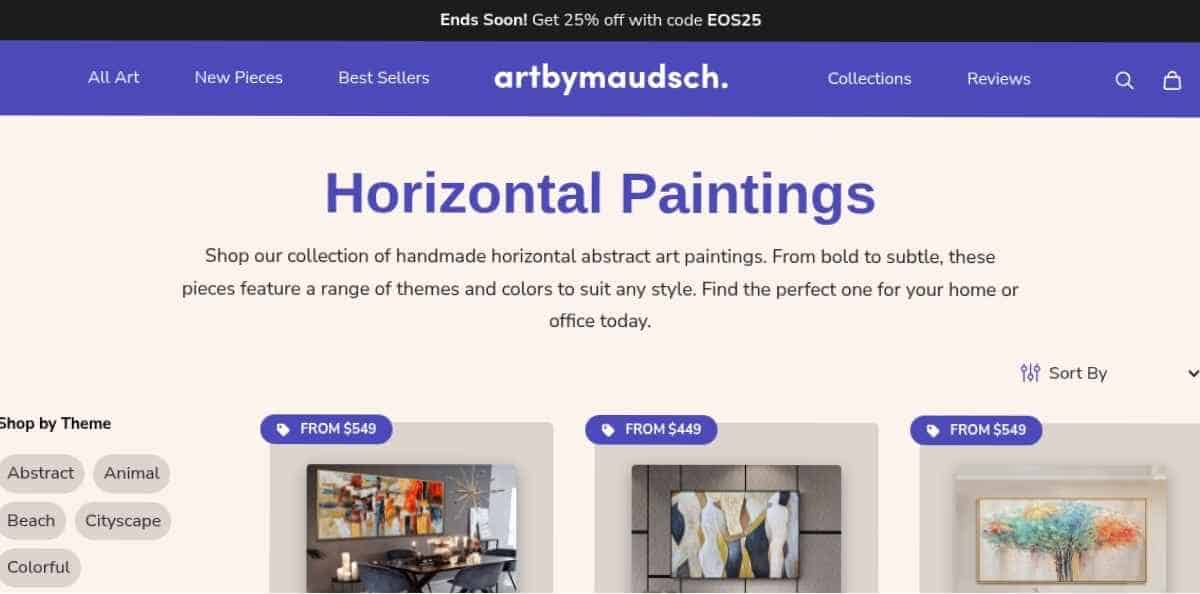
Art By Maudsch’s horizontal collection of handmade original paintings, shown on the brand’s own site.
Art By Maudsch sells handmade original paintings, and the horizontal collection leans into exactly the trend I mentioned above.
You get one large, personal piece instead of a dozen small ones.
The range spans abstract compositions to quiet landscape work, with most pieces landing in a mid-to-premium price range of roughly $399 to $599.
What sets it apart from a print marketplace is that every piece is an original, not a reproduction.
If you want a done-for-you statement piece to anchor a living room or entryway, rather than another DIY project this weekend, this is the kind of company worth bookmarking.
It won’t be the cheapest option on this list, but if you want a piece nobody else will have hanging on their wall, that’s the tradeoff.
A single original above the sofa also gives your eye somewhere to land, which is often what a room is missing when it feels busy but unfinished.
This kind of investment piece lines up with where the market is heading too. Grand View Research’s wall art market report points to steady growth through 2033 as more households treat original art as a long-term purchase rather than a disposable accent.
2. Society6
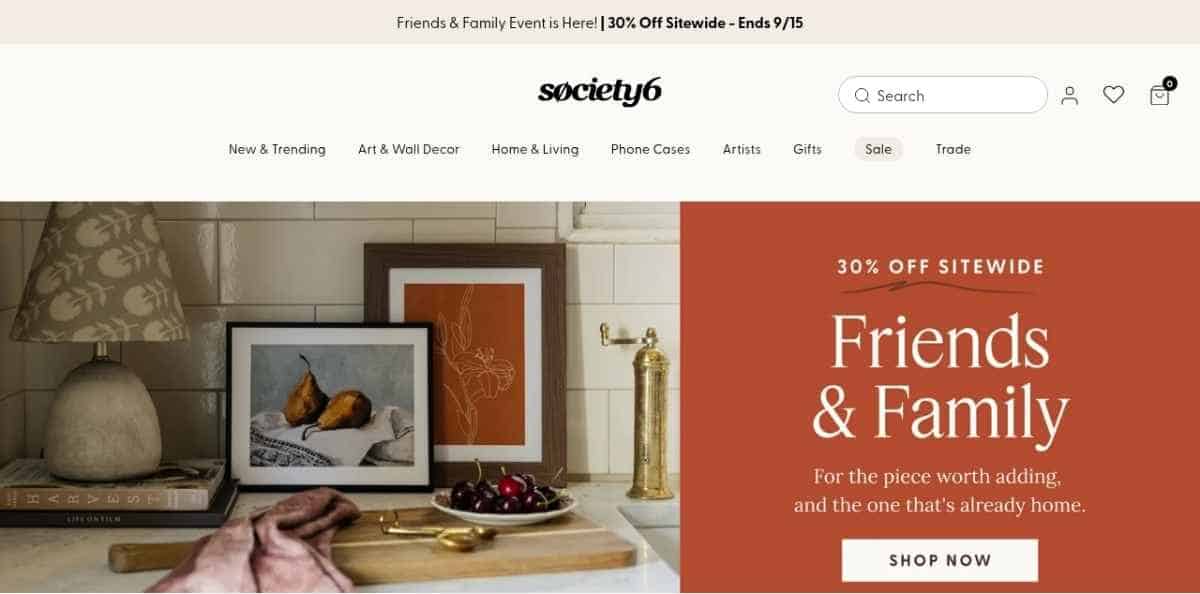
Society6 website
Society6 is a marketplace built around independent artists, with thousands of designs available as prints, canvases, and framed art.
It’s a strong budget-friendly entry point, and because so many artists sell through the platform, you’ll find styles ranging from bold graphic prints to soft watercolor florals.
That range makes it easy to pull a color straight from your cushions or rug and echo it on the wall.
The tradeoff is quality control varies by artist and print type, so it pays to read reviews on a specific design before you buy.
3. Saatchi Art
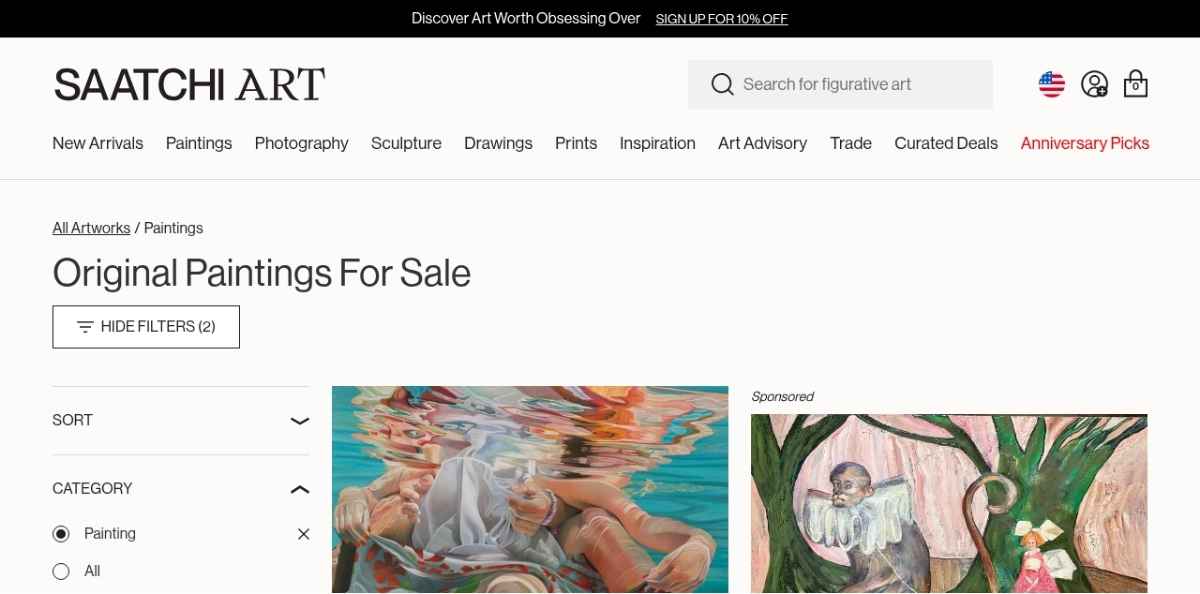
Saatchi Art website
Saatchi Art focuses on original paintings and sculptures rather than prints, curated by style, subject, and price range.
It’s a good fit if you want a one-of-a-kind piece and you’re willing to pay original-art prices for it.
Filtering by category makes it easier to narrow down thousands of listings, though shipping large originals can get pricey given the fragility involved.
A piece with real brushwork also brings a quiet sense of craft into a room, which is hard to fake with anything mass produced.
4. Minted
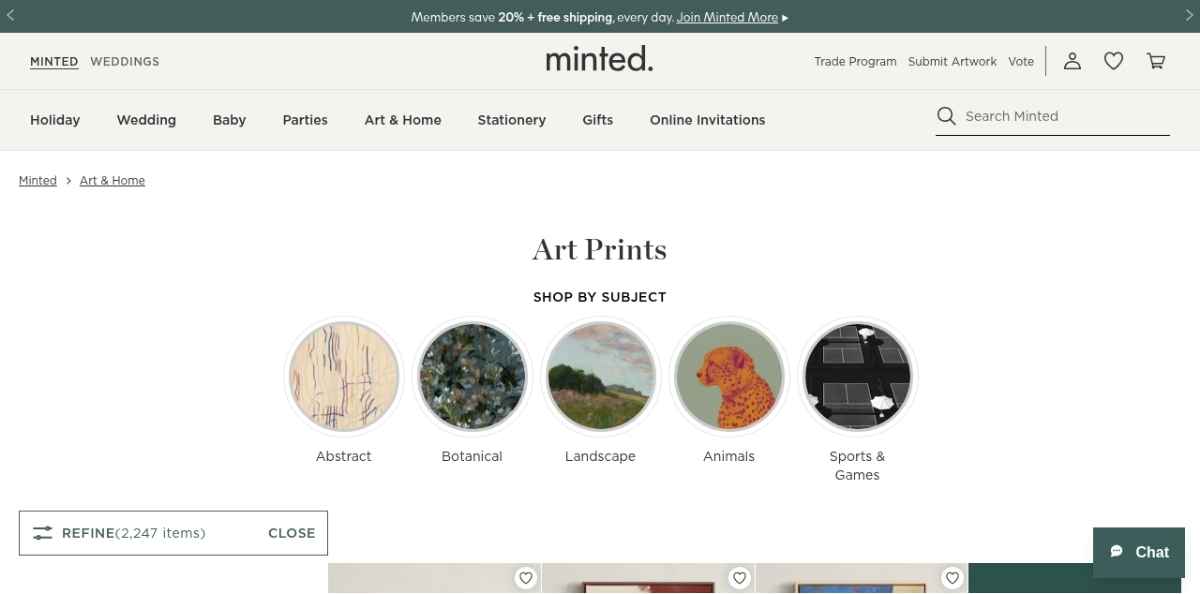
Minted website
Minted works with independent designers on limited-run print collections, which gives it a more curated feel than an open marketplace.
It’s particularly strong if you want something that looks custom-designed without commissioning original work.
Selection rotates fairly often, so a design you love today might not be available in six months.
I’d take that as a nudge to buy the piece that stops you rather than the one you’re only half sure about.
5. iCanvas
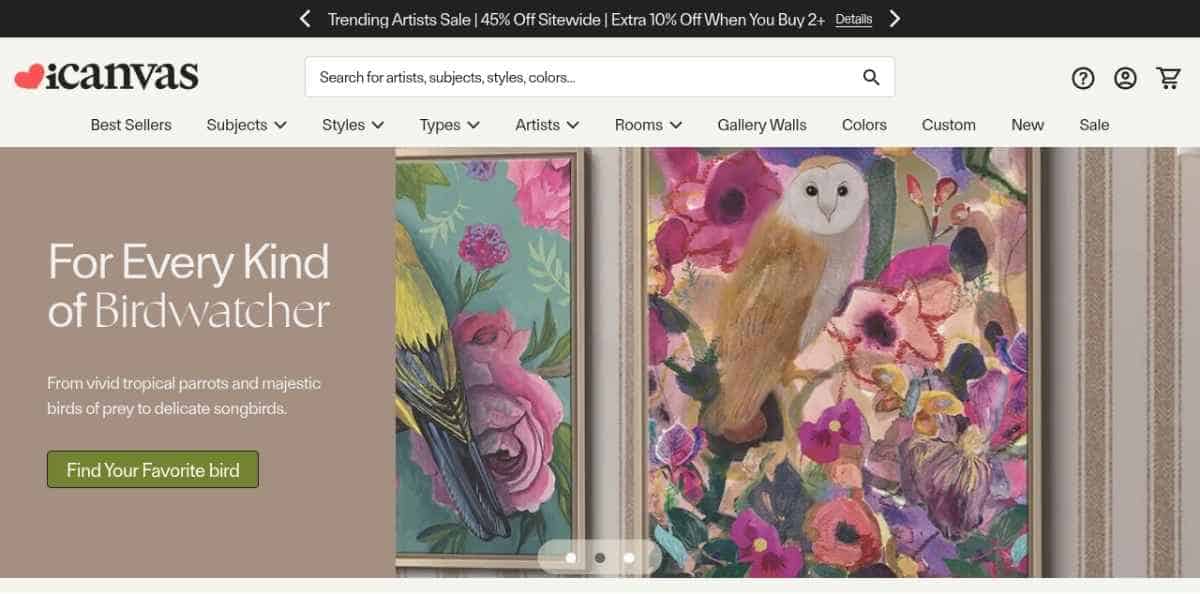
iCanvas website
iCanvas specializes in canvas prints across a huge range of subjects, from nature photography to abstract and cityscape work.
Size flexibility is the real strength here.
If the 2026 trend toward oversized statement art appeals to you, iCanvas makes it easy to size a single design up to fill a large wall.
Going bigger than feels comfortable is usually the fix when art looks lost above a sofa or bed.
It’s a print company rather than an original-art seller, so don’t expect one-of-a-kind pieces.
6. Desenio
Desenio leans into Scandinavian minimalism with clean typography prints, muted botanical illustrations, and simple graphic designs.
Frame-and-print bundles make it easy to get a finished look without sourcing a frame separately, and prices stay budget-conscious throughout.
Those soft, quiet palettes sit well in a bedroom or reading corner where you want the walls to calm things down rather than compete.
It’s a great fit if your style runs minimal, less so if you want bold or maximalist pieces.
7. Art.com
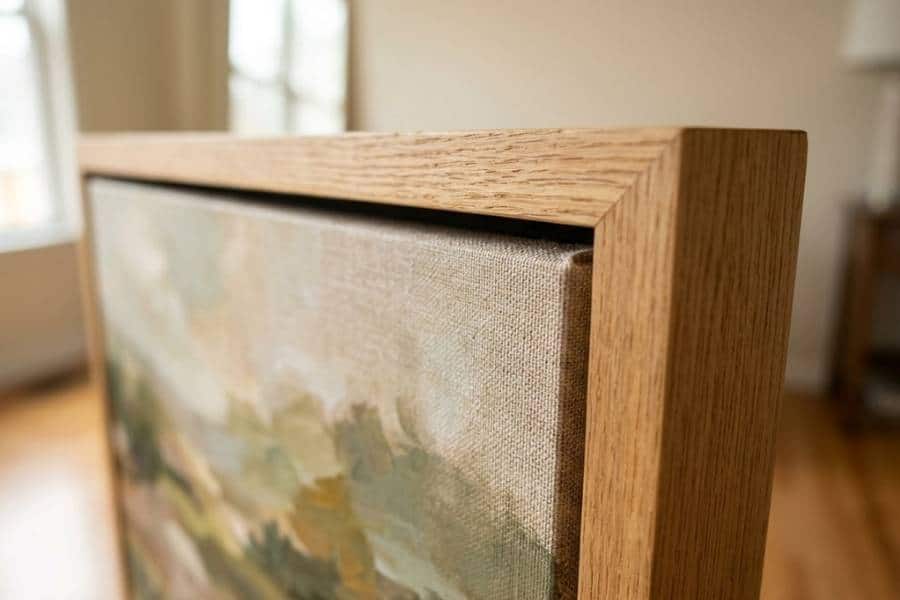
Textured canvas and natural wood framing are among the top materials trending in 2026 wall art.
Art.com is one of the broadest marketplaces on this list, spanning posters, photography, and framed prints across nearly every genre imaginable.
That breadth is the appeal. It’s a reasonable first stop if you’re not sure what style you want yet.
With so many options, though, browsing can feel overwhelming compared to the more curated companies above.
I’d narrow things down by deciding on your frame finish first, since matching it to the wood tones already in your room does half the styling work for you.
Wide selection matters more as the category grows.
The broader home decor market is estimated to reach USD 1,622.90 billion by 2030, according to Grand View Research’s home decor market report, and wall art is one of the fastest-moving pieces of that spend.
Picking the Right Wall Art for the Way You Live
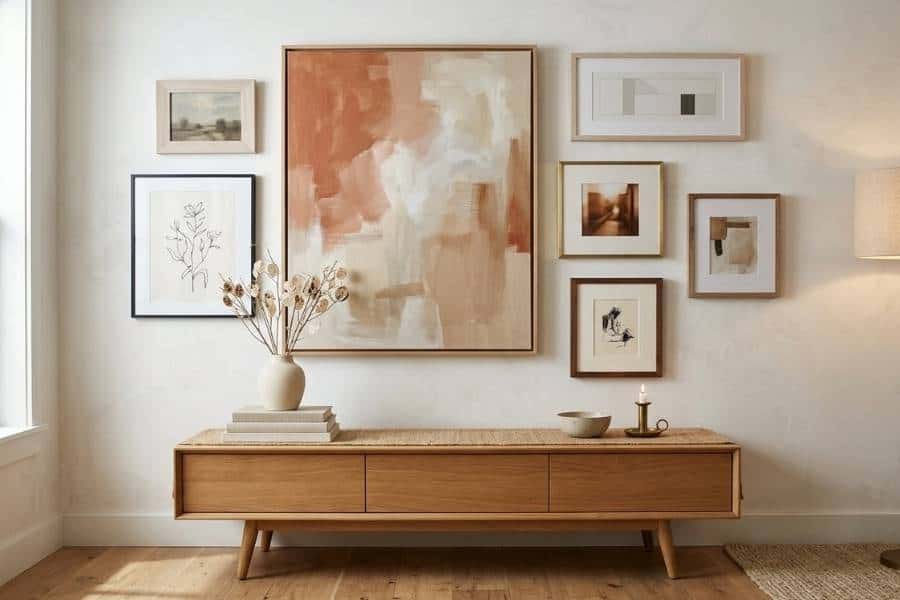
Mixing statement pieces with smaller framed art keeps a gallery wall feeling current in 2026.
There’s no single right answer here.
If you want an original piece that nobody else will have, Art By Maudsch and Saatchi Art both deliver that, just at different price points and styles.
If budget matters more than originality, Society6, Desenio, and Art.com all offer accessible entry points.
And if you’re chasing the oversized, statement-piece look that’s defining 2026 interiors, iCanvas’s size flexibility is worth a look.
Whichever direction you go, I wouldn’t treat the decision as purely decorative.
Research from the Global Wellness Institute on biophilic design shows that natural textures, earthy palettes, and thoughtfully chosen art can genuinely affect how a space feels to live in, not just how it photographs.
And as the National Endowment for the Arts has noted in its work on arts and health, everyday exposure to art in the places we live plays a real role in wellbeing, not just style.
That’s the quiet argument for buying the piece you love. You’ll walk past it every morning for years.
If you’re not ready to commit to a big purchase yet, there’s plenty you can do in the meantime.
I’ve covered styling a gallery wall at home if you want to arrange what you already own, and my guide to framed art projects for renters is worth a look if you can’t hang anything permanent.
For more budget-friendly wall decor ideas, check out my rustic wood wall art project too.

Leave a comment