
Moving into a new rental can be exciting, but it can also feel a little unfamiliar at first.
You may have the keys in your hand and your boxes stacked around the living room, yet the space still feels like someone else’s home rather than your own.
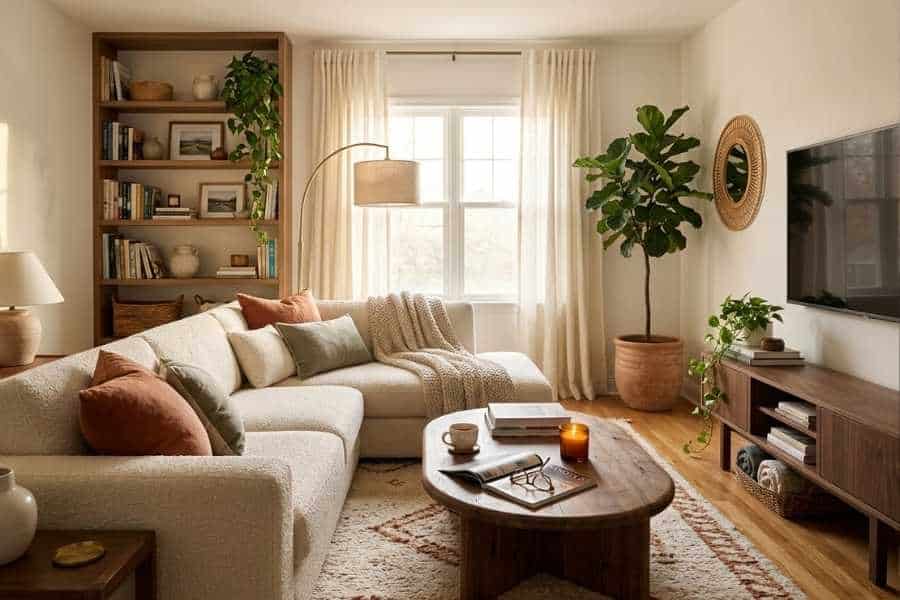
That’s especially common with rentals, where the walls, floors, lighting, and fixtures were chosen long before you arrived, and there may be limits on what you’re allowed to change.
Even so, making a rental feel comfortable and personal doesn’t require a major renovation or a huge decorating budget.
In most cases, I’ve found a few thoughtful choices can make a surprisingly big difference.
The goal isn’t to turn your rental into a perfectly styled showroom.
It’s to create a place that supports your routine, reflects your personality, and feels comfortable when you walk through the door at the end of the day.
Whether you’re moving into a downtown apartment, a suburban townhouse, or a smaller rental in another part of Alberta, the process starts with understanding the space you have and thinking carefully about how you want to live in it.
Get to Know the Space before You Start Decorating
It can be tempting to begin decorating right after moving in, especially if you already have a clear idea of how you want your home to look.
You may be thinking about new furniture, artwork, rugs, or storage solutions before you’ve even unpacked all the boxes.
That enthusiasm is useful, but I’d say it’s often better to spend a little time living in the space before making bigger purchases.
Pay attention to how natural light enters each room throughout the day, because a corner that looks bright and inviting in the morning may feel much darker by late afternoon.
Notice which areas naturally become part of your daily routine and which ones you barely use.
You may discover that the dining area works better as a home office, or that a small section of the living room is the perfect place for a reading chair because it gets the best light in the apartment.
It also helps to think about the practical details that are easy to overlook when you first move in.
Look at where the electrical outlets are placed, how much storage you really have, whether doors or drawers block certain areas, and how furniture affects the flow of the room.
These small observations can save you from buying pieces that look great online but don’t actually work well in your home.
Before changing everything at once, ask yourself what genuinely bothers you about the space and what simply feels unfamiliar.
Sometimes a room doesn’t need a major makeover at all.
It may just need time, better lighting, a few personal touches, and furniture arranged in a way that suits your routine.
I think that waiting period is worth more than most people expect, because a room you’ve actually lived in tells you where you want to sit, where you drop your keys, and where the day naturally slows down.
Let Your Lifestyle Shape the Way You Decorate
A well designed home should support the way you actually live, rather than forcing you to adapt your routine around the furniture and decor.
If you work from home several days a week, a practical workspace may be far more valuable than a formal dining area that rarely gets used.
If you enjoy having friends over, flexible seating and an open layout may matter more than adding decorative furniture that takes up valuable floor space.
If your evenings are usually quiet, you may want to focus on soft lighting, comfortable seating, and a calm atmosphere that helps you relax.
Your location can also affect the kind of space you’re likely to rent and how you choose to furnish it.
Housing options, rental costs, floor plans, and available space can vary between cities and communities across Alberta.
For anyone planning to settle in Calgary, learning more about the Calgary rental market can help create realistic expectations around space, location, and budget before spending heavily on furniture or decor that may not suit the home you eventually choose.
Thinking about your lifestyle first makes decorating decisions much easier because you begin choosing items based on what you need rather than what simply looks appealing in a photo.
A comfortable chair that you use every evening may be a better investment than a trendy piece that takes up space without serving a real purpose.
The same idea applies throughout the home.
Function and personality don’t have to compete with each other, and the most comfortable spaces usually manage to include both.
I’ve noticed that the rooms people love most are rarely the most decorated ones. They’re the ones built around a real habit.
Use Removable Decor to Add Personality without Breaking the Rules
One of the biggest challenges of decorating a rental is working within the limits of your lease.
You may not be allowed to repaint the walls, replace flooring, or make permanent changes, but that doesn’t mean your space has to feel plain or impersonal.
There are many renter friendly ways to introduce color, texture, and character without creating problems when it’s time to move out.
Peel and stick wallpaper is one of the most flexible options because it can completely change the look of a wall without the commitment of traditional wallpaper.
It can work well behind a bed, in a small entryway, or even inside a bookshelf to add a subtle pattern.
Removable wall decals can give you a similar effect if you want something simpler or less dramatic.
Adhesive hooks and removable hanging strips are also useful because they make it easier to display artwork, photographs, mirrors, or lightweight shelves without putting large holes in the walls.
In the kitchen, removable backsplash panels can bring color and texture to an otherwise basic space, while decorative contact paper can sometimes be used to refresh shelves or other surfaces.
The key is to avoid changing everything simply because you can.
A few carefully chosen updates usually have more impact than covering every surface.
One interesting wall, a few framed prints, and a strong color palette can make the space feel intentional without making it feel crowded.
I’d start with the wall you see first when you come home, since that’s the one that decides how the whole place greets you.
Add Warmth through Rugs, Curtains, and Soft Furnishings
Textiles are one of the easiest ways to make your rental feel warmer because they add softness, color, and texture without requiring any permanent changes.
This is especially helpful in apartments or newer rentals where hard flooring, neutral walls, and simple finishes can sometimes make the space feel a little cold.
A well placed rug can change the atmosphere of a room immediately.
It can soften laminate or tile floors, make a seating area feel more comfortable, and visually separate different parts of an open plan space.
In a small apartment, for example, one rug can define the living area while another helps create a clear dining or work zone.
Curtains can have a similar effect because they soften windows and make a room feel more finished.
Even if your rental already has blinds, adding curtains can improve privacy, reduce glare, and bring in color or pattern.
You don’t need heavy or expensive fabrics either.
Simple curtains in a warm neutral shade can make a noticeable difference.
Smaller items such as cushions, throws, bedding, and blankets are also useful because they let you experiment with color without making a large financial commitment.
They’re easy to replace, easy to move, and easy to take with you when you eventually relocate.
Instead of spending heavily on changes that belong to the property, it often makes more sense to invest in pieces that will keep working in future homes.
Soft materials also change how a room sounds, and I think that’s the part people feel without ever naming it. A rug and a set of curtains quiet the echo that makes an empty rental feel temporary.
Improve the Lighting and Change the Entire Mood of the Room
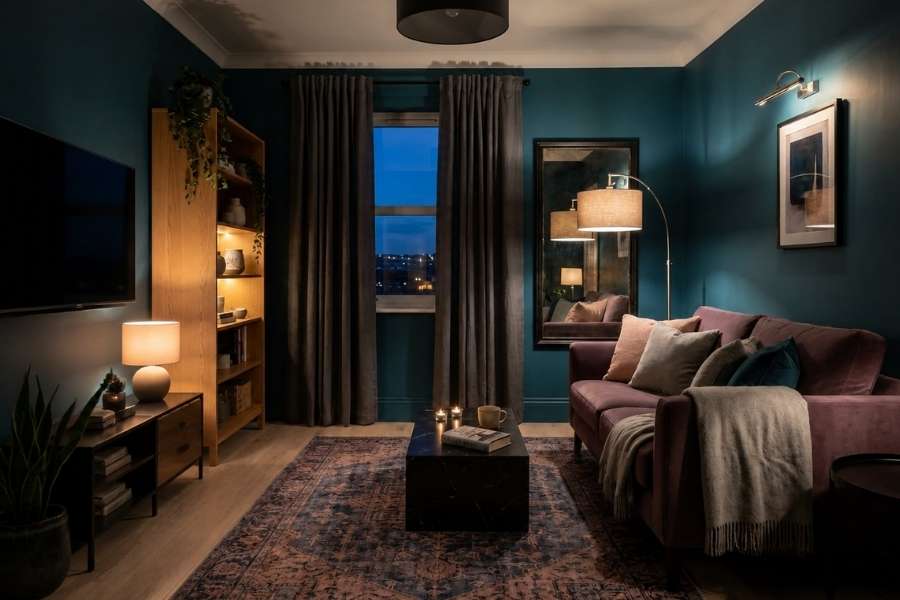
Lighting has a strong effect on how a room feels, yet it’s often one of the last things renters think about.
Many rental homes rely heavily on a single ceiling fixture, which may give you enough light but does little to create a warm or inviting atmosphere.
Adding several smaller light sources can make a room feel much more comfortable, especially in the evening.
A floor lamp beside the sofa can create a softer living area, while table lamps on side tables or dressers can make bedrooms feel calmer.
Small lamps on bookshelves or kitchen counters can also add warmth without taking up much room.
Choosing warm toned bulbs rather than very bright, cool white lighting can make a noticeable difference, particularly in rooms where you want to relax.
Mirrors are another simple tool because they can reflect natural light and make darker rooms feel more open.
A mirror placed across from a window can help spread daylight through the space, while a larger mirror in a hallway or bedroom can make a narrow area feel less confined.
Ask yourself how you want the room to feel at night.
Do you want one bright light overhead, or would you rather have several softer lights that create a more relaxed atmosphere?
In many cases, I’d say improving the lighting can change the character of a room more than buying additional furniture.
Lamps at different heights also give you pools of light instead of one flat wash, and that’s what makes a room feel like it’s inviting you to sit down rather than just be seen.
Choose Furniture That Can Work in More than One Home
When you’re renting, it’s worth thinking beyond the home you’re living in right now.
A large sectional sofa or oversized dining table may fit perfectly in your current rental, but it could become difficult to use if you move into a smaller apartment later.
For that reason, I think versatile furniture is often a smarter choice for renters.
Look for pieces that are easy to move, rearrange, and use in different ways.
Modular shelving can work in a living room, bedroom, or office.
Nesting tables can give you extra surface space when needed and tuck away when they’re not in use.
A storage ottoman can serve as a seat, a footrest, and a place to store blankets or other items.
Multifunctional furniture is particularly helpful in smaller rentals because it lets you get more use from limited space.
A dining table can double as a workspace, a bench can provide both seating and storage, and a compact bookcase can also act as a visual divider in an open plan room.
Try to think about whether each major piece of furniture will still be useful if your living situation changes.
The best purchases are often the ones that make your current home more comfortable without limiting your options later.
There’s something steadying about furniture that moves with you, too. A few familiar pieces can make an unfamiliar apartment feel like yours within the first week.
Make Small Spaces Work More Efficiently
A smaller rental doesn’t necessarily need more furniture.
In many cases, it simply needs better use of the space you already have.
Storage and layout become especially important when every square foot matters.
Vertical storage is one of the most useful approaches because it lets you use wall height instead of filling up valuable floor space.
Tall shelving units, over door organizers, and stackable storage solutions can help keep everyday items under control.
Under bed storage is also valuable for seasonal clothing, extra bedding, or items you don’t need to reach every day.
Baskets and containers can help reduce visual clutter while keeping frequently used items within easy reach.
In open plan layouts, furniture can be used to create clear zones without making the space feel closed off.
A bookcase can separate a work area from the living room, while a rug can define a seating space without adding any physical barriers.
The goal isn’t to squeeze as much furniture as possible into the room.
It’s to make the space easier to use.
When your storage is thoughtful and each piece of furniture has a clear purpose, even a compact rental can feel organized and comfortable.
Clear surfaces are their own kind of decorating, and I’ve found a small home with room to breathe reads as far more welcoming than a large one that’s crowded.
Add Personal Details That Make the Space Feel like Yours
This is often the point where your rental begins to feel like a real home.
Furniture and storage solve practical problems, but personal objects create familiarity and emotional connection.
Display books you actually enjoy, photographs that remind you of important people or places, and artwork that reflects your taste rather than simply matching the color of the sofa.
Plants can also make a room feel more alive, whether you choose a few small herbs in the kitchen or a larger plant near a window.
You can also bring in objects connected to hobbies, travel, family, or everyday routines.
These don’t need to be expensive or impressive.
A favorite ceramic mug on an open shelf, a framed print from a memorable trip, or a blanket that has followed you through several homes can make a room feel more personal than a perfectly coordinated collection of decorative accessories.
A home that looks polished isn’t always the same as a home that feels comfortable.
Sometimes the small, slightly imperfect details are what give a space its character.
Those are also the things guests end up asking about, and I think that’s the quiet difference between a room people admire and a room people relax in.
Create One Area That Feels Completely Finished
Trying to decorate an entire home at once can become overwhelming and expensive, so it often helps to focus on one small area first.
Choose a corner or room that you use frequently and make that space feel complete before moving on to the rest.
It could be a reading corner with a comfortable chair, a lamp, and a small table.
It might be a bedside area with better lighting, soft bedding, and a few personal items.
In the kitchen, it could be a simple coffee station that makes your morning routine easier and more enjoyable.
Finishing one small area gives you an immediate sense of progress and helps establish the style you want to carry through the rest of the home.
It also lets you experiment before spending more money.
Once one part of your rental begins to feel familiar and comfortable, the rest often becomes easier to approach.
There’s no reason to rush.
A home usually comes together gradually, as you learn what you need and what makes the space feel right.
That one finished corner does something else, too. It gives you a place to go at the end of a long day while the rest of the boxes wait.
Turning a Temporary Rental into a Home You Love
You don’t need to own a property to care deeply about how it looks and feels.
A rental can be warm, practical, stylish, and personal without expensive renovations or permanent changes.
The most effective updates are often simple ones, such as improving the lighting, adding textiles, choosing versatile furniture, organizing storage more effectively, and surrounding yourself with things that have real meaning.
Give yourself time to understand the space before deciding what needs to change.
Focus on comfort and function rather than trying to follow every decorating trend, and choose items that can keep serving you if you move again in the future.
Most importantly, remember that making a home feel personal isn’t about creating perfection.
It’s about shaping a space around your everyday life, your routines, and the things that make you feel comfortable.
Once the rooms begin to reflect the way you actually live, even a temporary rental can start to feel settled, familiar, and genuinely yours.

Leave a comment