
Most curb appeal advice starts and ends with plants.
Add a boxwood hedge. Install window boxes. Lay down fresh mulch.
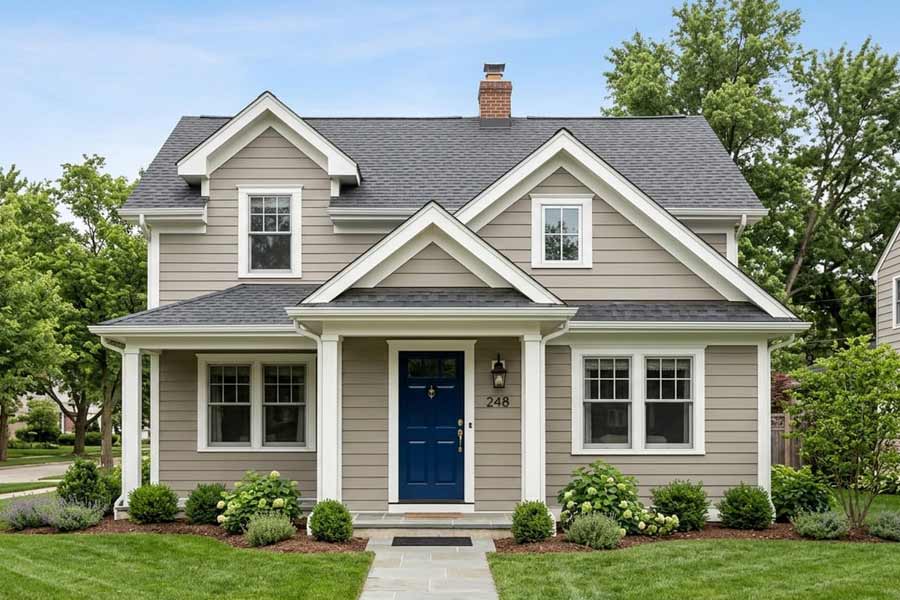
These are fine suggestions, but they ignore the surface that dominates what people actually see when they look at a house: the house itself.
The siding, the trim, the front door, the shutters, the roofline, these are the elements that define the visual character of a home, and when they’re working together, no amount of landscaping is needed to make a house look sharp.
When they’re not, no amount of landscaping can compensate.
I’ve seen beautifully landscaped homes that still fall flat simply because the exterior surfaces weren’t pulling their weight, and I’ve seen modest yards on houses that looked stunning because every structural element was working together.
Start with What Covers the Most Surface Area: The Siding
Siding is the single largest visual element on most homes, which means its condition and color set the tone for everything else.
Faded, chalky, or mismatched siding drags down the entire exterior regardless of what surrounds it.
If your home is older and full of character, with the kind of Victorian trim or Craftsman lines that made you fall for it in the first place, you’ll usually see the biggest change when you work with experienced contractors to swap out aging clapboard or worn vinyl.
I’d put most of your attention on the color, since fresh material in a shade that actually suits your home’s architecture is what makes the whole thing click.
Think of it the way you’d pick a wall color inside.
You’re not just covering a surface, you’re setting the mood every person feels before they even reach your door.
The right exterior color makes your home read as cared for and welcoming, and that feeling carries right through the entry into the rooms you’ve already worked so hard on.
The color choice matters more than the material when it comes to curb appeal.
A home with basic vinyl siding in a well-chosen color will look better from the street than a home with premium fiber cement in a shade that fights the roof color or clashes with the neighborhood palette.
Before choosing a siding color, look at what’s already fixed: the roof color, any brick or stone that will remain, and the general color temperature of the street.
Your siding color is the foundation of your entire exterior palette, so it’s worth getting right before anything else.
Understanding Undertones on Exterior Surfaces
Exterior paint and siding colors behave differently than they do on a screen or a paint chip.
Natural light amplifies undertones that are barely visible indoors.
A white with a yellow undertone reads warm and creamy on a north-facing wall.
A gray with a blue undertone looks almost lavender in afternoon sun.
The only reliable way to evaluate an exterior color is to see a large sample on the actual wall in both morning and afternoon light.
The classic mistake is choosing a color that looks perfect in the store and wrong on the house.
Always test.
Get a large sample, at least two feet square, and view it at different times of day before committing.
I’ll say it plainly: this step costs almost nothing and prevents the most common color regret in exterior renovation.
It’s one of those small habits that makes a genuinely big difference to how your home ends up looking and feeling from the outside.
The Five Structural Elements that Create Curb Appeal
When landscaping is removed from the equation, the elements that create genuine curb appeal are all part of the building itself.
Siding Color and Condition
The backdrop against which everything else reads.
Clean, fresh siding in a well-chosen color does more for curb appeal than any other single element.
If your budget allows only one improvement, this is the one.
Trim Color and Contrast
The trim is what gives a house its visual definition, separating planes and highlighting architectural details.
The relationship between the siding color and the trim color is what creates the contrast that makes a home read as intentionally designed rather than generically finished.
A crisp white trim against a deeper body color is the most reliable combination, but darker trims against lighter siding can create a striking contemporary look.
The Front Door
The focal point of the entire facade and the one element where bold color choices carry low risk and high reward.
A saturated red, deep navy, or rich green door on an otherwise neutral exterior creates exactly the kind of intentional visual moment that makes a house memorable from the street.
Shutters
When done well, shutters frame windows and add visual weight that balances the facade.
When done poorly, wrong scale, wrong color, or non-functional shutters on a house that never had them, they look like an afterthought.
The rule is simple: if the house was designed for shutters, they should be sized to cover the window when closed, painted a color that grounds the facade, and mounted to look functional even if they’re not.
The Roof
Often overlooked in curb appeal planning because it’s expensive to replace on a discretionary basis, but its color and condition are visible from the street and affect how every other color choice reads.
When a roof replacement is on the horizon anyway, choosing the shingle color as part of a whole-house exterior palette rather than in isolation produces better visual results dramatically.
How These Elements Work Together: The Color Coordination Principle
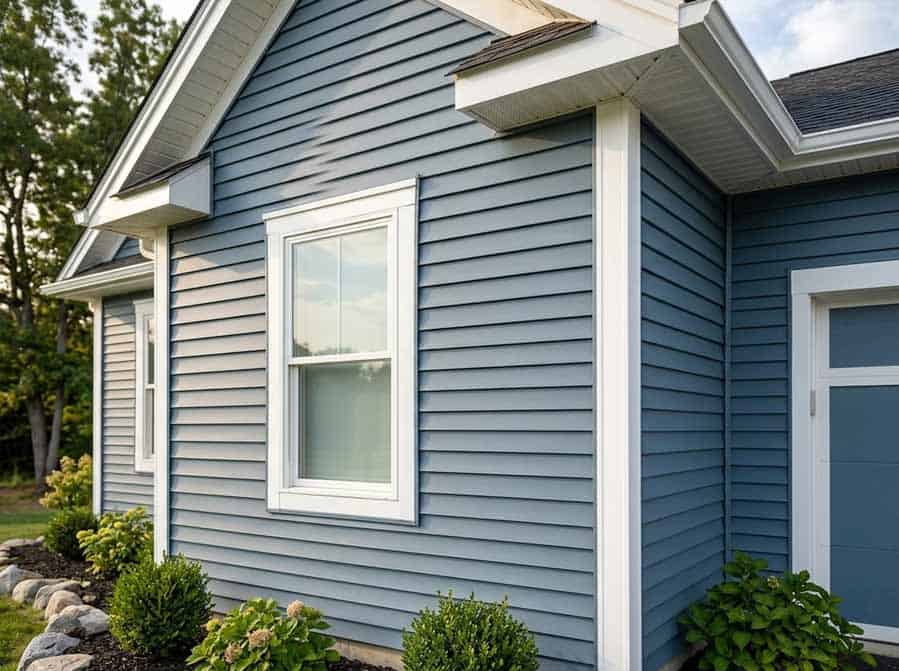
The homes that look best from the street aren’t the ones with the most expensive materials.
They’re the ones where every visible element looks like it was chosen as part of a single palette rather than independently over decades.
This doesn’t require a professional designer. It requires looking at the house as a whole composition before making any individual color decision.
A practical approach: photograph the front of your house and identify every color that’s visible, siding, trim, door, shutters, roof, foundation, any brick or stone.
Count the colors.
If there are more than four, the palette is probably fragmented.
The strongest exteriors use two to three colors deliberately: a body color, a trim color, and one accent.
I’ve found that homeowners who approach their exterior this way end up with a result that feels cohesive, considered, and genuinely beautiful rather than pieced together over time.
Quick Wins that Cost Almost Nothing
Not every curb appeal improvement requires a major renovation budget.
Several changes produce outsized visual impact relative to their cost.
Painting the front door is the highest-return curb appeal investment in residential exterior work.
A quart of high-quality exterior paint, a Saturday afternoon, and a color chosen with intention rather than habit can change how your house presents from the street for less than fifty dollars.
Replacing dated hardware, house numbers, mailbox, exterior light fixtures, and door hardware, removes visual clutter that accumulates as styles change and individual pieces are replaced without considering the whole.
Choosing a consistent finish across all exterior hardware, matte black, brushed nickel, or oil-rubbed bronze, creates a coordinated look that signals real intentionality.
It’s one of those details I always point out because it’s so easy to overlook and yet so noticeable once it’s done right.
Power washing the siding and walkways removes the accumulated grime that makes even well-maintained homes look tired.
The visual difference between a washed and unwashed facade is surprisingly dramatic, and the cost of a rented pressure washer for a day is minimal.
Curb Appeal Mistakes that Make Things Worse
Adding decorative elements that don’t match the architectural style of your house is one of the most common missteps I see.
Craftsman columns on a Colonial. Mediterranean tile on a Cape Cod.
Each of these creates a visual contradiction that makes the house look confused rather than charming.
Using too many colors is another one.
The impulse to make every element stand out with a different color produces visual noise rather than visual impact.
Restraint in color use is what separates homes that look well considered from those that look like every decision was made independently.
Ignoring the neighborhood context is the third mistake worth calling out.
A home that looks dramatically different from every house around it doesn’t stand out in a positive way. It looks like it doesn’t belong.
The best curb appeal improvements respect the visual character of the street while expressing your individual style within it.
Your home should feel like yours, and with the right exterior choices, it absolutely can.

Leave a comment