
For most cold-region houses, an EIFS stucco system delivers stronger thermal performance and better crack resistance than traditional cement render, thanks to its continuous foam insulation layer.
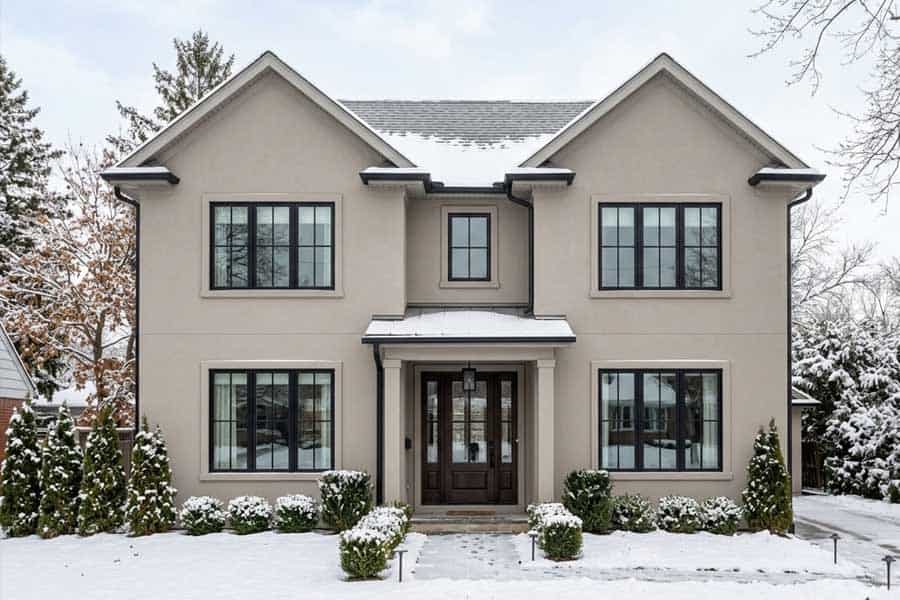
Hard-coat plaster, by contrast, costs less upfront and shrugs off surface impact more readily.
The right pick depends on your insulation goals, your budget, and how the wall must manage moisture through repeated freezing and thawing.
Every homeowner planning an exterior upgrade eventually hits the same fork in the road.
Two finishes look nearly identical on a completed wall, yet they behave very differently once winter arrives.
One traps heat inside a continuous insulating shell, while the other leans on cement mass and a long record of proven durability.
The choice shapes your heating bills, your upkeep schedule, and how the structure copes with snow load and meltwater for decades.
That decision deserves more than a glance at a brochure.
Builders who have weathered prairie winters know that detailing matters as much as the material itself, which is why many owners consult experienced EIFS stucco contractors in Calgary before committing.
The reality is that the stronger choice is the one matched to your wall build-up, your exposure, and your long-term plans for the property.
Two Finishes, Two Very Different Wall Builds
At a glance, both options present a smooth or textured face that reads as classic plaster.
The difference lives beneath that surface, in how each assembly is constructed and what it asks of the wall behind it.
Conventional render bonds a cement-based mix directly onto lath and relies on density for toughness.
A synthetic finish, by contrast, wraps the building in a layered envelope engineered around an insulating core.
The Layered Build
A modern exterior insulation finishing system stacks several parts that each carry a distinct job.
Following the sequence clarifies why these walls react so differently once temperatures fall.
- A rigid polystyrene foam board fastened to the substrate, supplying continuous warmth across the entire face.
- A fiberglass reinforcing mesh set into a polymer base coat, adding tensile strength and flex.
- A weather-resistant acrylic finish coat that carries the color and texture while shedding rain.
Many build-ups also fold in a water-resistive barrier and drainage channel, letting incidental moisture escape rather than pool inside the cavity.
Where Cement Render Holds Its Ground
Conventional plaster answers with proven longevity and a denser, more impact-tolerant face.
Mixed from sand, lime, Portland cement, and water across three coats, it’s shielded buildings for centuries.
The trade-off is thermal: bare masonry offers little insulating value, and its stiffness makes hairline fractures more likely as a building settles.
Small Tip: Before you choose, ask for the wall’s effective R-value rather than the foam rating alone.
A continuous insulating layer removes thermal bridging at the studs, which matters far more in a heating-driven climate than the nominal figure printed on a spec sheet.
The upshot is two systems built on opposite ideas, a contrast that grows clearest once a long winter puts them to the test.
I’d also add that from a home exterior standpoint, the finish you choose plays a real role in your home’s curb appeal and how the whole property presents from the street.
Getting the Cold-Weather Details Right
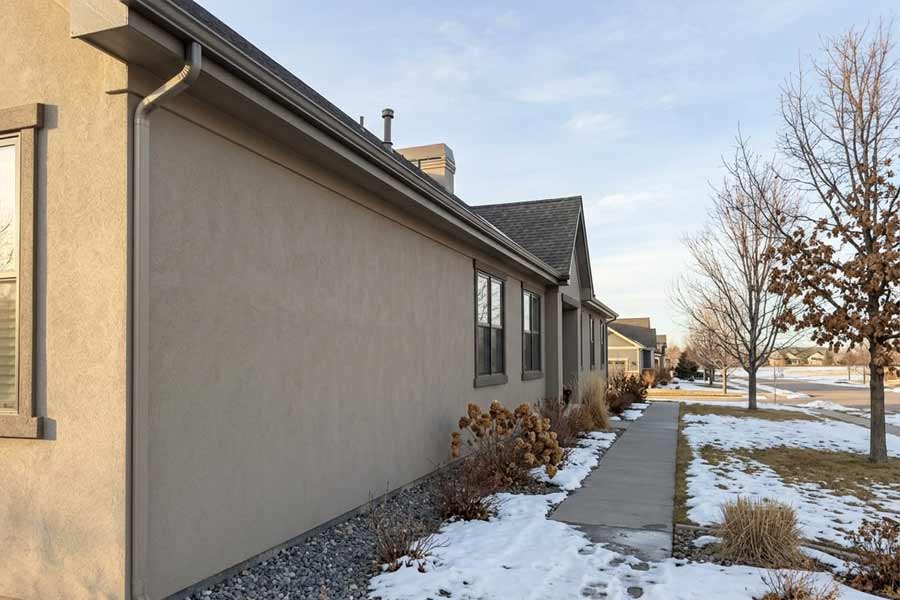
Material choice is only half the equation.
How a wall is detailed and applied decides whether it survives years of frost cycling, and this is where regional standards earn their keep.
Application Governed by the Weather
A sound installation follows the National Building Code of Canada and the CAN/ULC-S716 standard, both of which set firm conditions for cold-region work.
Base and finish coats can’t go on below 4°C, and the surface must hold above that mark while the material cures.
Movement joints belong at roughly 9-metre intervals to absorb seasonal shifting without splitting the face.
The table below shows how each option answers the pressures of a heating-driven climate.
| Performance Factor | Synthetic System | Cement Render |
| Insulating value | High, continuous | Minimal |
| Crack resistance | Strong, flexible | Moderate |
| Moisture drainage | Built-in path | Surface-dependent |
| Upfront cost | Higher | Lower |
| Impact tolerance | Moderate | High |
Read together, these factors explain why warmth and water control often tip the balance toward the layered build in colder places.
Detailing that Protects the Wall
Beyond the basics, the weak spots are predictable, so a seasoned crew watches them closely.
- Window and door transitions, sealed with correct flashing to divert meltwater.
- Grade terminations, kept clear of snow contact to stop wicking.
- Sealant joints, checked and refreshed before they harden and split.
Solid detailing sets the stage, yet the finished surface still depends on who builds and maintains it.
I’ve seen beautifully finished exteriors that hold up year after year simply because the detailing was done right from the start, and it shows in how clean and sharp the whole home looks.
Picking a Crew and Keeping the Finish Healthy
A quality wall assembly performs only as well as the hands that build it.
Workmanship and upkeep separate a facade that lasts fifty years from one that fails within ten.
Vetting the Right Installer
Typing EIFS stucco contractors near me into a search bar returns plenty of names, yet credentials matter more than proximity.
A dependable crew should show a few non-negotiable qualities before you sign anything.
- Proof of WCB coverage plus bonding and liability insurance.
- A written workmanship warranty, commonly running ten years on fresh applications.
- A documented record across both home and commercial projects in the area.
Reviewing past jobs and verified customer ratings gives you a realistic read on how a tradesperson handles detailing and deadlines.
Your home’s exterior finish is one of the first things anyone notices, so it’s worth taking the time to find someone who takes that seriously.
Maintenance that Extends Service Life
Once in place, these walls reward modest, steady attention.
Routine care keeps the envelope sealed against the weather and preserves its warmth through punishing seasons.
When trouble does surface, prompt EIFS repair stops minor sealant or impact damage from snowballing into hidden moisture problems behind the cladding.
A short seasonal habit covers most needs: rinse the face to clear grime and mold, check sealant joints for shrinkage, and patch any fractures before water finds them.
I’ve found that homeowners who stay on top of these small checks year after year end up with an exterior that stays looking sharp and well-kept for far longer.
Making the Right Call for Your Home
Both finishes earn their place, and neither is universally better.
Conventional plaster wins on price and impact strength, while the layered alternative leads on insulation and moisture management where the cold runs deep.
Weigh your budget, your exposure, and your comfort goals together.
Leave a comment