
You probably don’t think much about rainwater until it starts pooling near your foundation, carving trenches through your mulch, or turning your basement into an unwanted science experiment.
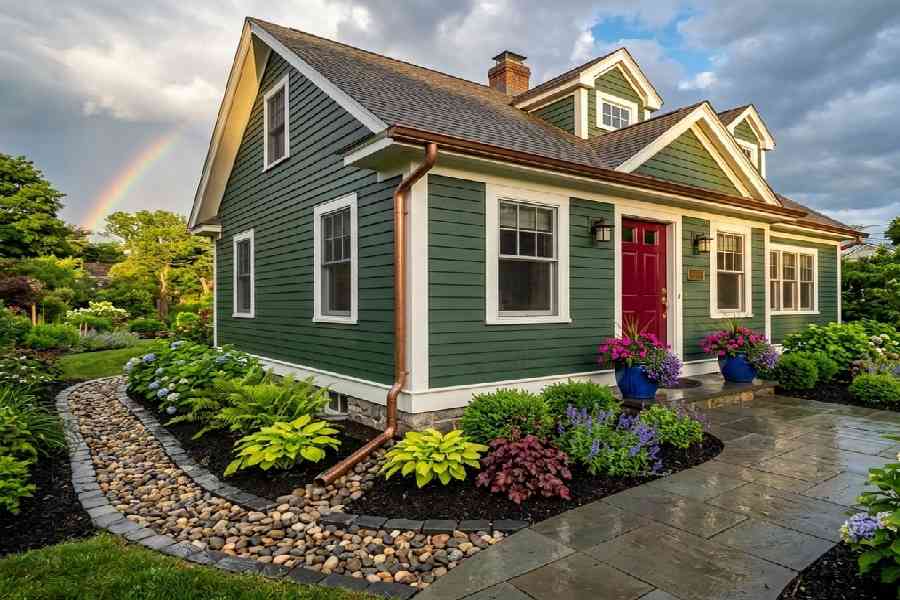
A smart gutter drainage plan does more than move water off your roof.
It protects your siding, landscaping, soil, and structure.
When drainage is handled well, your home stays cleaner, drier, and a lot less expensive to maintain over time.
I’d also say it protects something harder to measure, which is that settled, cared-for feeling you get walking up to a house that looks like someone’s paying attention.
Why Downspouts Matter More than Most Homeowners Realize
Gutters usually get the attention, but downspouts do the heavy lifting when it comes to directing water away from your home.
If they’re too short, clogged, disconnected, or aimed badly, your whole system underperforms.
A well-designed downspout drainage system carries roof runoff to a safer discharge point instead of letting it collect around the base of your house.
That can involve buried drain lines, pop-up emitters, extensions, or grading improvements depending on your property.
Think about a steep roof during a hard rain.
The water volume coming off that surface is intense.
One poorly placed downspout can soak a single corner of your lot every time the weather shifts.
Good drainage design spreads that pressure out and moves water with purpose, not guesswork.
I’ve seen homeowners paint a downspout to match the trim or swap in a copper one that patinas over the years, and that small choice turns a utility piece into part of the exterior palette.
What Happens When Rainwater Has Nowhere to Go
Your gutters collect a surprising amount of water during even a normal storm.
If that water dumps straight beside your house, trouble starts fast.
You might notice muddy splashback on siding, soggy flower beds, or standing water near your walkways.
Those small signs often point to bigger issues underground.
Poor runoff control can lead to:
- Soil erosion around your foundation
- Cracks caused by shifting ground
- Basement or crawl space moisture
- Damage to your plants and hardscaping
- Slippery spots near your entryways
Water is persistent.
It doesn’t need a dramatic flood to create damage.
It just needs the same weak spot over and over again.
That’s what makes runoff management such a practical upgrade.
It handles a basic problem before it turns into a repair bill with too many zeroes.
That crawl space moisture is also where musty air comes from, and no candle or diffuser upstairs can cover a smell that’s rising through your floors.
Signs Your Property Needs Better Drainage
You don’t need to be a contractor to spot drainage problems.
Your yard and exterior usually tell the story pretty clearly.
Watch for these common warning signs:
- Water pooling for hours after rain
- Mulch washing into your lawn or driveway
- Staining on brick, siding, or foundation walls
- Basement dampness or musty odors
- Trenches forming under your gutter outlets
- Grass that stays soggy in certain areas
Some homes also show problems through peeling paint, rotting trim, or concrete settling near the foundation.
If one section of your property always looks like it lost an argument with the weather, drainage deserves a closer look.
The tricky part is that water doesn’t always damage the exact place where it lands.
It can travel along footing lines, seep into lower-grade spaces, or soften soil in ways that show up months later.
Those same stains and soft spots are the reason a porch chair never quite gets used, since you stop lingering in the parts of your home that feel damp or uncared for.
Drainage Solutions That Actually Work in Real Yards

Not every yard needs the same fix.
A flat lot behaves differently than a sloped one, and clay-heavy soil drains differently than sandy soil.
Good solutions match your conditions instead of forcing a one-size-fits-all setup.
Effective options often include:
- Buried downspout drain pipes
- Splash blocks for short-term control
- Pop-up emitters in safe discharge zones
- Catch basins for heavy collection points
- French drains for persistent saturation
- Regrading to improve surface flow
For example, a small suburban yard with compacted soil may benefit from buried extensions tied into a pop-up emitter.
A larger property with low spots may need a combination of grading and subsurface drainage.
The goal isn’t just to move water.
It’s to move it far enough away, at the right speed, without creating a new issue somewhere else.
That’s where planning matters.
I like buried lines for the same reason I like hidden wiring and tucked-away cords, since the beauty of a yard comes from what you don’t have to look at.
A river rock channel or a planted dry creek bed can carry runoff and read as a design feature at the same time.
How Better Drainage Helps Your Home Look Better Too
Drainage is a protection feature, but it also affects curb appeal more than most people expect.
When runoff is controlled, your landscaping holds its shape, your garden beds stay intact, and your exterior surfaces look cleaner.
Without proper drainage, decorative gravel shifts, mulch floats away, and lawn edges start looking rough.
Water can also leave algae streaks on concrete and ugly splash marks on lower walls.
A cleaner runoff plan helps preserve:
- Your foundation plantings
- Mulch borders and edging
- Your walkways and patios
- Painted or finished exterior surfaces
- Your overall yard symmetry
In other words, drainage supports the visual side of home care too.
You can spend good money on landscaping, lighting, and outdoor decor, but uncontrolled water can undo that work in a season.
Rain has no respect for your weekend project schedule.
Think about what your guests actually see in their first ten seconds, which is your entry path, your planters, and the line where your beds meet the lawn.
Those are exactly the edges runoff blurs first, so drainage is quietly doing the work of keeping your welcome intact.
What to Consider before Installing or Upgrading a System
Before making changes, look at how water moves across your property during and after a storm.
Pay attention to roof valleys, gutter outlet locations, low areas, and property lines.
A few smart questions can help:
- Where does each downspout currently discharge?
- How close is that point to your foundation?
- Does water flow toward neighboring property?
- Are there recurring wet spots in your yard?
- Is the soil draining slowly?
Also think about maintenance.
Even a strong drainage setup needs occasional cleaning and inspection.
Leaves, roof grit, and root intrusion can reduce performance over time.
If your home has repeated pooling, moisture intrusion, or erosion, a professional assessment can save you from trial-and-error fixes.
The best drainage systems are usually the ones you barely notice, because they quietly do their job every time the sky opens up.
A little planning now can spare you major repairs later, and your yard won’t have to keep absorbing the consequences.
Keeping Your Home Dry, Grounded, and Worth Coming Home To
I’ve come to think of drainage the way I think about good lighting or a well-placed rug, since it’s infrastructure for comfort rather than decoration on its own.
You don’t notice it working, but you feel its absence in damp air, tired edges, and a yard that never quite looks finished.
Handle the water, and everything you’ve chosen for your home gets to stay beautiful a lot longer.
Leave a comment