
A typical shower uses anywhere from 15 to 25 gallons of water, depending on how long you’re in there and which fixture is doing the work, a figure that adds up quickly across utility bills and energy consumption.
Modern water-efficient showerheads are built to bring that volume down without making the experience feel like a punishment.
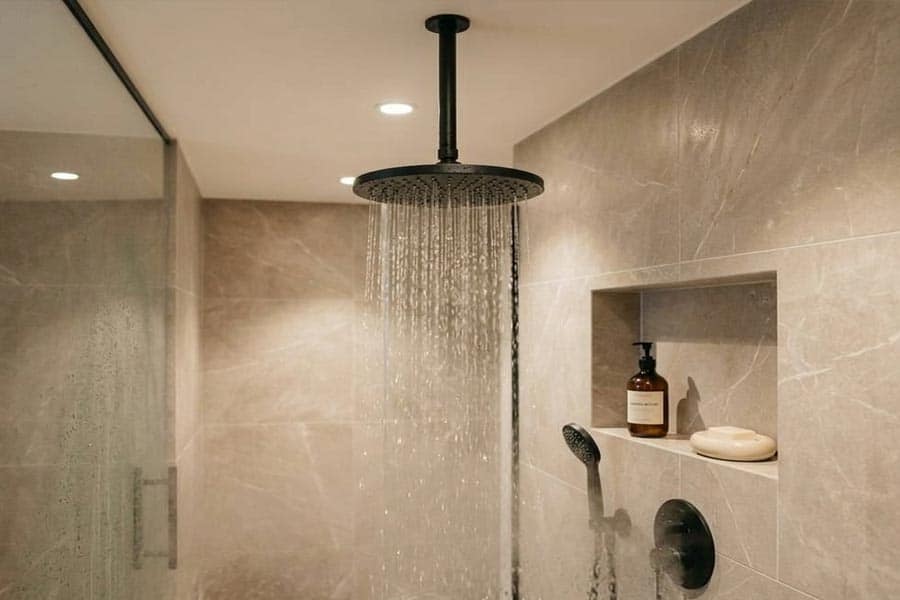
They come in several styles: fixed wall-mounted models, wide-coverage rain heads, and handheld designs.
Many households make the switch to a handheld option, such as a sproos shower head, for the added flexibility of rinsing, cleaning, or helping children and elderly family members bathe.
Choosing the right model involves more than picking a style.
It means understanding how efficiency, pressure, and design all work together, and I’d say the best showerheads manage to do all three while also looking genuinely beautiful in your bathroom.
Understanding Flow Rate and Efficiency Labels
The single most important metric for any water-efficient fixture is flow rate, measured in gallons per minute (gpm).
Older showerheads can exceed 2.5 gpm, while modern efficient models are typically designed to use 2.0 gpm or less.
The U.S. EPA’s WaterSense program certifies showerheads that meet a 2.0 gpm threshold and pass independent testing across three specific criteria:
- Spray force
- Coverage area
- Pressure compensation across varying household pressures
When you’re shopping, look for the WaterSense label or an equivalent certification on the packaging.
It provides an objective, third-party signal that performance standards have actually been verified, not simply claimed by the manufacturer.
I’ve also found that many of the best WaterSense-certified models come in finishes and forms that look just as impressive as they perform, so you really don’t have to choose between efficiency and a beautiful bathroom.
How Design Preserves Comfort at Lower Flow Rates
The most common concern about low-flow fixtures is that reduced water volume means a weak, unsatisfying shower.
In practice, several engineering features can more than compensate for that reduction.
Aerating technology blends air into the water stream, increasing perceived volume and droplet coverage without drawing more water from the line.
Pressure-compensating valves maintain a consistent spray force even when household pressure fluctuates, which is particularly useful in apartments or older buildings where running multiple fixtures at once can cause noticeable pressure drops.
Adjustable spray patterns let you switch between a focused, concentrated jet and a broader, softer spread depending on your mood or need.
I think the adjustable spray feature is one of the most underrated aspects of a modern showerhead because it lets your shower adapt to how you’re feeling that day, which is exactly the kind of thoughtful detail that makes a bathroom feel more like a personal retreat.
Consider someone upgrading from a decade-old fixed head in a mid-rise apartment.
With a pressure-compensating, aerating model running at 1.8 gpm, they might actually notice improved pressure compared to their worn, partially clogged original, not because more water is flowing, but because the design makes better use of what it has.
How Your Showerhead Shapes the Look of Your Bathroom
I think this is one of the most overlooked parts of choosing a showerhead, and it deserves more attention than it usually gets.
The finish and form of your showerhead contribute more to your bathroom’s overall aesthetic than most people realize.
A sleek matte black finish brings a bold, modern edge to a shower space.
Brushed nickel feels timeless and pairs beautifully with neutral tile and soft lighting.
Brushed gold or champagne bronze adds warmth and a spa-like richness that can make even a modest bathroom feel more considered and intentional.
I’ve found that when your showerhead’s finish coordinates with your faucets, towel bars, and cabinet hardware, the whole bathroom feels pulled together in a way that’s hard to achieve through any other single change.
If you’re working toward a more polished bathroom look, treat your showerhead as a design statement just as much as a functional fixture.
The good news is that water-efficient models are available across every finish and style category, so you don’t have to compromise on either front.
Comparing Showerhead Types
| Type | Key Features | Best For | Potential Trade-offs |
| Fixed wall-mounted | Simple, minimal parts, compact | Most standard bathrooms | Limited directional flexibility |
| Rain showerhead | Wide overhead coverage, soft spray feel | Relaxed, immersive experience | Requires adequate pressure; larger footprint |
| Handheld | Flexible hose, directional control | Accessibility, cleaning, families | Slightly more installation complexity |
All three types are available in water-efficient designs, so settling on a style you love doesn’t mean giving up your conservation goals.
From a design perspective, I’d point out that rain showerheads tend to create the most dramatic visual impact in a shower space, while fixed wall-mounted models work beautifully in clean, minimal bathrooms where simplicity is the whole point.
Handheld models, particularly those with a sleek profile and quality finish, can look just as intentional as a fixed head when chosen carefully.
Materials, Maintenance, and Longevity
Most showerheads are built around ABS plastic bodies or metal components.
Neither material is inherently superior, and what matters more is upkeep.
Hard water leads to mineral buildup in the nozzles over time, gradually reducing spray quality and increasing flow resistance.
A periodic soak in white vinegar dissolves those deposits safely and effectively.
Many models also feature rub-clean nozzles, flexible silicone tips that dislodge buildup with a quick wipe.
I’d avoid abrasive tools, which can scratch finishes and distort nozzle geometry in ways that affect spray performance.
This matters especially if you’ve chosen a showerhead for its finish and appearance, because keeping that surface in good condition is a big part of keeping your bathroom looking the way you intended.
A well-maintained showerhead holds its finish longer, sprays better, and continues to look like a deliberate design choice rather than an afterthought.
Practical Pre-Purchase Checklist
Before committing to a purchase, it’s worth confirming a few things:
- Shower arm connector type: most residential fittings use a standard half-inch NPT thread.
- Baseline water pressure: homes with consistently low pressure benefit from heads specifically engineered for that condition.
- Desired spray settings: single-setting models are simpler and more reliable, while multi-setting heads offer more day-to-day flexibility.
- Certification evidence: look for WaterSense or comparable independent testing documentation, not just marketing language on the box.
- Finish coordination: take a look at your existing bathroom hardware including faucets, towel bars, and cabinet pulls before you buy. Choosing a finish that ties everything together is one of the simplest ways to make your bathroom feel more cohesive and well-designed.
- Overall style fit: consider whether the showerhead’s shape and profile suit the design direction of your bathroom, whether that’s modern and minimal, warm and rustic, or something more traditionally elegant.
I’d also suggest holding the finish choice up against your tile and wall color if you can, because the right combination can genuinely make your shower the most beautiful part of the room.
Finding a Showerhead that Saves Water and Looks Great Doing It
Choosing a water-efficient showerhead doesn’t have to mean giving up comfort or style.
The right decision comes down to understanding flow rate, selecting a design with appropriate pressure compensation and spray pattern options, and matching the fixture type to your household’s actual needs.
I’ve found that the best showerheads manage to do all of this while also looking genuinely beautiful in the space.
Look for verified performance certifications, keep up with basic maintenance, and choose a finish that works with the rest of your bathroom’s design.
The result is a daily routine that feels better, looks great, and costs less over the long run.
Your bathroom deserves a showerhead that works hard and looks the part too, and I think you’ll be surprised by how much difference the right one can make.
Leave a comment