
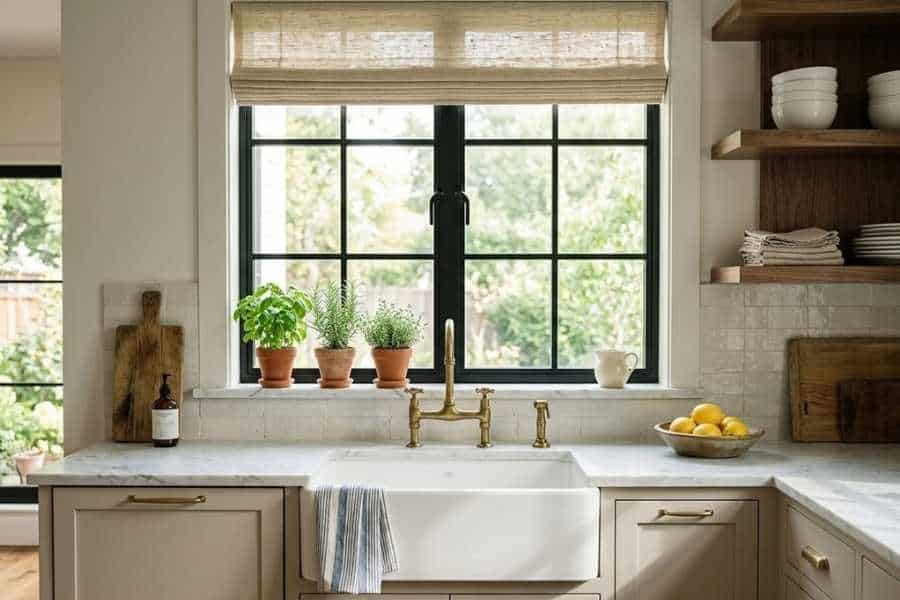
 Kitchen windows usually get treated as an afterthought.
A hole in the wall for light. A spot for a plant. Nothing more.

I think that mindset leaves a lot of design potential on the table.
A window can anchor your whole room.
It can set the tone for your cabinetry, your lighting, and even your layout.
Here’s how I’d suggest you treat it that way.
Why Kitchen Windows Deserve More Attention
A survey of 500 UK homeowners found that natural light ranked as the single most important home feature, cited by 26.4 percent of respondents.
That put it ahead of garden size and open-plan layouts.
Your kitchen benefits from this more than most rooms.
You spend real working time there. Chopping, prepping, cleaning.
Poor light makes every task harder.
Good light makes your room feel bigger without adding a single square foot.
It’s also the cheapest warmth you’ll ever bring into a house, since a sunlit counter does more for the mood of a kitchen than any accessory you could set on it.
Treatments Do More than Block Light
Bare glass isn’t always the answer.
Cooking creates grease, steam, and odors that settle on fabric fast.
The wrong treatment near your stove becomes a maintenance headache within months.
Blinds solve most of this.
They wipe clean, they hold up near heat, and they give you control over light without blocking your window entirely.
If you’re weighing your options for a specific window, this guide to kitchen window blinds walks through styles that fit different kitchen layouts.
Match the Treatment to the Window’s Job
A sink window usually needs partial coverage for privacy without losing your view.
A window over your stove needs something that clears easily and stays out of the way of steam.
I’d also think about texture here, because a woven shade or a soft linen fold softens all the hard surfaces a kitchen already has.
Frame Style Sets the Tone
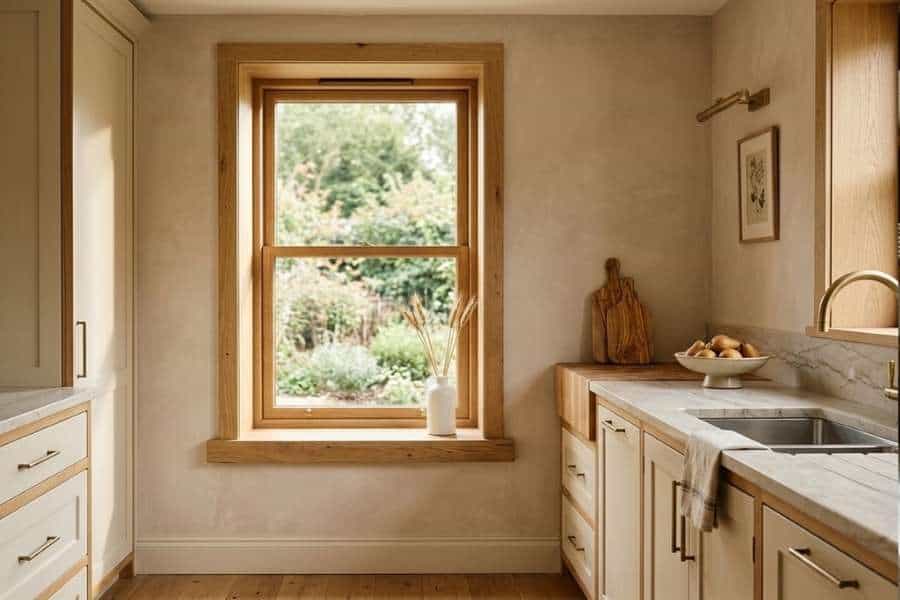
Window frames aren’t neutral.
They carry visual weight, and that weight either matches your kitchen or fights it.
Black steel frames read industrial.
White vinyl frames read clean and traditional.
Wood frames read warm, but they need more upkeep near your sink or stove.
Pick a frame material that matches your cabinet hardware or your lighting fixtures.
Consistency across metals and finishes is what makes a kitchen look designed instead of assembled piece by piece.
That quiet agreement between finishes is usually what people are responding to when they walk in and say your kitchen feels calm.
Window Placement Changes the Whole Layout
Placement decides how your window functions, not just how it looks.
A window above the sink is standard for a reason.
It gives you something to look at during a repetitive task.
But a window doesn’t have to sit above your sink to do real work.
I’d look at these placement options before you finalize a layout:
- A window behind an island seating area, which brings light to a spot cabinets usually block
- A row of small clerestory windows above upper cabinets, which adds light without losing storage
- A corner window where two walls meet, which opens up sightlines in a tight kitchen
- A window as a backsplash, replacing a section of upper cabinets entirely
Each option changes your room differently.
A backsplash window opens things up but removes storage.
A clerestory window adds light with almost no tradeoff, but only works with tall ceilings.
Where you place a window also decides where people naturally gather, and a bright seat at the island is the one your guests will pick every time.
Materials That Hold up in a Kitchen
Kitchen windows face conditions other rooms don’t.
Humidity from cooking. Grease in the air. Temperature swings from your oven.
Vinyl and fiberglass frames resist moisture better than wood.
Tempered glass handles temperature changes near your stove without stressing the seal.
If your kitchen window sits close to a range, ask about heat-resistant glazing before you install anything standard.
Don’t Overlook the Sill
Sill material matters just as much as your frame.
Stone or composite sills resist water damage from condensation.
Wood sills near a sink often show wear within a few years, especially if you don’t keep the caulking maintained.
A sill is also prime real estate for a row of herbs or a small ceramic pitcher, so I’d pick a material you’ll actually want to look at every day.
Small Details That Make a Big Difference
A few finishing touches separate a functional window from a designed one.
Trim color should match or intentionally contrast with your wall color, not sit somewhere in between.
Hardware finish should match your faucet or cabinet pulls.
Even the direction your window opens affects how much counter space you keep clear.
None of these details cost much to get right.
They just take planning before installation instead of after.
That’s the part I find most worth your time, because beauty at home almost always comes from small decisions made early rather than expensive fixes made later.
Make Your Kitchen Window Earn Its Place
A kitchen window is structural, functional, and visual all at once.
Treat it like all three, and it stops being an afterthought.
Get it right and your kitchen stops feeling like a room you work in and starts feeling like the one everybody drifts toward.

Leave a comment