
Most people think about climate control only when something goes wrong.
When a room is too stuffy, a hallway runs cold, or the thermostat sits awkwardly on an otherwise clean wall, that frustration points to something worth exploring.
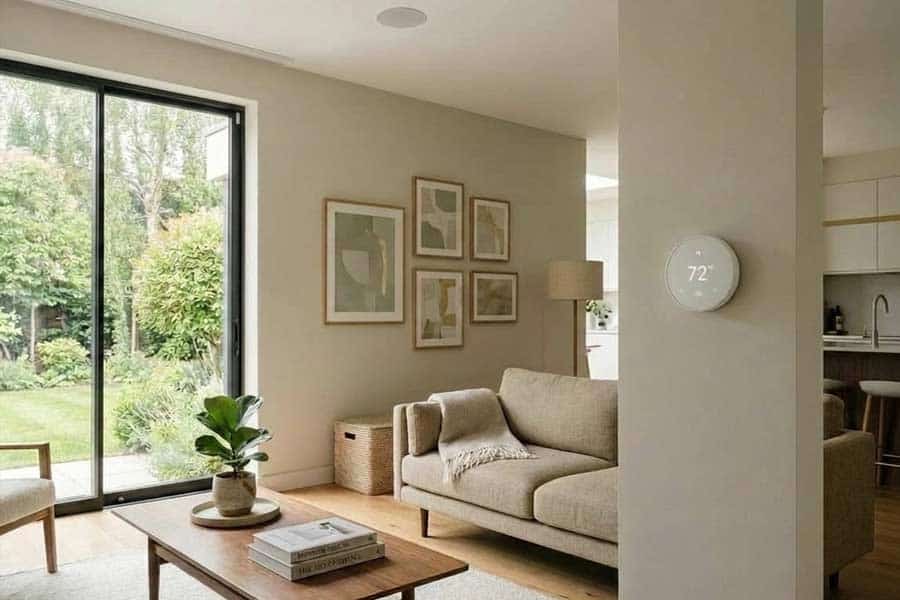
The way temperature management shapes a home’s feel happens long before anyone notices it consciously.
Smart climate control has become one of the more thoughtful decisions in modern home design, and not simply because it keeps spaces comfortable.
When HVAC systems respond intelligently to occupancy, time of day, and personal preference, they change how rooms are used, how layouts are planned, and how much equipment needs to be visible.
The result is a home that feels considered rather than assembled.
For anyone designing or updating a living space today, the connection between smart home integration and interior quality is hard to ignore.
Personalized comfort, quieter operation, and fewer intrusive vents or wall units all contribute to spaces that look and function better together.
Climate performance, in that sense, is no longer a technical afterthought but a genuine layer of design thinking.
Why Smart Climate Control Matters in Design
Smart climate control shapes daily living in ways that go well beyond keeping a room at a comfortable temperature.
The decisions made around HVAC systems, from where equipment is placed to how zones are divided, directly influence how a home looks, how its layout functions, and how much visual clutter ends up competing with the design itself.
Modern design goals tend to favor clean lines, adaptable rooms, and spaces that feel intentional rather than improvised.
Smart climate control supports all of those goals.
When temperature management runs quietly and responds automatically to how a space is used, it removes the need for bulky hardware, constant manual adjustments, and the kind of visible infrastructure that interrupts a room’s visual logic.
The benefits you’ll care about most, including comfort, control, efficiency, and integration with the wider smart home, are also the areas where intelligent climate systems make the clearest difference.
The sections that follow explore each of those areas in terms of what they actually contribute to a well-designed home.
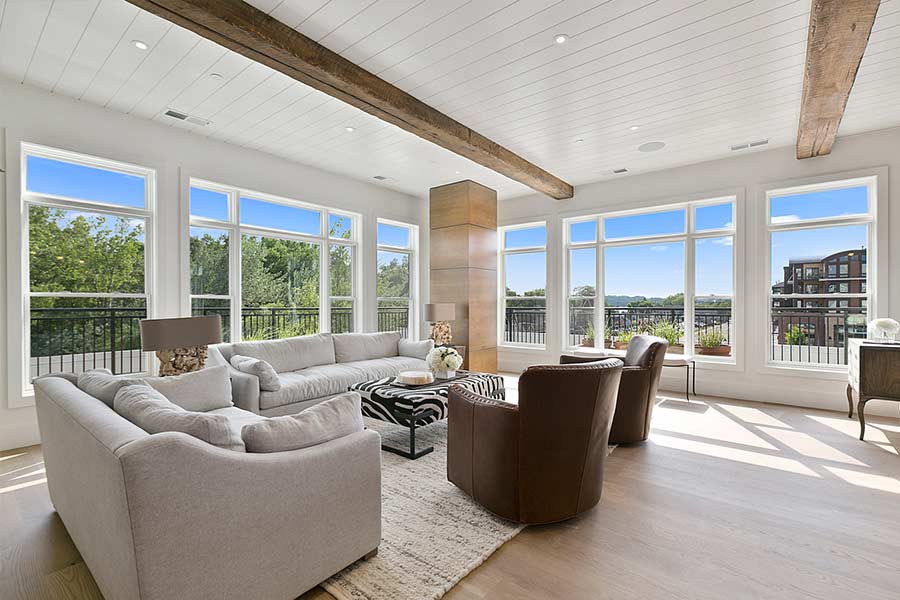
Design Benefits You Feel Every Day
The way a home is lived in rarely matches a single, fixed routine.
Rooms shift in purpose throughout the day, occupancy changes, and the comfort needs of a bedroom at night are nothing like those of a kitchen at noon.
Smart climate systems are built around exactly that kind of variability, and that’s where their design value becomes most apparent.
Design-minded homeowners often need climate planning that matches how different rooms function, which is why professionals like the team at Island Breeze AC approach zoning, equipment placement, and room usage as interconnected decisions rather than separate ones.
Comfort That Follows How Each Room Is Used
A bedroom, a home office, and an open kitchen all have different demands, and not just in terms of furniture.
Each space holds a different level of activity, a different number of people, and a different time of day when it actually gets used.
Smart climate systems respond to exactly those differences.
Through smart sensors and adaptive learning, these systems read how a room is occupied and adjust temperatures without anyone needing to step near a thermostat.
A home office that heats up by mid-morning, or a guest room that sits empty most of the week, gets treated according to what’s actually happening inside it.
That kind of personalized comfort removes the compromise that older systems required, where one setting had to serve every space at once.
Control That Fits Open and Flexible Layouts
Open-plan layouts create a specific challenge for climate management.
Large, connected spaces without clear room divisions make it difficult for a single unit to maintain even temperatures across different zones.
Zoned climate control addresses this directly.
By dividing a home into independent zoned cooling for every room, each area can be managed separately based on use, sun exposure, or occupancy, without affecting the rest of the home.
Multi-story homes benefit from this especially, since heat rises and ground floors tend to stay cooler.
Remote control, voice control, and scheduling tools extend this flexibility further.
Through home automation, you can adjust climate zones from another room or before you arrive home, keeping comfort consistent without interrupting the flow of the space.
How Climate Tech Supports a Cleaner Interior
The visual quality of a room depends on more than furniture and finishes.
The hardware that supports a home’s systems, including climate control, plays a real role in whether a space feels resolved or cluttered.
Fortunately, modern smart climate control has moved in a direction that works with interior design rather than against it, both in terms of what can be seen and what can be heard.
Less Visible Hardware, Less Visual Disruption
One of the quieter shifts in modern home design is how much less HVAC equipment actually needs to be seen.
Older systems often required bulky wall units, exposed ductwork, or oversized vents that interrupted a room’s visual logic.
Newer approaches to smart climate control work with the architecture rather than against it.
Compact controls and flush-mounted vents sit within walls and ceilings without drawing attention.
The way heating systems reshape interior layouts frees up wall space and reduces the need for visible hardware entirely.
A smart thermostat, when well-placed or embedded into a home’s interface panel, reads more as an intentional design detail than a functional interruption.
For minimalist and modern interiors especially, this matters a lot.
Every visible object in a clean room carries visual weight, and temperature management components that disappear into their surroundings contribute to spaces that feel resolved and uncluttered.
I’d also say that when your climate hardware blends into the room, your decor gets to do the talking instead.
Quiet Performance Protects the Mood of a Room
Beyond what can be seen, smart home comfort also depends on what can be heard.
HVAC systems that cycle loudly, rattle, or hum at unpredictable intervals break concentration, interrupt sleep, and flatten the ambiance a room is meant to create.
Modern smart climate control systems are designed with noise levels as a performance measure, not an afterthought.
In bedrooms, media spaces, and work areas, quiet operation supports the conditions those rooms are built around.
A living room set up for conversation or a home office designed for focus both depend on acoustic consistency.
When temperature management runs unobtrusively in the background, the room can simply do what it was designed to do.
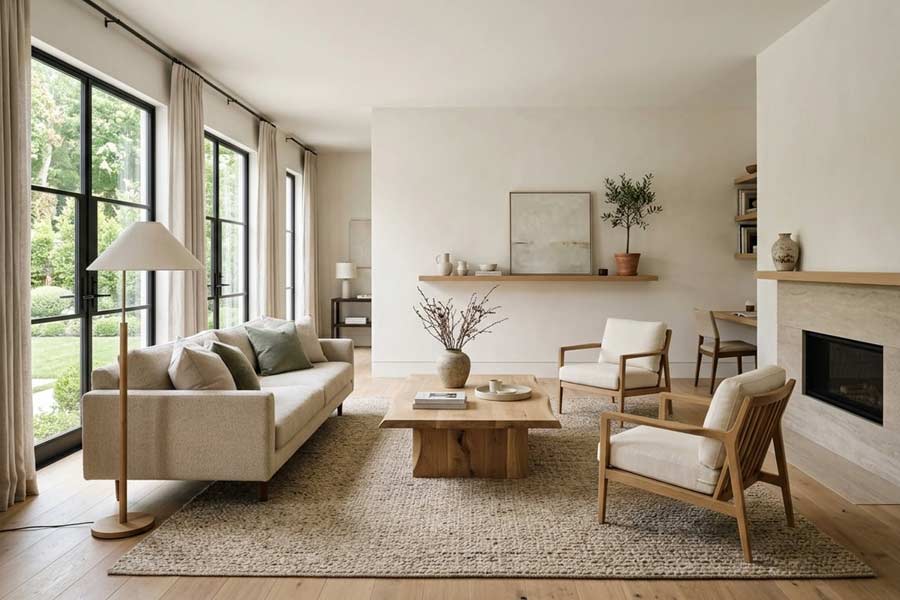
Efficiency and Air Quality Raise the Standard
Smart climate control adds more than comfort to a home.
When energy efficiency is built into how a system operates, the long-term picture improves considerably, both for household costs and for sustainable living.
ENERGY STAR data suggests that smart thermostat use can generate meaningful energy savings on heating and cooling costs, which represents a real return on a design investment that also happens to look and function better than its predecessors.
The benefits extend beyond the utility bill.
Indoor air quality has become a defining factor in how livable a home actually feels, and smart systems increasingly manage both temperature and air quality within the same framework.
Filtration settings, humidity monitoring, and ventilation schedules can all be coordinated through a single interface.
For households where wellness and long-term comfort are part of the design brief, that kind of air quality management moves climate control from a background utility into something closer to a home health feature.
Taken together, energy efficiency and air quality represent the performance layer that turns a smart thermostat into a long-term design asset, not simply a more convenient dial.
Frequently Asked Questions
How Does Smart Climate Control Improve Home Design?
Smart climate control reduces the need for visible hardware, supports zoned temperature management across different rooms, and allows HVAC systems to respond to how spaces are actually used.
The result is a home that feels more considered, with fewer intrusive components competing for visual attention.
Can Smart Climate Control Help Reduce Energy Costs?
Yes, and meaningfully so.
Systems that use adaptive scheduling, occupancy sensing, and smart thermostat technology avoid heating or cooling spaces unnecessarily.
That efficiency translates into energy savings over time, particularly in homes with multiple zones or varied daily routines.
Is Smart Climate Control Worth It for Smaller Homes?
Smaller homes benefit from smart climate control in different but equally practical ways.
Quieter operation, more accurate temperature response, and better air quality management all improve your daily comfort regardless of square footage.
Energy efficiency gains also stay relevant, since smaller spaces can still lose energy through inconsistent or oversized systems.
The Real Difference Is How Your Home Feels to Live In
Modern home design has always been about how a space makes you feel, not just how it looks on first impression.
Smart climate control earns its place in that conversation because it contributes to both.
When personalized comfort, quiet performance, zoning flexibility, and energy efficiency work together within a thoughtfully designed space, the result is a home that functions as well as it appears.
I think that’s what good design really comes down to: every system working quietly in the background so your home can simply feel like yours.
Temperature management, at its best, disappears into the background, leaving your rooms to do exactly what they were designed for.
That’s the standard modern home design is moving toward, and honestly, it’s a standard worth building to.

Leave a comment