
Before hiring a custom home builder, ask seven targeted questions covering licensing, warranty registration, portfolio relevance, contract type, building envelope performance, subcontractor management, and post-occupancy service.
Strong answers reveal technical competence and contractual transparency.
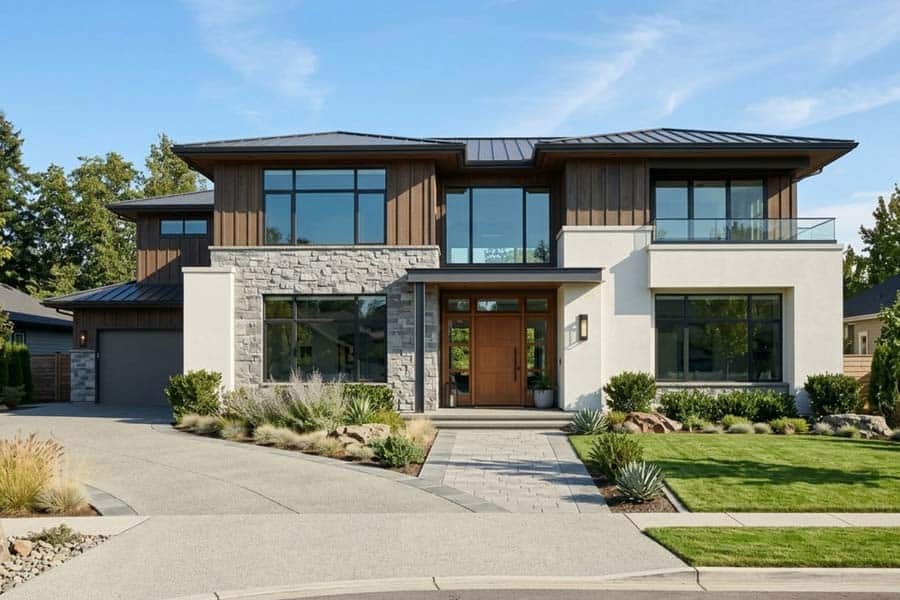
Weak or vague responses signal risk.
These questions move the conversation past pricing and into construction quality, protecting your investment across the entire project lifecycle and the decades of ownership that follow.
The decisions made at this stage quietly shape everything from your floor plan flow to the finishing details that make a home feel truly designed rather than just built.
Why This Decision Matters More Than You Think
Hiring the wrong contractor is the single most expensive mistake you can make on a residential project.
Most prospective clients walk into initial meetings armed with generic questions about timeline and price per square meter, which any competent salesperson can answer smoothly.
The harder questions, the ones that separate qualified custom house builders from polished marketers, rarely get asked at all.
The reality is that selecting a custom home builder deserves the same careful approach applied to commercial construction.
Experienced firms building high-performance residential projects, including McKinley Masters, document their processes transparently and welcome technical scrutiny.
Published service standards, warranty structures, and building science protocols offer a useful baseline for what professional answers should sound like.
And I’d add this: the builder you choose doesn’t just affect your budget or your timeline.
They shape how your home looks, how it feels to live in, and how well every decor choice, finish, and detail holds up over the years.
Foundational Questions for Vetting a Custom Home Builder
The first tier of vetting confirms that a contractor meets baseline legitimacy standards.
These questions are non-negotiable, and any hesitation in the response should raise a flag.
Strong firms answer with documentation in hand, not verbal reassurances.
Licensing, Insurance, and Warranty Program Registration
Ask for proof of current business licensing, commercial general liability coverage of at least two million dollars, and active registration with the applicable provincial new home warranty program.
In provinces such as Alberta and British Columbia, warranty enrollment is a legal requirement for residential builders.
Request the policy numbers directly and verify them with the issuing bodies.
Reputable custom house builders treat this request as routine rather than intrusive.
Portfolio Relevance and Project Scale Alignment
Portfolio size matters less than portfolio relevance.
A firm that primarily delivers mid-market infill projects may not have the detailing experience required for a complex acreage build, and the same is true in reverse.
Request three completed projects that match your scope in square meters, site conditions, and finish tier.
This is also a great opportunity to get a feel for their design sensibility, how they handle interior details, and whether their approach to finishes and decor aligns with your vision for your home.
Key portfolio questions include:
- How many projects of similar scale have you delivered in the past five years?
- Can we visit a completed home and speak with the owner directly?
- Who was the lead site supervisor, and are they still with the company?
Financial Stability and Client Reference Depth
A contractor’s financial health directly affects your project.
Delayed supplier payments cascade into schedule slippage and trade walk-offs.
Ask how long the company has operated under its current legal entity, whether it has ever filed for creditor protection, and how it structures deposit funds.
Tip: Request references from projects completed three to five years ago, not just recent handovers.
Long-term references reveal how the contractor handles warranty obligations once the final invoice clears.
Technical and Contractual Questions Most Clients Overlook
This second tier separates experienced contractors from those who rely on charm over competence.
The questions below dig into construction methodology and contractual fairness, areas where weaker firms tend to deflect or go vague.
Contract Type, Allowances, and Change Order Methodology
Contract structure dictates how risk is shared.
Fixed-price agreements shift uncertainty to the contractor, while cost-plus arrangements require transparent bookkeeping and trust.
Ask how allowances are calculated, whether markups on change orders are disclosed in writing, and how overruns on trade contracts flow back to you.
| Contract Type | Risk Holder | Transparency | Best Fit |
| Fixed Price | Contractor | Moderate | Defined scope, complete drawings |
| Cost Plus Fee | Client | High | Evolving scope, premium finishes |
| Guaranteed Maximum | Shared | High | Larger builds with a cost ceiling |
Building Envelope Performance and Air Tightness Targets
High-performing firms speak fluently about envelope science.
Ask what air-tightness target, measured in air changes per hour at 50 pascals, the company commits to contractually.
National Building Code minimums sit around 2.5 ACH50, while performance-focused luxury home builders routinely deliver 1.0 ACH50 or tighter.
Confirm whether a blower door test is included and who retains the results.
A well-sealed, properly ventilated home also holds its temperature more evenly, which matters more than you might think when it comes to how comfortable your living spaces actually feel day to day.
A home that breathes and holds temperature well is also one where your decor, furniture, and finishes are far less likely to warp, fade, or wear prematurely.
Mechanical Systems, Commissioning, and Subcontractor Management
Tight homes demand properly engineered ventilation.
Request confirmation that HRV or ERV units are sized by a certified designer and commissioned with balanced airflow measurements at handover.
Ask how subcontractors are selected, whether they are long-standing partners, and how warranty callbacks are coordinated between trades.
Together, these questions reveal whether the technical execution actually matches the marketing presentation.
Protecting Your Custom Home Investment Through Post-Occupancy Support
The final questions address what happens after the keys change hands.
Construction quality reveals itself over seasonal cycles, and the contractor’s service approach during years two through ten often matters more than the build phase itself.
Warranty Structure and Deficiency Response Timelines
Provincial warranty programs set minimum coverage, typically one year on workmanship, two years on mechanical and envelope components, and ten years on structural defects.
Ask how the company goes beyond these minimums and what response timelines are committed to in writing.
A serious firm publishes a deficiency protocol with target response windows rather than vague assurances.
Clarifying questions worth asking include:
- What is the documented response time for urgent items such as water intrusion?
- Who manages warranty claims internally, and is that role separate from sales?
- How are seasonal deficiencies, such as drywall cracking, handled after the first heating cycle?
Seasonal Callback Programs and Long-Term Service
Quality-focused firms schedule proactive callbacks rather than waiting for complaints.
A structured eleven-month review, completed before the first anniversary, catches settlement issues while formal coverage is still active.
Ask whether this visit is standard and what documentation you receive afterward.
Documentation, As-Built Records, and Homeowner Handover
Complete handover packages include as-built drawings, equipment manuals, commissioning reports, warranty certificates, and a maintenance calendar.
These records preserve your home’s resale value and make future renovations a lot easier to plan and execute.
I’d also say they give you a much clearer picture of your home from the inside out, which is something most homeowners don’t think about until they’re in the middle of a renovation and wishing they had it.
What to Look for When Choosing the Right Builder for Your Home
Strong hiring decisions rest on structured inquiry rather than gut feel.
The seven questions covered above move the conversation from surface-level credentials into contract mechanics, envelope science, and post-occupancy accountability, which is where real construction quality lives.
Apply this framework consistently across every shortlisted firm, document the answers, and compare them side by side.
A qualified custom homes builder will welcome this level of scrutiny and respond with written evidence at every step.
And when you find the right one, you’re not just protecting your budget.
You’re setting the foundation for a home where the structure, the craftsmanship, and every decor decision you make from that point forward all work beautifully together.
Leave a comment