
Neutral interiors give you a timeless, serene canvas for any modern home, yet they can sometimes feel a bit cold, flat, or sterile without the right textures.
If your living space leans heavily on crisp whites, soft grays, and sleek metals, I’d say adding organic texture is the fastest way to bring in real warmth and visual depth.
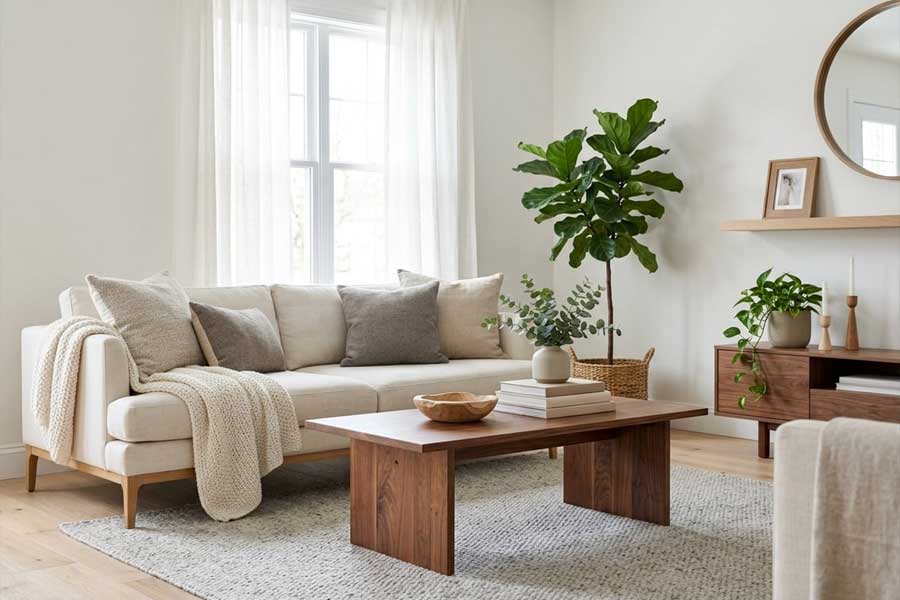
Whether you’re adding a statement piece like a solid wood dining table or a beautiful epoxy computer desk, natural wood brings the grounding essence of the outdoors right into your daily environment.
I’ve watched a single wood piece turn an ordinary room into a cozy, inviting space you’ll actually want to linger in.
The Power of Contrast: Balancing Cool Neutrals with Organic Warmth
The Contrast Effect:
Pairing your stark white walls or concrete gray floors with rich, deep-toned timber creates a striking balance that keeps a room from looking flat and lifeless.
Layering Textures:
Combine smooth wooden surfaces with woven textiles, wool throws, and linen drapes to wake up multiple senses and build a layered look.
Breaking Monotony:
Monochromatic spaces often lack character, and I’ve found a distinct wood grain breaks up a monotone scheme better than almost anything else.
Balancing a minimalist color palette takes an intentional approach to texture, so every piece of furniture you own earns its place both practically and visually.
Your cool neutral backdrop acts as a quiet stage, letting the grain patterns, knots, and warm undertones of natural timber really show up.
When you blend soft fabrics with rigid, organic elements on purpose, you lose the clinical feeling that trails so many ultra-modern rooms.
What you get instead is a space that feels curated and genuinely livable.
Touch matters more in a home than we usually give it credit for, and wood offers a tactile quality that manufactured materials just can’t fake.
I think that’s the real reason wood reads as warmth. Your hand registers it before your eye does.
Choosing the Right Wood Tones for Your Color Palette
Light Woods (Maple, Birch, Ash)
Perfect for Scandinavian and coastal styles, reflecting light to keep your smaller rooms feeling open, airy, and bright.
Medium Woods (Oak, Walnut)
Versatile and classic, these tones bridge contemporary and traditional looks without overpowering your room.
Dark Woods (Mahogany, Espresso Stains)
Add dramatic contrast, polish, and a moody, grounded feeling to larger, well-lit spaces.
Mixed Tones Strategy
Thoughtfully blending light and dark woods adds real depth, as long as they share similar undertones.
| Wood Tone | Best Paired With | Ideal Room Style | Maintenance Tip |
| Light Oak | Soft whites, beige, cream | Scandinavian / Minimalist | Dust regularly with a microfiber cloth |
| Rich Walnut | Warm gray, taupe, charcoal | Mid-Century Modern | Avoid direct, harsh sunlight exposure |
| Aged Pine | Soft pastels, muted greens | Rustic / Farmhouse | Use coasters to prevent water rings |
Picking the right timber finish keeps everything feeling harmonious from room to room.
Mixing wood finishes is a popular move that adds character, but I’d tell you it takes a careful eye to hold the whole thing together.
Matching your undertones, whether warm golden hues or cool ash grays, anchors the space and keeps your design looking deliberate rather than accidental.
I’d also watch how natural light hits different stains through the day, since morning light can completely change how a finish reads in your living room.
That’s worth sitting with before you commit. A wood you love at noon may feel like a different piece entirely at dinner.
Strategic Placement: Where to Introduce Natural Wood Accents
Functional Centerpieces
Anchor your living room or workspace with substantial wooden furniture that draws the eye without crowding your floor plan.
Subtle Architectural Details
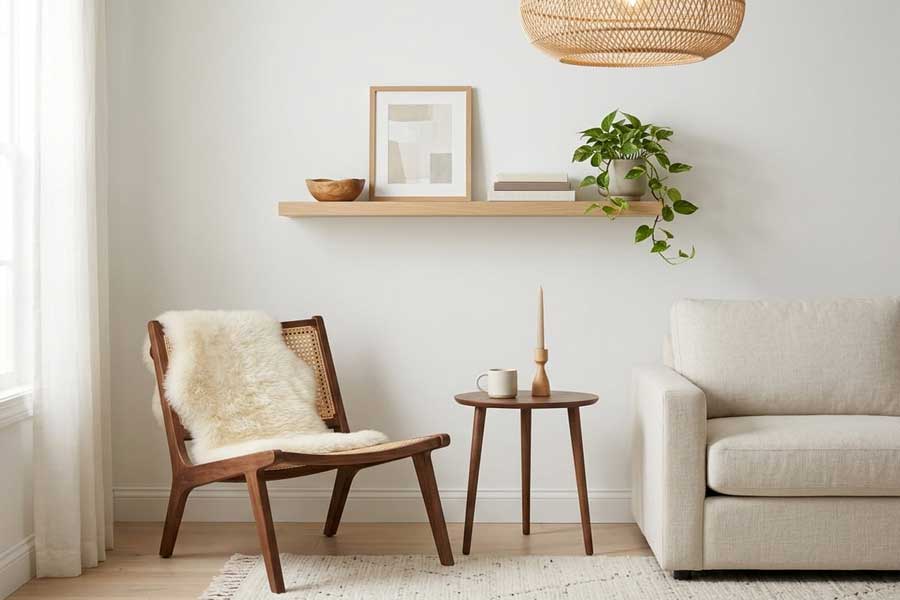
Use floating shelves, exposed ceiling beams, or wooden window frames to pull the eye upward and frame your room naturally.
Decorative Accessories
Work in smaller touches like carved bowls, wooden picture frames, or accent trays on your coffee table and kitchen counters.
Lighting Fixtures
Add wooden pendant lights or lamp bases to spread a warm, organic glow across your neutral walls.
Where you place your wooden pieces shapes how light and space move around them.
Instead of filling a room with a matching heavy timber set, I’d spread your organic elements across different heights and corners.
A warm wooden accent chair in an empty corner or a floating oak shelf above your neutral sofa creates a flow that feels effortless and professionally styled.
When every wooden piece has a clear purpose and visual weight, your room stays open while the natural materials do more work.
I’ve noticed those small wooden accessories carry the most warmth per square inch, because they’re the pieces guests actually pick up and turn over in their hands.
Maintaining Balance: Keeping Your Neutral Space Airy and Bright
Embrace Negative Space
Don’t overcrowd your rooms, and leave real breathing room around your large wooden statement furniture.
Integrate Living Greenery
Pair your wood elements with houseplants to reinforce the organic theme and add fresh pops of natural color.
Optimize Natural Lighting
Keep your window treatments sheer and unobstructed so sunlight bounces off wooden surfaces and fills the whole room.
Reflective Surfaces
Place mirrors opposite your windows to spread the warmth reflecting off your wooden floors or furniture.
Keeping an airy feeling matters most when you’re working with rich, heavy materials like solid wood inside a neutral scheme.
Over-decorating can smother a room fast, turning your cozy retreat into a cramped storage space.
By keeping layouts clean, letting plenty of light through, and pairing your wooden pieces with fresh botanical accents, you hold onto that breathable elegance.
Small adjustments help too, and I’d start with raising furniture onto slender legs so your floor stays visible and the room doesn’t feel weighed down.
Empty space isn’t wasted space in your home. It’s what gives your best pieces room to be noticed and gives your guests room to relax.
Building a Home That Feels Warm for Years
Bringing natural wood into your neutral interior is really the bridge between modern minimalism and rustic comfort, and it turns cold rooms into genuinely welcoming ones.
By choosing complementary wood tones, placing your accent pieces with intention, and balancing heavy textures with light and open space, you end up with a home that feels curated and completely natural at once.
Whether you’re updating your home office or setting up to create a suitable place for meetings, organic materials keep your interior timeless, stylish, and comforting for years.
That’s the part I’d hold onto. A room styled around real materials doesn’t just look good in a photo, it keeps feeling good to walk into every single day.

Leave a comment