
Walk through East Nashville on a fall afternoon and you’ll notice the porches first.
Deep, square-columned, painted in soft greens and creams.
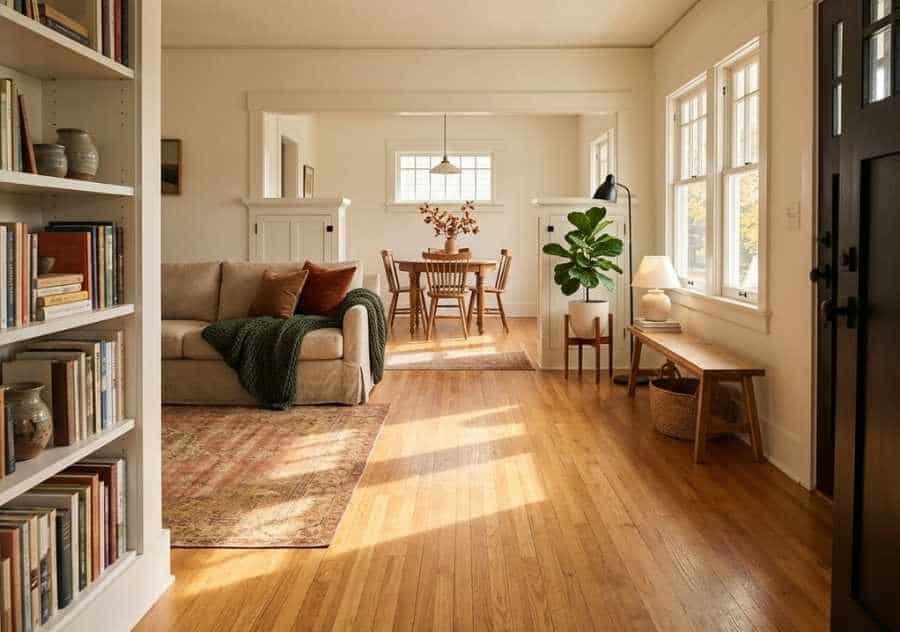
Then someone opens a front door, and you see the floors.
Honey-toned oak. Narrow boards that run straight from the entry to the back of the house.
A soft glow that only decades of footsteps, family gatherings, and wax can give.
I’ve always thought those floors are the real heart of a bungalow.
The good news is you can borrow the look, even if your house was built last year.
Why East Nashville Bungalows Have Such Good Floors
A lot of East Nashville was rebuilt in a hurry.
On March 22, 1916, a fire swept through the area and destroyed more than 600 homes and buildings, according to the Nashville Public Library.
What grew back was a streetcar neighborhood of practical, handsome houses.
The Nashville Historical Foundation notes that nearby East End developed between 1880 and 1945, with styles ranging from Craftsman to Queen Anne.
Craftsman builders loved honest materials.
That meant solid wood floors, simple trim and nothing fussy.
Many of those floors are still there, refinished more than once and looking better with age, and I think that’s why they feel so welcoming when you walk in.
That’s the look we’re after. Warm, slightly worn, and completely unpretentious.
What to Know Before Flooring Installation in Nashville
If you live in or around Nashville, the local climate matters as much as the style.
Middle Tennessee summers are hot and humid, and older homes often sit on crawlspaces rather than slabs.
Both can affect how wood behaves.
That’s why I always suggest talking through your subfloor and moisture situation before you fall in love with a specific plank.
When you’re comparing options for flooring installation in Nashville, ask to see samples inside your own home.
A golden oak can look completely different under your lamps at night than it does in a bright showroom.
I’d also ask whether the installer will check and level an older subfloor before anything goes down, because that step makes or breaks a vintage look.
Outside Nashville, the same questions apply.
Your climate and your subfloor should guide the material, and your taste should guide the color.
Original Oak vs. Engineered vs. Vinyl Plank
Here’s where the knockoff part comes in.
You have three realistic ways to get the bungalow look.
Solid Oak vs. Engineered Hardwood
Solid oak is the original.
It can be sanded and refinished many times, which is exactly why so many old bungalow floors survive.
Engineered hardwood has a real wood top layer over a stable core.
It handles humidity swings better than solid wood, which makes it a smart pick in muggy climates or over crawlspaces.
From a standing position, most of your guests can’t tell the difference.
If you want the authentic feel and a long life, I’d choose engineered over solid for most homes today.
Engineered Hardwood vs. Luxury Vinyl Plank
Luxury vinyl plank is the budget-friendly knockoff.
Good ones copy the grain of oak surprisingly well, and they’re waterproof.
The trade-off is depth.
Vinyl can’t develop that soft patina over time, and it can’t be refinished.
For kitchens, mudrooms and busy households with pets, though, it’s a really practical way to carry the wood look through your whole house so every room feels connected.
My rule is simple. Use real wood where you live, and vinyl where you spill.
The Stain Shade That Reads Bungalow
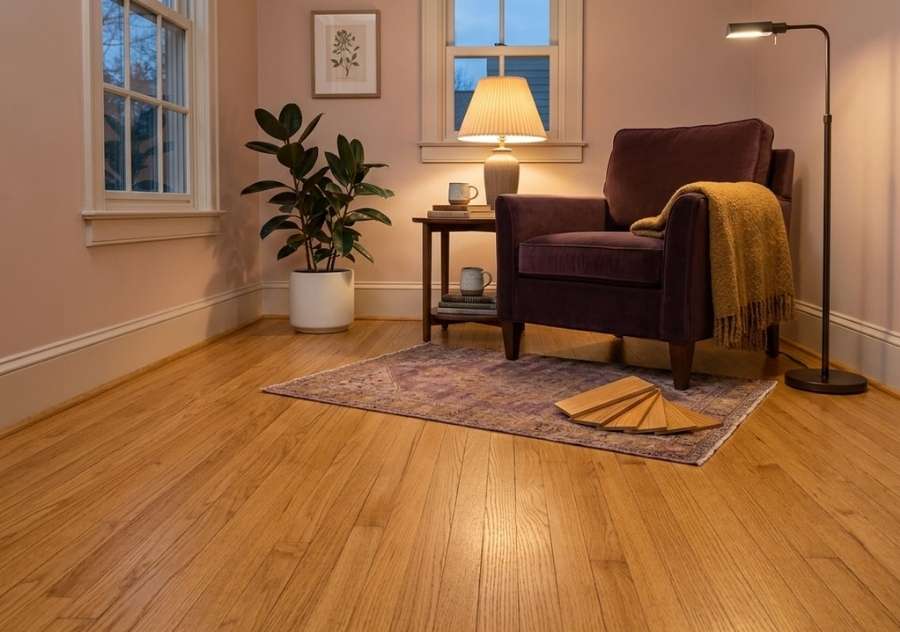
Color is where most bungalow knockoffs go wrong.
Too gray looks modern. Too orange looks dated.
The sweet spot is a warm honey or golden tone with visible grain.
Think natural red or white oak with an amber oil finish, or a light “golden oak” stain applied thin.
I love how that golden tone catches lamplight and makes your evenings at home feel softer.
A few tips I swear by:
- Choose narrow boards rather than extra-wide planks. Narrow strips feel more period-correct.
- Pick a satin or matte finish. High gloss reads too new.
- Run boards in one continuous direction through connected rooms.
- Skip heavy hand-scraping. Original floors are worn, not distressed.
Keep the Wood Calm through the Seasons
Warm wood floors look best when they stay flat and tight.
That depends a lot on moisture.
Wood is always trading moisture with the air.
Purdue Extension explains that lumber for interior use is typically dried to 6 to 8 percent moisture content, and that floors can crack after a long winter of dry, heated air.
The fix is steady indoor humidity.
The EPA’s moisture guide recommends keeping it below 60 percent, ideally between 30 and 50 percent.
A cheap hygrometer will tell you where you stand, and a humidifier or dehumidifier can do the rest, which I’ve found makes the whole house feel more comfortable, too.
If you’re in Nashville, you have one more thing to watch.
Red clay tracked in from outside acts like fine grit on a finish.
A sturdy, good-looking doormat at every entrance and a quick daily sweep go a long way.
Walls, Rugs and Trim That Warm It All Up
Floors carry the look, but the room around them finishes it.
For walls, I love soft, warm neutrals with a hint of history.
Sherwin-Williams Alabaster and Benjamin Moore White Dove are both creamy whites that flatter honey oak.
If you want color, Sherwin-Williams Evergreen Fog brings in the muted green you see on so many East Nashville porches, almost like carrying that front-porch welcome inside.
For trim, keep it simple. Painted trim in the same creamy white feels fresh.
Stained trim that echoes the floor feels more traditional.
Then layer in textiles.
A faded wool rug, a vintage runner in the hallway, and maybe a braided rug by the back door.
Rugs protect your floor and add that lived-in softness bungalows are known for, the kind that makes you want to kick off your shoes.
Finally, add a few original-style details.
Simple brass or black hardware, a wooden bench by the door, and a houseplant or two on a plant stand.
Make It Look Like It Was Always There
The best bungalow floors don’t shout.
They glow quietly in the background and make everything else in the room look warmer.
Start with a material that suits your climate, choose a honey-toned finish, and keep the boards narrow and continuous.
Then add creamy walls, a few worn-in rugs and simple trim.
Give it a year of real life, from muddy boots to holiday dinners, and your new floor will look like it’s been there all along.
So, I’d love to know, are you going with real oak, engineered wood or a clever vinyl knockoff?

Leave a comment