
A sunny patio can look inviting from inside your house, then feel uncomfortable once you step outside.
Direct afternoon sun, glare from hard surfaces, humid air, and overheated furniture can turn a promising outdoor area into a space that rarely gets used.
That challenge is common in seasonal regions like southeastern Pennsylvania, where patios need to handle warm summers, rainy afternoons, cool evenings, and shifting sun exposure from spring through fall.
In Berks County, for example, your patio may need shade during a hot July afternoon, light weather protection during a passing shower, and enough flexibility to stay comfortable later in the season.
I’ve found the best outdoor rooms are planned around comfort first.
Your furniture, plants, rugs, and lighting all work better when the space already has shade, airflow, and a clear purpose.
If children use the garden, that purpose often includes somewhere to play.
A small climbing frame or swing set placed just off the patio keeps the seating area calm and gives the kids a zone of their own.
Playground equipment supplier catalogues also cover safety surfacing and the clear space needed around each piece, which matter more than the equipment itself when room is tight.
Study the Sun Before Rearranging Your Patio
Before choosing furniture or decor, watch how the sun moves across your patio at different times of day.
A space that feels pleasant in the morning may become too bright or hot by midafternoon.
The direction of your patio, nearby trees, rooflines, fences, and neighboring buildings all affect how much shade the area receives.
West-facing patios often need the most attention because they receive strong afternoon sun.
South-facing patios can stay bright for long stretches in summer.
Patios near glass doors or large windows may also increase glare inside nearby kitchens, dining rooms, or living rooms.
Seasonal changes matter too.
A spot that gets natural shade in early spring may be fully exposed by midsummer.
Instead of planning around one weekend or one season, focus on how your patio performs during the months when you’ll use it most.
Start by identifying your main activity zone.
This may be near the back door, around a dining table, beside a grill, or in a corner with your best yard view.
Once that area is clear, shade decisions become more precise.
Use Shade to Define Your Outdoor Room
Shade gives your patio structure.
Without overhead coverage, the space can feel like an exposed slab of concrete, brick, stone, or decking.
With the right coverage, it starts to feel like an outdoor living or dining area, the kind of space where you actually want to linger over coffee instead of rushing back inside.
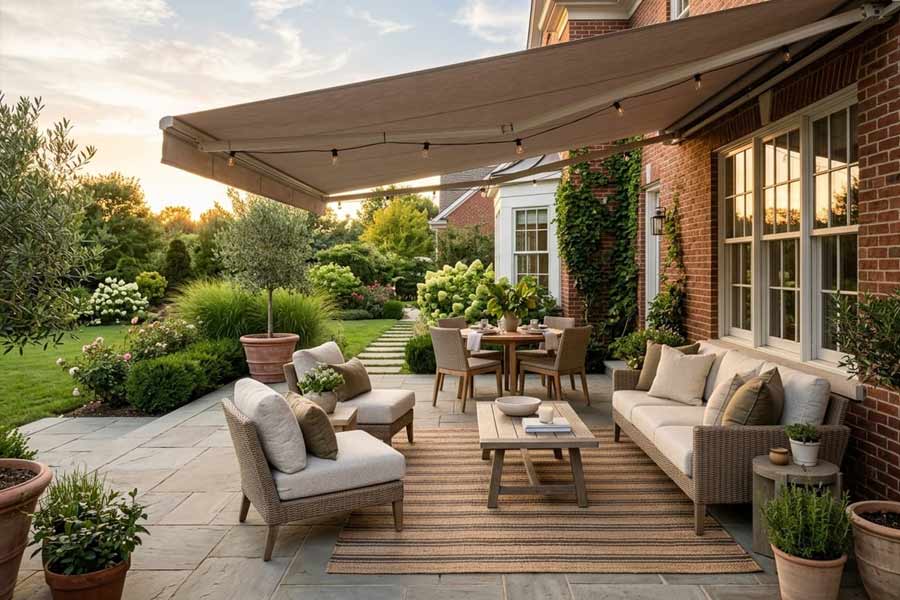
Awnings are useful because they create a defined zone while keeping your patio open on the sides.
They can cover seating, dining, or a walkway near your house without closing off fresh air, yard views, or the connection between indoors and outdoors.
A patio in Arizona might need shade that focuses almost entirely on heat and UV exposure.
A coastal patio may call for materials that stand up to salt air and stronger winds.
With outdoor awnings Berks County PA homeowners use, the challenge is more seasonal, managing harsh afternoon sun, humid summer air, passing rain, and the need to keep your space comfortable from spring through fall.
Placement should follow function.
A dining table usually needs coverage directly overhead.
A lounge area may need shade that extends far enough to cover your chairs during afternoon sun.
A doorway may need protection that makes the transition from inside to outside more comfortable.
When you plan shade early, it helps determine the size of your seating area, your furniture layout, and the overall mood of your patio.
Choose a Style That Matches Your Home
Your patio should feel connected to your house.
The shade structure should complement your exterior through color, shape, scale, and materials.
For a brick home, warm neutral awning colors can soften your patio without clashing with the exterior.
For a house with light siding, deeper tones can create contrast and make your outdoor room feel more grounded.
Homes with black, bronze, or dark trim may look balanced with a frame or fabric choice that repeats those details.
Patterns can work well when used carefully.
Stripes, subtle textures, and classic outdoor fabrics can add interest without overwhelming the space.
If your patio already has patterned cushions, a colorful rug, or plenty of plants, a simpler awning fabric may keep the design calm.
If your patio is mostly neutral, the awning can introduce more character, almost the way a single statement piece can set the tone for an entire room indoors.
Scale is just as important.
An awning that’s too small may leave key seating areas exposed, while one that’s too large can make a modest patio feel heavy.
The best fit covers the area you use most while keeping your yard and surrounding space open.
Retractable designs can help you control shade as conditions change.
Fixed shade may work better for areas that need consistent coverage throughout the day.
Think About Heat, Glare, and Indoor Comfort
Patio shade can affect nearby indoor spaces, especially when your patio sits outside a kitchen, breakfast room, family room, or sliding glass door.
When sunlight hits these areas for hours, glare and heat can make both your patio and the adjoining room less comfortable.
This is most noticeable in summer, when pavers, concrete, stone, and decking absorb heat.
If your patio is uncovered, those surfaces can stay warm long after the strongest sun has passed.
Shade reduces harsh exposure, keeps your outdoor furniture more comfortable to touch, and softens glare on tabletops.
It can also support a cooler feeling near your windows and doors, since solar heat gain through windows can contribute to warmer indoor spaces during cooling season.
For homes in southeastern Pennsylvania, this matters because outdoor rooms often sit close to family gathering spaces.
A shaded patio near your kitchen or living room can make cookouts, casual dinners, and weekend gatherings feel more connected, which is really what a lot of us want from our homes in the first place.
When planning shade, consider the view from inside your home.
The awning or shade feature should frame your patio naturally from the kitchen, dining area, or family room.
Build Your Seating Area Around the Shade
Once your shaded zone is clear, arrange your furniture around it.
This makes your patio feel intentional and puts your most used pieces in the most comfortable area.
For a dining patio, place your table where shade is strongest during the meals most likely to happen outdoors.
If dinner is the priority, study the late afternoon and early evening sun.
If your patio is used for weekend lunches, midday shade matters more.
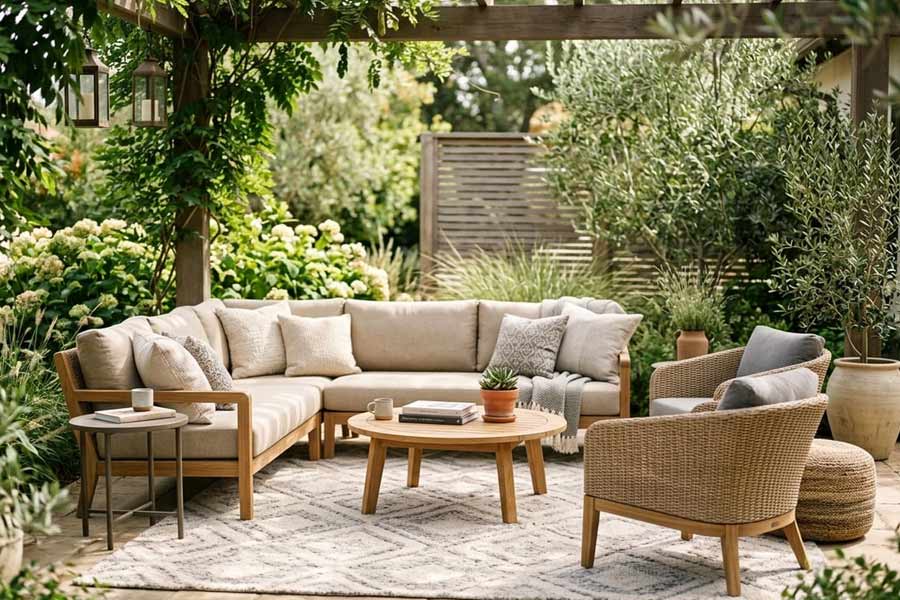
For a lounge area, start with your largest furniture piece, such as an outdoor sofa, sectional, or pair of deep chairs.
Position it where you can sit without squinting or feeling exposed.
Add side tables within easy reach, then bring in smaller pieces such as stools, poufs, or folding chairs for guests.
Leave clear walking paths between your door, seating, grill, steps, and yard.
A patio may look full in photos, but it needs open space to function well.
An outdoor rug can help define the room, especially under a seating group, the same way a rug anchors a living room and makes the whole space feel grounded.
Choose one large enough to sit beneath at least the front legs of your main furniture pieces.
This creates a finished look and helps your shaded area feel distinct.
In humid summer weather, avoid crowding every side of your patio.
Open space around your seating area allows air to move through more easily.
Add Decor That Works with Seasonal Weather
Decor gives your outdoor room personality, but each piece should be able to handle real weather.
In Berks County and the surrounding Pennsylvania region, outdoor decor may face strong sun, rain, damp mornings, pollen, falling leaves, and cool evenings.
Start with fabrics made for outdoor use.
Cushions, pillows, and curtains should resist fading and dry quickly after damp weather.
Lighter colors can keep your seating areas feeling fresh, while deeper colors may hide everyday wear.
A simple mix of solids and one or two patterns can make your patio feel styled without looking busy.
Planters can soften a sunny patio and create privacy.
Use taller plants near the edges of your seating area and smaller containers near tables, steps, or corners.
Choose plants based on the light conditions after shade is added, since a covered area may need different plants than a fully exposed border.
Lighting changes how your patio feels after sunset.
Wall lights, string lights, lanterns, and solar path lights can make the space more useful in the evening.
Warm lighting usually feels softer and more relaxed than bright white light, and it’s often the small detail that makes an outdoor space feel just as inviting as your favorite room inside.
Storage keeps your patio easier to use.
A deck box, storage bench, or weather resistant cabinet can hold cushions, throws, candles, games, and small decor items.
This makes it easier to reset your space after rain or wind.
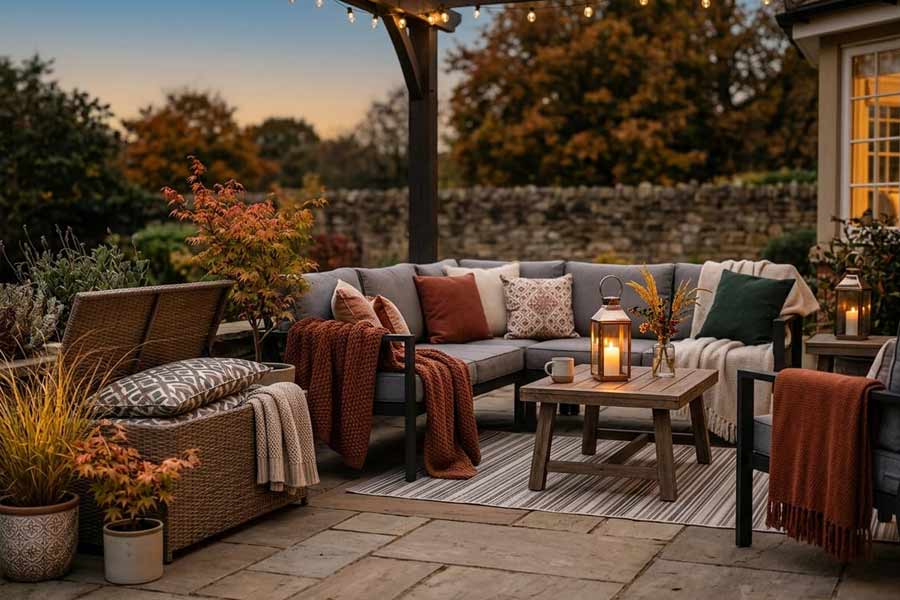
For cooler evenings, keep lightweight throws near your seating area.
These details help extend your patio use beyond the hottest part of summer.
Make Small Upgrades Around Your Covered Area
After your shaded area is planned, the surrounding details can make your patio feel complete.
These upgrades don’t need to be expensive, but they should support how you use your outdoor room.
A narrow privacy screen can make a seating area feel more intimate.
Planters can soften the edge between your patio and lawn.
A side table can make a reading chair more practical.
A serving cart can help during outdoor meals.
Replacing faded cushions or adding coordinated containers can also make your space feel more polished.
Think about your patio from every angle.
It should look inviting from your yard, from inside your house, and from the seating area itself.
If one corner feels empty, add a planter or lantern.
If your dining area feels disconnected, use a rug, lighting, or repeated colors to tie it back to your covered zone.
Once your main covered area is in place, smaller backyard upgrades such as lighting, planters, privacy features, and defined seating zones can help your patio feel more finished.
Avoid adding too many unrelated items.
Each choice should support the same goal, making your patio easier and more comfortable to use.
For a seasonal climate, flexibility is valuable.
Choose pieces that can be moved, stored, cleaned, or updated as the weather changes.
A patio that works in June may need small adjustments in September, and lightweight accessories make those changes simple.
Keep Your Patio Comfortable Through the Season
A sunny patio needs regular care to stay comfortable.
Outdoor rooms collect dust, pollen, leaves, and moisture, so a quick weekly reset can keep your space ready for daily use.
Wipe your tables and chairs often, especially during spring and early summer.
Shake out cushions after storms.
Sweep hard surfaces so dirt and leaves don’t collect around furniture legs or planters.
Check that water drains properly and that rugs dry fully after rain.
As the season changes, adjust your layout.
In peak summer, shade and airflow may matter most.
In early fall, warmer lighting, extra cushions, and throws can make the same patio more comfortable in the evening.
Pay attention to how you actually use the space.
If everyone moves chairs to one corner, that may be your most comfortable spot.
If your dining table is rarely used but your lounge chairs are always occupied, the layout may need to change.
In areas with humid summers and cool shoulder seasons, comfort comes from several practical decisions working together, shade, furniture placement, durable decor, and weather aware maintenance.
Turning Your Patio Into a Space You’ll Actually Use
A sunny patio can become one of the most useful areas of your home when it’s planned around comfort first.
Shade sets the foundation, while your furniture, lighting, plants, rugs, and accessories shape the space into a true outdoor room.
For homeowners in seasonal regions like southeastern Pennsylvania, effective patio design should account for sun, rain, humidity, cooler evenings, and changing use throughout the year.
When shade, layout, and decor work together, your exposed patio can become a comfortable place to relax, eat, entertain, and spend more time outside.

Leave a comment