
In the Bay Area, replacing a water heater is rarely as easy as switching out one unit for another.
I hear this from HVAC, plumbing, and electrical contractors regularly: the unit cost is rarely the complete story.
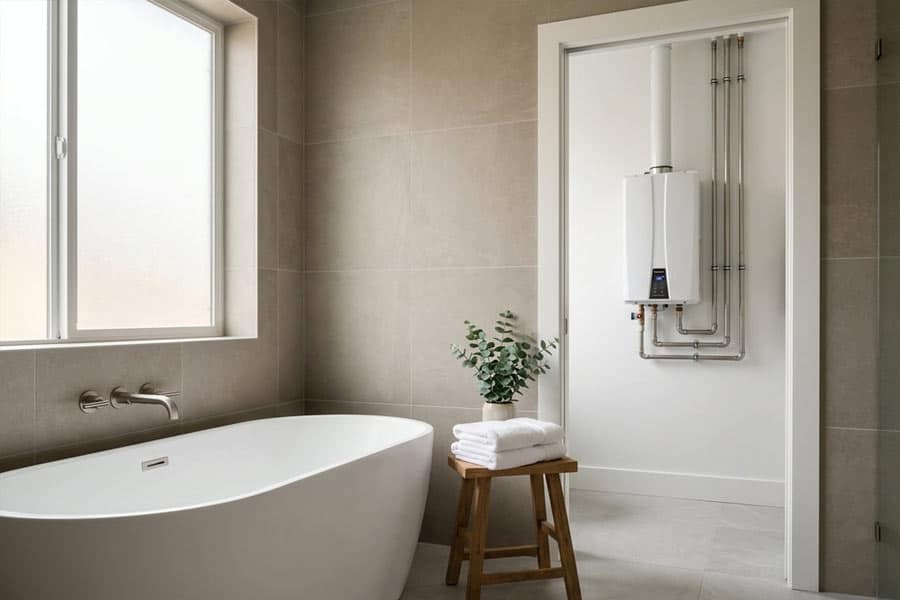
Labor, permits, and the specific quirks of your property can push the final bill well past what any online estimate suggests.
That’s especially true when you’re weighing a tankless system against a traditional storage tank.
The Bay Area has its own pricing reality.
High labor rates, strict municipal permitting requirements, and older housing stock all play a role.
Water heater specialists in the region consistently flag that homeowners underestimate the gap between the sticker price and the installed price for both system types.
Understanding where that money actually goes makes the decision much easier, and I’ll walk you through exactly that.
Water Heater Types in Bay Area Homes
The two main options are storage tank heaters, the familiar cylinders most of us grew up with, and tankless on-demand units that heat water only when you need it.
Gas and electric variants exist for both.
In the Bay Area, natural gas remains the dominant fuel source for water heating, though electric heat pump water heaters are gaining traction given California’s energy incentives.
Your choice here will shape not just your energy bills but how your home functions day to day, which is worth thinking through carefully before committing.
Average Installation Costs in the Bay Area: 2026 Market Overview
For a standard 40 to 50-gallon gas storage tank, you can expect to pay somewhere between $1,100 and $2,200 installed, depending on the brand and whether any code updates are required.
That’s a relatively contained number.
Tankless water heater installation cost sits in a different bracket.
A whole-home gas tankless unit typically runs $1,800 to $3,500 installed, and in San Francisco proper, where labor costs spike, it can push even higher.
Electric tankless systems are often cheaper upfront but may require panel upgrades, which can quietly inflate your total.
Comparing tankless vs traditional water heater cost at face value will mislead you.
The gap at installation is real, but it’s only part of the equation.
Hidden and Often Overlooked Installation Expenses
Permits alone can run $150 to $400 in Bay Area jurisdictions.
Upgrading gas lines for a tankless unit, which demands higher BTU input, adds another $300 to $700.
If the installation requires new venting, tankless units use different exhaust configurations, budget an extra $500 or more.
Older homes present additional surprises.
Seismic strapping requirements, corroded shut-off valves, and outdated flexible connectors all come up during installs and get added to your invoice.
I’ve seen these extras catch homeowners completely off guard, so it’s worth asking your contractor to flag potential add-ons before work begins.
Long-Term Cost Comparison: Which System Saves More Money?
Tankless units are 24 to 34% more energy-efficient than storage tanks for homes that use under 41 gallons of hot water daily, according to the U.S. Department of Energy.
In the Bay Area, where gas costs are above the national average, that efficiency gap translates to meaningful savings of roughly $80 to $150 per year for most households.
Storage tanks have a lifespan of 10 to 15 years.
A quality tankless unit can last 20 years or more.
Spread the higher upfront water heater installation cost across a longer lifespan and the per-year cost begins to look a lot more competitive.
For homeowners who’ve put real thought into how their home looks and functions long term, that kind of durability is worth factoring in alongside the upfront price.
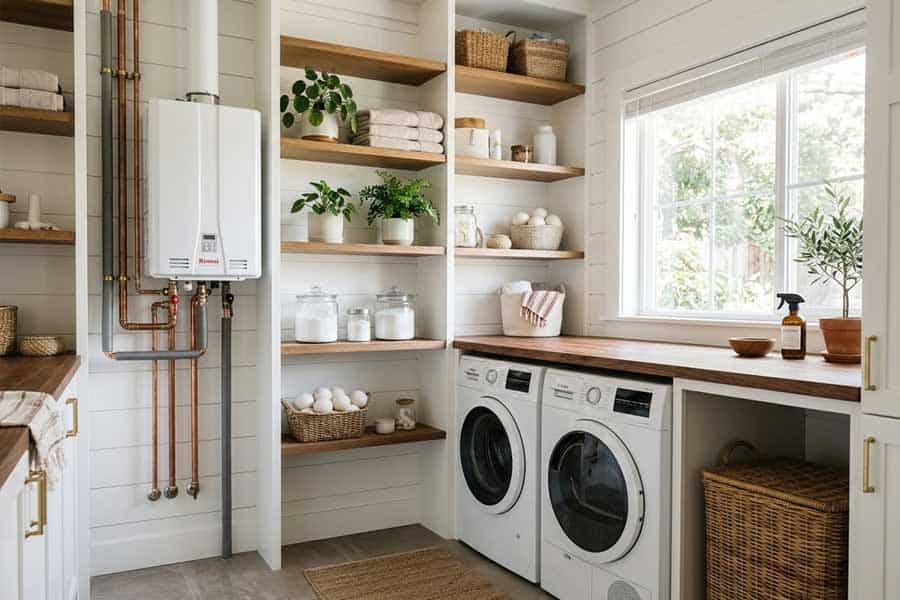
Performance Differences That Impact Real Value
A storage tank delivers hot water instantly since it’s already sitting there heated.
Tankless units have a brief delay while the heat exchanger fires up, particularly for units installed far from fixtures.
In larger Bay Area homes, a single tankless unit can also struggle during simultaneous demand like two showers running alongside a dishwasher.
That’s solvable with a larger unit or point-of-use additions, but it does cost more.
If your home has a well-thought-out layout with bathrooms spread across multiple floors, it’s worth discussing flow rate needs with your installer before you commit to a single unit.
Installation Scenarios in Bay Area Homes
Direct replacements using the same fuel, same location, and similar unit size are the most affordable installs regardless of system type.
Conversions are where your costs can escalate quickly.
Rearranging venting to fit a tankless system in a small mechanical closet or switching from electric to gas can easily increase the project’s cost by $1,000 or more.
In San Jose or Oakland, homes with more recent infrastructure typically have smoother installations than the city’s Victorian-era homes.
If you’ve been renovating a Victorian and love its character, just know that its charm sometimes comes with older infrastructure that adds to project costs.
When Tankless Water Heaters Are Worth the Higher Upfront Cost
If you’re planning to stay in your home for seven or more years, the efficiency savings and extended lifespan make a genuinely compelling case.
California’s energy efficiency rebate programs can also help offset the gap, sometimes by $200 to $500.
For homeowners doing a full kitchen or bathroom renovation anyway, the disruption cost of upgrading is lower because walls may already be open.
I’d also point out that a more efficient, updated mechanical system is one of those behind-the-scenes upgrades that quietly adds value to a home even when it’s not the most visible improvement you can make.
Making the Right Call for Your Home
The tankless vs traditional water heater cost debate doesn’t have a universal answer.
What it does have is a clear framework.
Calculate your full installed cost, factor in your household’s hot water demand, and check what rebates apply to your zip code.
Get two or three quotes, ask each contractor to itemize permits and materials separately, and the right decision for your home usually becomes pretty clear.
Leave a comment