
For some time now, a lot of modern rooms have begun to feel almost excessively shiny.
The default was millions of flats and newly refurbished residences with clean white surfaces, cool gray tones, hidden storage, and shiny finishes.
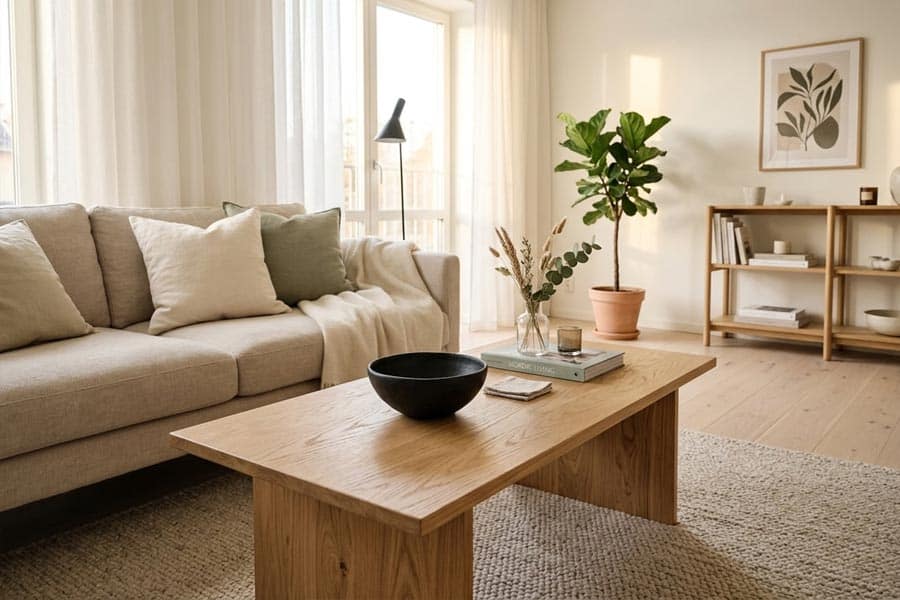
Everything was clean but not always comfortable.
The rooms were well photographed yet they quietly missed something warmer and more real.
That shift is one of the reasons Scandinavian interiors remain a global focus.
Scandinavian design has been around for decades but people are revisiting it again with fresh respect, particularly its affinity with natural wood.
Cold materials are being swapped out for homes that want to feel tranquil and not overly designed.
Oak dining tables, ash bookshelves, walnut accents, and simple wooden coffee tables are just some of the ways to bring warmth and coziness into a home.
What’s fascinating is that Scandinavian interiors were never really about trends to begin with.
That came from practical living, harsh winters, short daylight, and making places feel cozy in the normal course of daily life.
The approach was built on natural materials, softening interiors without weighing them down visually.
Today that same approach feels surprisingly relevant again.
Scandinavian Design Was Never About Perfection
One common misconception about Scandinavian interior design is that it has to be perfectly minimal, or almost empty.
This impression is often shaped by social media that portrays Scandinavian spaces as ultra-clean rooms with white walls and little to no personality.
Real Scandinavian interiors are usually much gentler than that.
Yes, simplicity matters. There’s less clutter and furniture is typically clean-lined.
But warmth is just as important as minimalism.
Homes in the Nordic countries are meant to be comfortable through long, dark seasons, and cold, antiseptic interiors would get tiresome fast.
One of the main elements that brings balance is natural wood.
Light oak floors, wooden chairs, textured dining tables, and handmade furniture bring life to otherwise simple spaces.
Scandinavian interiors are also about letting the materials themselves create the mood rather than filling rooms with decoration.
Why Wood Is the Cozy Element of Minimalism
Minimalist rooms can sometimes feel emotionally distant when every surface is too slick or industrial.
Concrete, glass, black metal, and polished stone can be beautiful, but too many hard materials together can make a room feel cold.
Scandinavian design avoids that by using wood seemingly everywhere: floors, furniture, shelves, wall accents, and even ceilings in some homes.
The effect is subtle but powerful.
Wood adds a natural softness to the sharpness of modern spaces.
The grain patterns create movement without harsh colors or heavy decoration.
Even a simple wooden coffee table can shift the entire emotional feel of a room.
That balance is partly why Scandinavian spaces rarely feel forced or overwhelming.
They stay visually calm without becoming static.
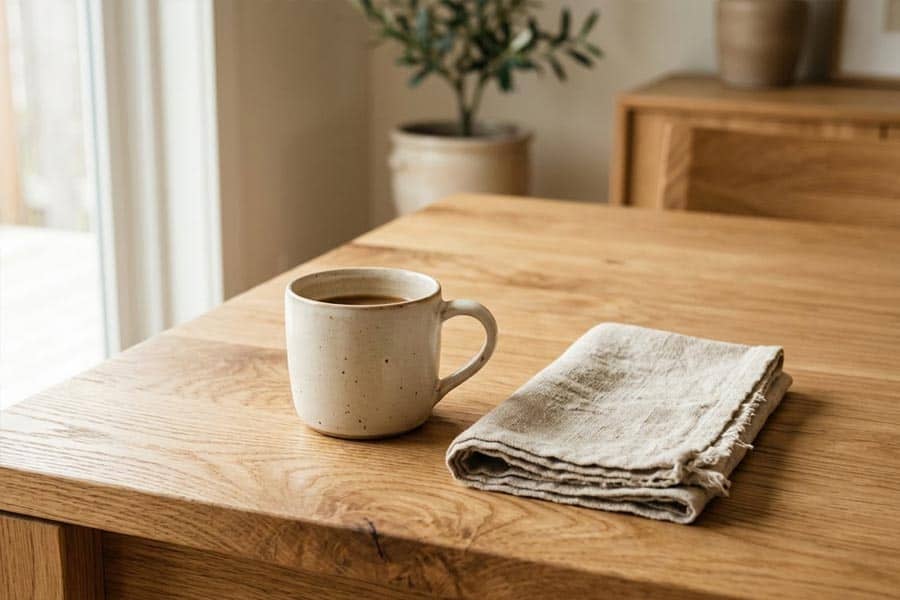
People Are Tired of Furniture That Doesn’t Last
Another reason for the comeback of natural wood has to do with how people think about furniture these days.
Fast furniture dominated the market for a long time.
Cheap materials, thin veneers, and mass-produced pieces became the norm because they were affordable and easy to replace.
But many homeowners started to see the downside pretty quickly.
Furniture aged poorly, cracked easily, and looked worn out after just a few years.
Natural wood has something different to offer.
Solid wood furniture ages well.
Small scratches blend into the grain rather than becoming a jarring eyesore.
The color deepens over time and surfaces soften naturally with wear.
That creates a different emotional connection with the pieces in your home.
Instead of thinking of furniture as temporary decoration, you start to think of it as part of the home itself.
I think that’s a big reason Scandinavian interiors resonate so strongly right now. They’re about permanence, not fleeting trends.
Light Wood Makes for Calm Interiors
One thing Scandinavian design has mastered is the use of lighter wood tones.
Darker woods like walnut can feel dramatic and elegant, but Scandinavian design tends to favor oak, ash, birch, and pine because they reflect light softly.
This matters especially in northern climates where winter daylight is limited.
Lighter woods can make a room feel open without relying entirely on white surfaces.
The result doesn’t feel like the high-contrast interiors you see elsewhere.
Scandinavian rooms feel balanced and calm, without any visual strain.
There’s texture, but it never feels heavy.
That softness is one of the reasons people often describe Scandinavian homes as serene, even when the design itself is relatively modest.
Handmade Details Matter More Again
As technology continues to fill our homes, many people are craving interiors that feel more tactile and more real.
Handcrafted wooden furniture is a natural response to that.
You can see the variety in the grain, the small imperfections, the edge details, and the marks of skill that factory-built furniture so often lacks.
That honesty in materials has long been valued in Scandinavian interiors.
Furniture is rarely ornate, but quality counts.
A plain oak table showing its natural grain often feels more valuable than an elaborate piece pretending to be something it’s not.
That appreciation for craftsmanship is making a comeback around the world, especially among younger homeowners who are becoming more intentional about what they bring into their spaces.
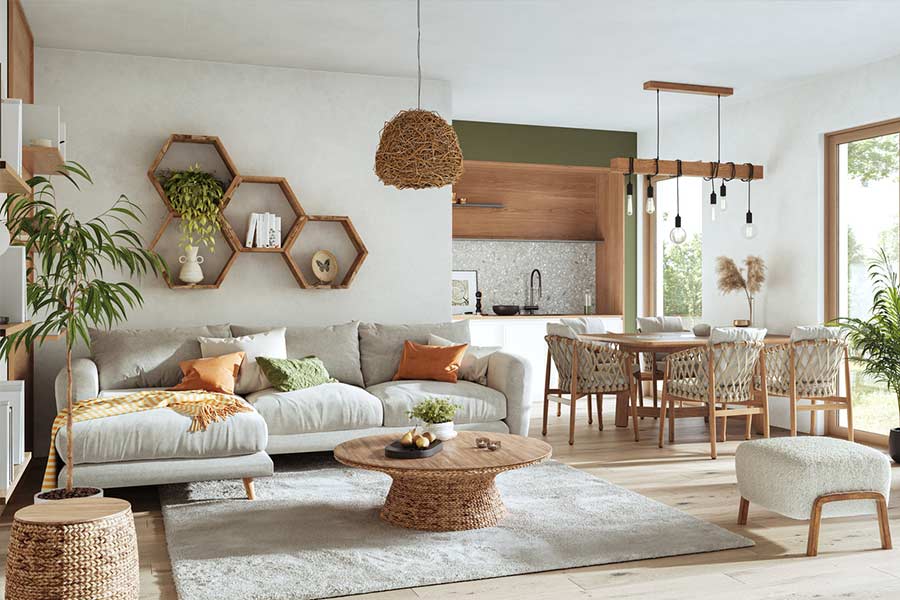
Natural Materials Help Rooms Feel Less Artificial
There are already enough screens, enough shiny surfaces, and enough artificial light in the modern world.
Many people find themselves drawn to interiors that reconnect them with natural materials, even if they can’t quite explain why.
Wood does this right away.
Genuine wood has a natural variety that can’t be replicated the way synthetic materials can.
Each board has its own grain movement, knots, color variation, and texture.
No two pieces are ever exactly the same.
In Scandinavian interiors, that uniqueness tends to be celebrated rather than hidden.
That’s probably why these spaces feel so calming.
There’s enough variation to make a room feel alive, but not so much visual noise that it becomes overwhelming.
Scandinavian Design and the Appeal of Slowing Down
The comeback of natural wood has a lifestyle element to it as well.
Scandinavian interiors are very much about slowing down and making homes comfortable for everyday living rather than showing off.
Furniture is meant to be used, not just admired.
That attitude pairs naturally with wood, which becomes more personal with age.
Tables pick up marks from family dinners. Books settle onto shelves for years. Coffee tables gain character through daily use.
Scandinavian interiors tend to let materials age naturally rather than fighting the process.
I find that philosophy genuinely refreshing in a culture where so much is built for fast replacement.
High-Gloss Finishes Are Giving Way to Texture
Interior tastes have shifted noticeably in the last few years.
Highly polished spaces full of shiny surfaces are falling out of favor.
Many homeowners now prefer matte textures, soft fabrics, stone, linen, and natural wood because these materials are simply easier to live with.
Scandinavian interiors anticipated this shift a long time ago.
Rather than striking luxury finishes, Scandinavian homes tend to focus on texture and feel.
A space might have very few decorative elements, yet the combination of wood grain, woven textiles, ceramic surfaces, and natural light creates depth naturally.
There’s something more intimate in that layered simplicity than in polished spaces designed purely for photos.
Wood Works Across All Kinds of Scandinavian Styles
Flexibility is another reason natural wood remains such a constant in Scandinavian interiors.
Some Scandinavian homes are sleek and minimal, with pale oak and black accents.
Others are rustic, with textured timber, older furniture, and handmade pottery.
Some blend industrial influences with softer Nordic materials.
Wood works across all of these versions.
That flexibility makes Scandinavian design feel less restrictive than it sometimes appears.
It’s not about copying one specific look but about creating warmth, simplicity, and harmony through natural materials.
Why Natural Wood Keeps Finding Its Way Back
Design trends tend to swing between extremes.
One decade favors heavy ornamentation, the next swings toward minimalism.
Fashion, technology, and social media all shape which materials feel current and which feel dated.
Natural wood somehow never disappears completely through any of it.
Part of that is practical. Wood is durable. It has stood the test of time and works across many different interiors.
But there’s an emotional reason too. Homes simply feel better to live in with natural materials present.
Scandinavian interiors understand this well.
They show that simple can still feel warm and that minimal doesn’t have to mean lacking personality.
Sometimes all it takes to make a home feel complete is a calm oak table, beautiful natural light, and a space built around texture rather than trends.

Leave a comment