
There’s something genuinely special about owning a rural property.
The open space, the natural surroundings, the sense of quiet that’s hard to find anywhere else.
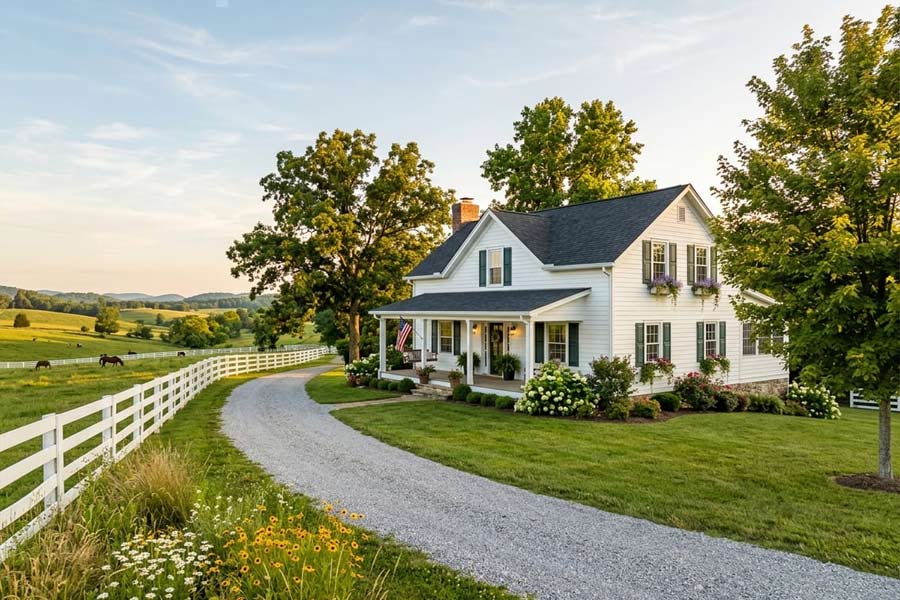
But keeping a country home looking and feeling its best takes a little more thought than a typical suburban yard.
I’ve found that the properties that truly stand out are the ones where the owners treat the exterior just as intentionally as the interior.
From the fence line to the flower beds framing the front porch, every detail contributes to how a rural home looks, feels, and functions.
Curb Appeal Starts at the Property Line
On a rural property, curb appeal isn’t just about a tidy front yard.
It extends to your fence lines, your drive, your outbuildings, and the general sense of order across the land.
Start by looking at your property from the road.
Is your entry inviting?
Are your fence lines straight and in good repair?
Does the landscape feel intentional or overgrown?
These first impressions shape how your home is perceived, and small improvements in these areas can make a surprisingly large difference in overall appeal.
A fresh coat of paint on a barn or outbuilding, a clearly defined driveway edge, or a simple planted border along a fence line can shift the entire feel of a property from neglected to genuinely cared for.
Landscaping That Works with Rural Life
One of the most rewarding things you can do for a rural property is invest in thoughtful landscaping.
I’m not talking about formal hedgerows or anything that feels out of place in the countryside.
I mean plantings that feel natural to the land while still adding beauty and structure to the space around your home.
Native grasses, wildflower meadows, and flowering shrubs are excellent choices for rural properties.
They require less water and maintenance than traditional landscaping and blend naturally into the surrounding environment.
Consider framing your porch or entryway with flowering plants that bloom in sequence throughout the warmer months.
Lavender, coneflower, black-eyed Susan, and ornamental grasses are beautiful, hardy choices that hold up well in rural settings and attract pollinators that add life and movement to your outdoor space.
Raised garden beds near the home can serve double duty as both a practical growing space and a design feature, especially when paired with a simple gravel or mulch path leading up to them.
Protecting Your Outdoor Spaces from Animal Damage
All the landscaping work in the world can be undone overnight by deer, rabbits, or wandering livestock.
If you’ve ever put real time and money into a flower garden only to find it stripped bare by morning, you know exactly how frustrating that is.
Deer are particularly destructive to flower beds, young trees, and ornamental shrubs.
Loose chickens, goats, or neighboring livestock can trample grass and damage landscaped areas in ways that set your property’s appearance back significantly.
This is where thoughtful fencing becomes one of the most practical investments a rural homeowner can make.
For protecting specific areas like garden beds, young tree plantings, or sections of lawn you’re trying to establish, electric netting is one of the most flexible and effective options available.
Unlike permanent fencing, it can be moved and repositioned as your needs change throughout the seasons, making it a much more cost-effective solution than installing fixed fencing around every area you want to protect.
Using Fencing as a Design Element
Beyond function, fencing on a rural property is one of the strongest visual design tools you have.
A well-chosen fence style can reinforce your home’s character and tie the whole property together in a way that feels cohesive and considered.
Classic white board fencing gives a property a clean, timeless look that holds strong resale appeal.
Split rail fencing works well for defining areas without feeling too structured or formal.
Whatever style you choose, consistency matters.
Mixing too many fence styles across a single property can make it feel scattered and unplanned.
Keep fence lines in good repair too, since a sagging or broken section draws the eye immediately and undermines the appearance of an otherwise well-kept property.
Lawn Care and the Space Around Your Home
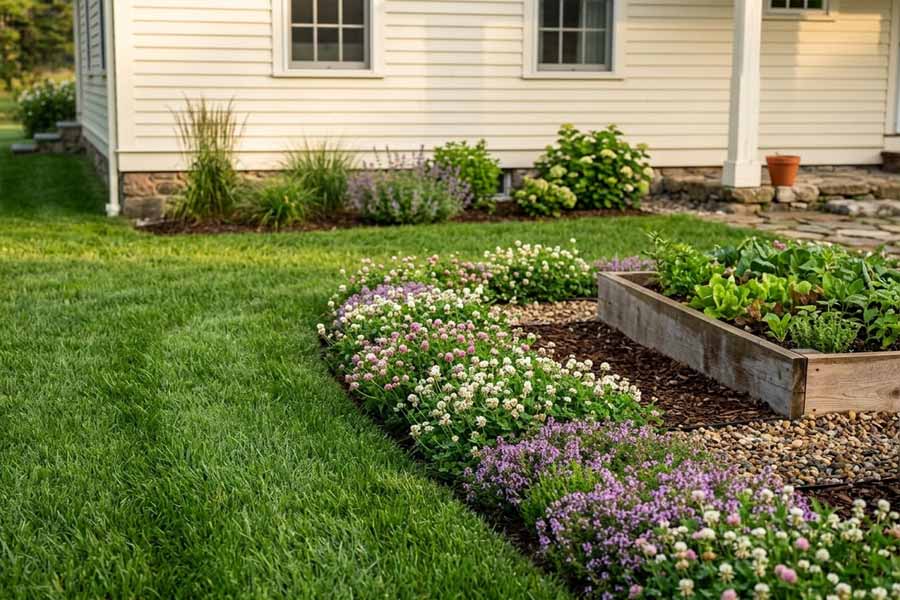
A lush, well-kept lawn around a rural home makes an enormous difference in how the property feels overall.
It softens the transition between the wilder areas of the land and the home itself, creating a sense of order and warmth.
I’d recommend getting a basic soil test before investing heavily in seed or sod.
Knowing your soil’s pH and nutrient levels helps you choose the right grass varieties for your specific conditions, which saves both money and frustration in the long run.
In areas where traditional grass struggles, consider alternatives like clover, which stays green longer into dry spells and supports pollinators, or creeping thyme for drier, sunnier spots.
Small Details That Make a Big Impact
On a rural property, it’s easy to focus on the big picture and overlook the smaller details that do a lot of the heavy lifting in terms of overall appearance.
Your front door and entry area set the tone for the entire home.
A freshly painted door, a clean welcome mat, simple plantings on either side, and good lighting above the door work together to create an entry that feels warm and welcoming.
Window boxes filled with trailing plants or seasonal flowers can also significantly change the look of a rural home’s exterior without requiring a major project.
Don’t overlook the condition of your outbuildings either.
A barn or shed that’s freshly painted and well-maintained contributes enormously to the overall appeal and perceived value of a rural property, since these structures are often the largest visual elements on the land.
A Rural Property That Truly Feels Like Home
The most beautiful rural properties share one thing in common: they feel intentional.
Not overly manicured or out of place in their surroundings, but clearly cared for and thoughtfully designed from the fence line to the front porch.
That sense of intention comes from paying attention to both the big picture and the small details, protecting what you’ve built, and consistently investing in the spaces that make your property feel like the home you always wanted.

Leave a comment