
A beautiful living room doesn’t need designer furniture, expensive artwork, or a complete renovation.
Sometimes, the difference between an ordinary space and one that looks professionally decorated comes down to a few thoughtful changes.
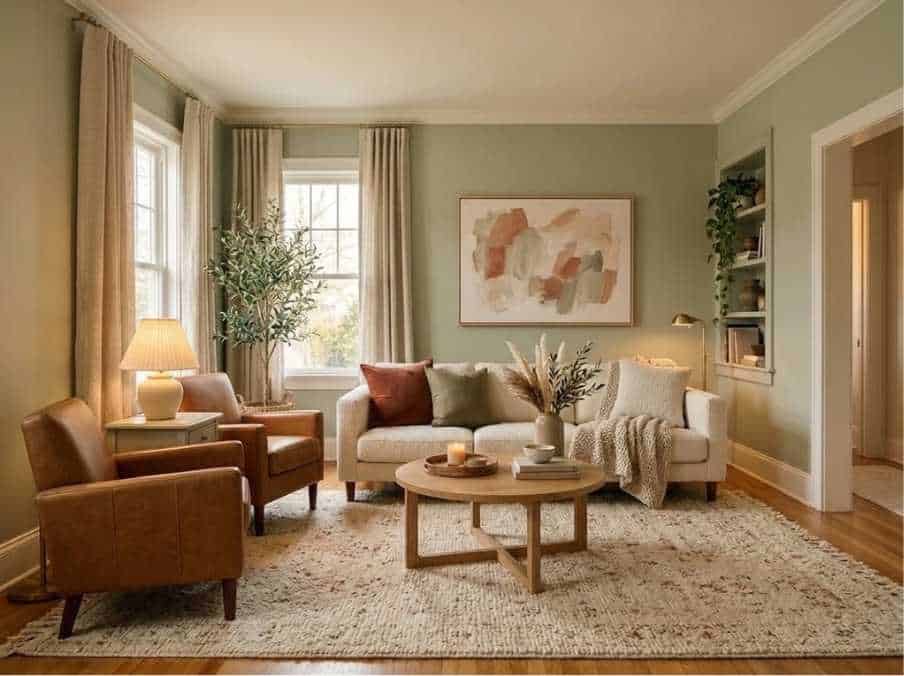
I’ve found the secret is knowing where to focus your attention.
Furniture placement, lighting, color, and carefully chosen accessories can make an affordable room look far more sophisticated.
And when your living room looks cared for, it naturally becomes the place where you and your guests want to gather and stay awhile.
Better yet, many of these improvements are simple enough to tackle over a weekend.
Here are seven budget-friendly ways I’d use to give your living room a more expensive look without spending a fortune.
1. Choose a Rug That Fits Your Space
A rug can completely change how your living room looks.
But choosing the wrong size is one of the easiest ways to make a room feel unfinished.
Small rugs often leave furniture looking disconnected.
A larger rug helps define your seating area and creates a more balanced arrangement.
In an interview with Architectural Digest, interior designer Anne Hepfer explained, “A rug is one of the most important elements of a room” (Brunker, 2017).
For a polished look, I’d choose a rug large enough to fit at least the front legs of your sofa and armchairs.
This creates a visual connection between your furniture pieces.
I like to think of it as pulling everyone onto the same cozy island, so conversations feel closer and the room feels like an invitation to sit down.
Texture matters, too.
A flatweave rug can complement minimalist interiors, while a textured wool rug adds warmth and character.
Brands such as Double Studio offer washable rugs in different materials, colors, and patterns, providing options for various decorating styles.
Washable is a big deal if you have kids, pets, or love hosting, since a spilled glass of wine doesn’t have to end the evening.
Before buying, use painter’s tape to mark the rug’s dimensions on your floor.
It’s an easy way to check proportions and avoid an expensive sizing mistake.
2. Layer Your Lighting for a Warmer Atmosphere
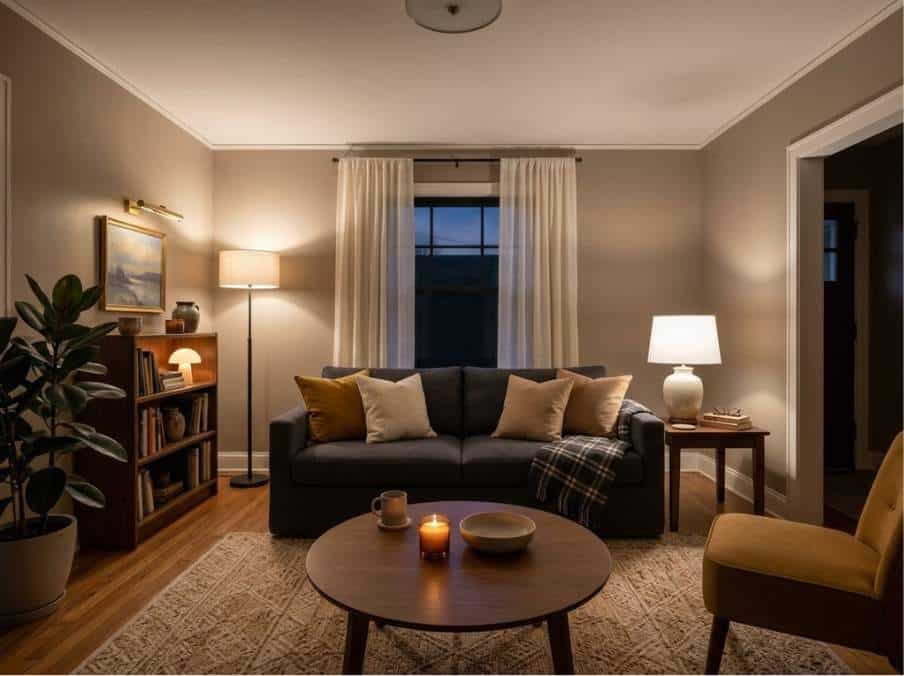
Lighting has a huge influence on how expensive a room feels.
Even beautiful furniture can look uninviting beneath harsh overhead lighting.
Instead of relying on one ceiling fixture, I’d use several light sources at different heights.
The California Lighting Technology Center (2022) identifies three main lighting layers: ambient lighting for general light, task lighting for specific activities, and accent lighting for highlighting decorative features.
You can use these ideas without hiring an electrician:
- Ambient lighting: Use your existing ceiling fixture or a floor lamp that directs light upward.
- Task lighting: Position a table lamp beside your sofa or favorite reading chair.
- Accent lighting: Add a small lamp to a bookshelf or light up a piece of artwork.
I’d choose warm-white bulbs, around 2700K, for a softer evening glow.
Matching the color temperature of your lamps also helps the room feel more consistent.
Those little pools of warm light are what make a room feel like it’s welcoming you home at the end of a long day.
Thrift stores are excellent places to find attractive lamp bases.
A new shade can make an inexpensive secondhand lamp look surprisingly stylish.
3. Use Paint to Create a More Cohesive Color Scheme
Few decorating projects give you as much visual impact for the money as a fresh coat of paint.
The trick is choosing colors that complement your existing furniture rather than following every new trend.
Warm whites, soft greiges, muted greens, and earthy neutrals can create a refined backdrop.
These colors also work well with natural wood, textured fabrics, and decorative metals.
Before committing to a color, I always test samples on different walls.
Paint can look noticeably different depending on how much natural light your room gets.
A calm, cohesive palette also gives your eyes a place to rest, which is a big part of why a room feels peaceful rather than busy.
For an even more affordable update, consider painting a tired side table, shelving unit, or outdated cabinet instead of replacing it.
A carefully chosen color scheme also makes inexpensive furniture look more intentional.
Try limiting your main palette to two or three coordinating colors, then bring in smaller accents through cushions, artwork, and accessories.
4. Give Your Windows a Designer-Inspired Makeover
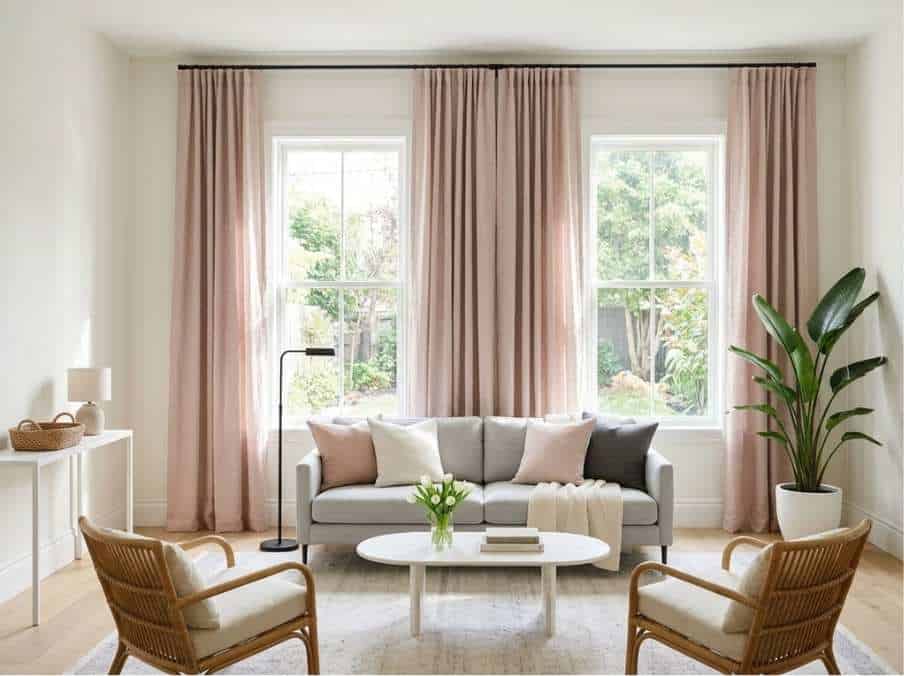
Window treatments are often overlooked, but they can dramatically change the proportions of your living room.
Curtains hung directly above the window frame can make the ceiling look lower.
Mounting the curtain rod higher creates the illusion of taller windows and a more spacious room.
For a designer-inspired finish, I’d position the rod about four to six inches above the window frame, as long as there’s enough space below the ceiling.
Extend it beyond the sides of the window so the curtains don’t block unnecessary daylight when open.
More morning sun makes your space feel brighter and more alive, while soft fabric framing the window adds a gentle, cozy layer at night.
Choose curtains that reach close to the floor rather than stopping awkwardly above it.
You don’t need custom-made drapes, either.
Affordable ready-made panels can look elegant when properly measured, steamed, and hung.
Linen-look fabrics, cotton blends, and subtle textures work especially well.
Avoid overly shiny materials if you’re aiming for a relaxed, understated look.
5. Rearrange Your Furniture Before Buying Anything New
An expensive-looking living room isn’t necessarily filled with expensive furniture.
Often, it’s simply arranged more thoughtfully.
One common mistake I see is pushing every piece against the walls, leaving a large empty space in the center.
Instead, try arranging your seating around a focal point, such as a fireplace, coffee table, or large window.
Pull your sofa slightly away from the wall if space allows.
Angle an armchair toward the sofa to create a more inviting conversation area.
When seats face each other, guests naturally lean in and linger, and that’s the kind of hospitality no new furniture can buy.
Pay attention to walking routes.
As a practical starting point, allow about 30 to 36 inches for main walkways, adjusting for your room’s dimensions and accessibility needs.
You can also remove furniture that serves little purpose.
A crowded room often benefits more from editing than additional decorating.
Best of all, rearranging your furniture costs absolutely nothing.
6. Create Your Own Oversized Wall Art
Large artwork can make your living room feel carefully curated, but original pieces and designer prints are often expensive.
Luckily, there are plenty of affordable alternatives.
Try creating abstract artwork using a large canvas, leftover paint, and a limited palette.
Simple shapes, textured brushstrokes, and muted colors can produce an attractive result.
Another option I love is framing vintage botanical illustrations, personal photography, or public-domain artwork.
Your own photos and handmade pieces also tell your story, so the walls feel personal and spark conversations when friends visit.
For a more cohesive look, choose frames with matching finishes or similar proportions.
Secondhand frames can be sanded and painted to create a coordinated style.
Remember that scale matters.
A tiny picture above a large sofa can look out of place.
As a helpful decorating guideline, aim for artwork or a grouped arrangement measuring about two-thirds of your sofa’s width.
Before hanging anything, I’d arrange paper templates on the wall to test the layout.
This lets you create a gallery-worthy display without repeatedly drilling holes.
7. Style Your Accessories with Intention
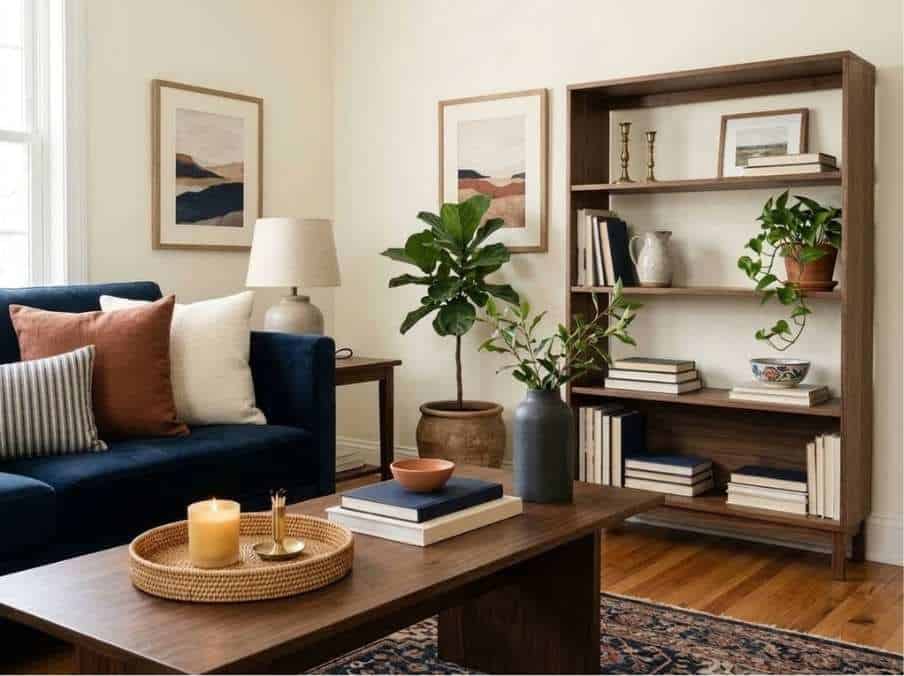
The finishing touches can make a surprisingly big difference to your living room’s appearance.
But filling every shelf with decorative objects rarely creates the refined look you’re after.
Start by removing unnecessary clutter.
Then, arrange a smaller collection of meaningful items, such as books, ceramics, candles, and greenery.
I find that a few pieces with real memories behind them, like a bowl from a trip or a stack of well-loved books, make a room feel warm in a way store-bought decor can’t.
Vary the height and shape of objects to create visual interest.
For example, stack two or three books beneath a small ceramic bowl, then position a taller vase nearby.
Mixing materials can also add depth.
Try pairing a wooden tray with glass, pottery, or metal accessories.
Indoor plants are another affordable option.
Even one healthy plant in an attractive pot can bring color and life to an empty corner.
Don’t overlook your coffee table.
A simple arrangement of books, a tray, and one decorative object often looks more thoughtful than a crowded collection of ornaments.
The goal is to make your accessories feel deliberately chosen rather than randomly collected.
Bringing Your Budget-Friendly Living Room Together
Making your living room look more expensive doesn’t require an unlimited decorating budget.
Small changes to your rug, lighting, window treatments, and furniture arrangement can have a big impact.
I’d start with the improvements that cost nothing, like rearranging furniture and removing clutter.
Then gradually bring in affordable updates that complement your existing space.
With a little creativity and attention to detail, you can create a living room that feels polished, comfortable, and distinctly your own.
And I think that’s the real luxury, a space that welcomes you, your family, and your friends every time you walk in.
References
Brunker, A. (2017, April 3). How to choose the right size rug for every room. Architectural Digest.
California Lighting Technology Center. (2022). Residential lighting guide: Concepts and principles. University of California, Davis.

Leave a comment