
You planned to spend a Saturday and about two hundred dollars.
Maybe it was new paint in the spare bedroom, or pulling up that tired carpet you’ve never liked, or finally swapping the builder-grade light fixture over the dining table.
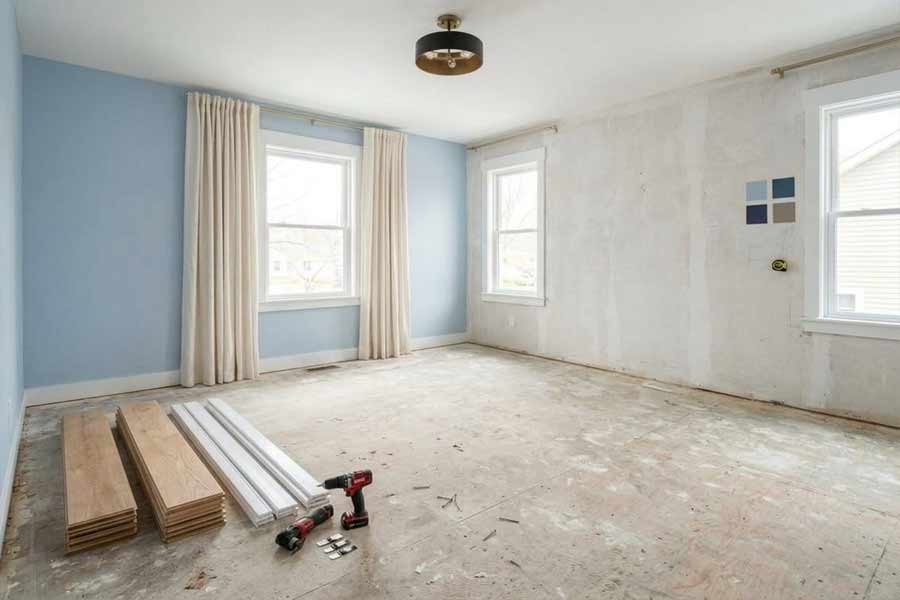
Then the carpet came up and the subfloor underneath told a different story.
I’ve watched this happen to so many people who just wanted their home to feel a little more like them.
One small styling project cracks open a much bigger one, and suddenly you’re not decorating anymore.
You’re renovating, and you’re doing the math in your head about whether any of this is worth it.
That’s the moment this article is for.
Not the big remodel decision, but the smaller and honestly harder question of how far to go when all you wanted was a home that looks and feels beautiful.
When a Refresh Is Enough
Most homes need far less than we think they do.
The changes that shift how a room feels are usually surface-level, and they cost a fraction of what a real renovation runs.
Paint is still the most powerful tool you have.
A warm white or a soft clay tone can make a room feel twice as calm, and you can finish it in a weekend without calling anyone.
Lighting is the second one I’d point to.
Swapping a harsh overhead fixture for something with warmer bulbs, then adding a table lamp and a floor lamp, changes the entire mood of a space after dark.
Hardware, textiles, and window treatments do the rest.
New cabinet pulls, longer curtain panels hung closer to the ceiling, and a rug that’s actually the right size will make a room look intentional in a way that no amount of structural work can fake.
Here’s the part I really want you to hear.
None of that requires tearing into your house.
If your home is structurally sound and you’re mostly unhappy with how it looks, you probably have a styling problem rather than a renovation problem, and those are wonderful problems to have.
When Small Updates Uncover Bigger Problems
Sometimes you start peeling back layers and the house shows you something you weren’t expecting.
A soft spot near the tub surround.
Outlets that were clearly wired by a previous owner on a confident weekend.
Adhesive from three flooring generations ago, or a faint musty smell behind a baseboard that only shows up when you pull it off the wall.
This is where a cosmetic project quietly becomes something else, and it’s worth knowing what those hidden home problems tend to look like before you’re standing in the middle of one.
Moisture damage, aging plumbing, unpermitted work, and failing subfloor are the usual suspects.
You can’t decorate over any of them, and I’d never tell you to try.
What I will tell you is that finding one doesn’t automatically mean the whole project is off.
It means the order changed.
The pretty part still happens, just after the boring part, and your budget needs to reflect that new sequence before you buy another thing.
The Question That Decides How Far You Go
Once a project grows, you’re really answering one question.
Are you doing this for yourself, or are you doing it for the next owner?
Those two answers lead to completely different spending limits, and I think most of the stress people feel comes from not deciding which one they’re in.
If you plan to stay for years, your return is measured in daily life.
A kitchen you actually enjoy standing in, a bedroom that feels restful, an entry that makes guests feel welcomed the second they step inside.
You don’t need to justify that to a future appraiser.
If you might sell within a few years, the math tightens considerably.
Most major renovations don’t return what you put into them.
Kitchens and bathrooms tend to recoup somewhere in the sixty to eighty percent range depending on your market, and highly personal upgrades often return far less.
The gap between what you spend and what you get back is the real cost of the project.
So before you commit, I’d write down two numbers.
What the finished project costs you, and what you honestly believe it adds to the home’s value.
If the first number is much larger and you’re not staying long enough to enjoy it, that’s your answer.
Projects That Give You Beauty and Value
Some updates do both jobs at once, and these are the ones I’d fund first.
Paint, inside and out
Nothing else returns as much for as little.
A cohesive color story running through your main floor makes a home feel considered rather than pieced together one room at a time.
Lighting
Replacing dated fixtures and layering in table and floor lamps costs relatively little.
It also photographs beautifully, which matters more than most people expect when it comes time to show the house.
The Front Door and Entry
A painted door, updated hardware, a good outdoor light, and a planter or two shape the very first impression of your home.
That’s also where hospitality begins, long before anyone sits down.
Flooring Consistency
You don’t need the most expensive material here.
You need fewer transitions and fewer competing surfaces, because a continuous floor makes even a modest home feel larger and calmer.
Storage and Organization
Clear counters and closed storage make a space feel finished rather than paused.
They also read as square footage to anyone walking through, which is a rare case of tidy actually being worth money.
What these all have in common is that they improve how your home feels every single day while still being easy for someone else to appreciate later.
Projects Worth Rethinking
Then there’s the other category.
Not bad projects, just expensive ones that rarely come back to you in dollars.
Highly specific built-ins, elaborate tile work in a bold pattern, wallpaper in a strong print, a converted room that only makes sense for your particular hobby.
I love all of these things, and I’m not telling you to skip them.
I’m telling you to be honest about why you’re doing them.
If it’s for your own joy and you plan to stay, buy the wallpaper.
If you’re hoping it adds resale value, it probably won’t, and there’s usually a lighter version of the same look that gets you most of the way there.
Removable wallpaper instead of permanent.
A freestanding piece instead of a built-in.
Paint on the existing tile instead of a full retile.
Style doesn’t have to be permanent to be real.
Design Choices That Buy You Time
Here’s my favorite part, because this is where you get to stop and still have a home you love.
If you’ve uncovered something you can’t afford to fix right now, or you’ve decided a full renovation isn’t worth it, you still have real options.
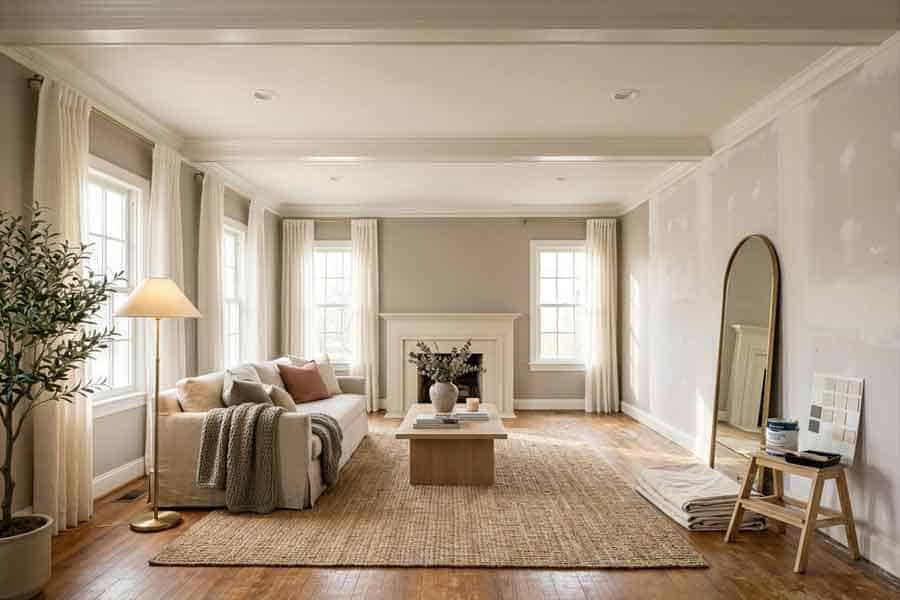
A generous area rug covers flooring you’re not ready to replace, and a rug that’s slightly too large always looks better than one that’s too small.
Peel-and-stick wallpaper or beadboard paneling hides tired walls without committing you to anything.
Curtains hung high and wide draw the eye up and away from a window you’d rather not think about.
Cabinet paint and new hardware will carry a kitchen for years.
A well-placed screen, plant, or piece of furniture can quietly retire a corner you’re not dealing with yet.
None of this is settling.
Warmth in a home comes from lamplight, texture, and the sense that someone actually lives there and cares.
It has almost nothing to do with whether your subfloor is original, and I’d rather you have a home that feels good now than a perfect one three years from now.
When the List Outgrows the House
Sometimes the repair list simply outgrows what you want to take on, and that’s a legitimate answer too.
Inherited homes, unfinished remodels from a previous owner, or years of deferred maintenance can put a house past the point where a decorative fix makes sense.
Homeowners in that position sometimes look into selling as-is instead, and companies like A-List Properties buy houses in their current condition without asking for repairs or staging first.
It isn’t the right call for most people reading this.
But it’s worth knowing the option exists before you commit to a renovation you don’t actually want, especially if the house has stopped feeling like yours.
There’s no failure in deciding that your energy belongs somewhere else.
Some homes are worth saving, and some are worth leaving so you can pour that same care into a place that gives it back.
Making Peace with a Project You Didn’t Plan for
If you’re standing in a half-torn-up room right now, take a breath.
You haven’t ruined anything.
You’ve just learned something true about your house, and that’s more than most people know about theirs.
Decide whether you’re building this for yourself or for the next owner.
Fund the fixes that keep the house sound, then spend what’s left on the things you’ll see and touch every day.
Light, color, texture, and comfort.
That’s what makes a home feel beautiful, and I promise it costs far less than the version of this project living in your head right now.
Leave a comment