
The living room is the heart of any home, a space where daily routines play out, conversations linger, and personal style comes through most clearly.
The furniture and styling choices made here don’t just influence appearance; they shape how people move, relax, and interact within the space, with thoughtful attention to all the elements that help bring warmth, depth, and cohesion to the overall design.
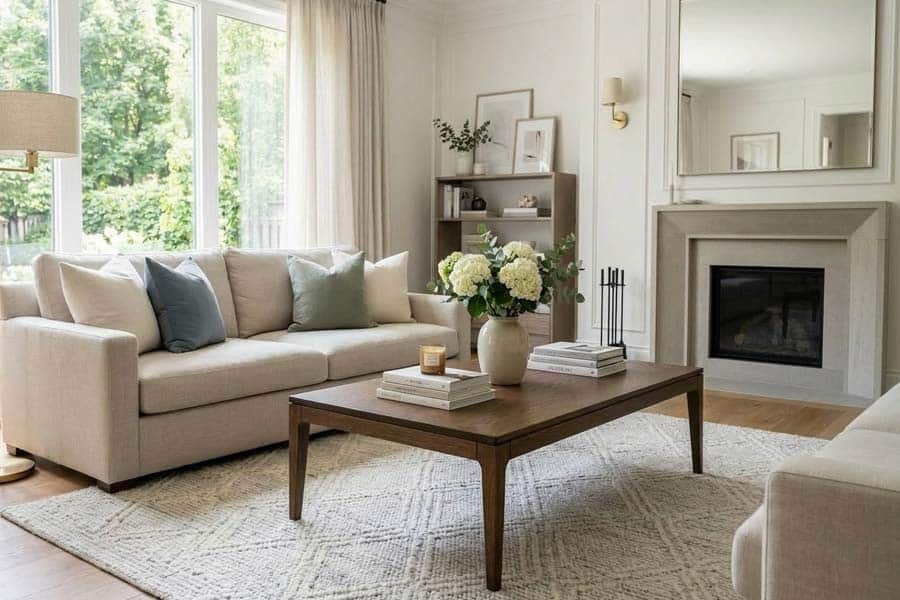
Quality pieces serve as natural focal points, blending practicality with visual appeal while anchoring modern living areas and setting the tone for everything around them.
Choosing foundational pieces thoughtfully, rather than chasing whatever trend happens to be circulating, is the surest way to create a living room that feels both enduring and genuinely yours.
The Role of Coffee Tables in Living Room Layouts
A coffee table does far more than hold a cup of tea.
It defines how people move through a space, provides essential surface area, and acts as a visual anchor that holds a seating arrangement together.
Proportion matters enormously: a table that’s too large overwhelms the room, while one that’s too small looks lost.
Design professionals typically recommend leaving 18 to 20 inches between the sofa edge and the table, enough for comfortable reach without creating an obstacle.
Height should roughly align with the seat cushion, usually 16 to 18 inches, so the table feels natural to use rather than something to lean awkwardly toward.
Key Sizing Considerations by Room Type
- Small apartments: Round or oval tables ease navigation and soften the edges of tight spaces.
- Open-plan rooms: Longer rectangular tables help carve out a defined seating zone within a larger footprint.
- Family rooms: Lower profiles with rounded edges offer safety alongside casual accessibility.
Essential Materials for Durability and Aesthetic Appeal
The material a coffee table is made from shapes both its longevity and its visual character.
Wood brings warmth and organic texture, marble conveys quiet elegance, glass creates a sense of lightness, and metal introduces structure and a graphic edge.
| Material | Pros | Cons | Upkeep | Style Fit |
| Wood | Warm, durable, versatile | Can scratch or warp | Occasional oiling or waxing | Rustic, Scandinavian, transitional |
| Marble | Elegant, timeless | Heavy, porous | Regular sealing required | Formal, contemporary |
| Glass | Light, space-expanding | Shows fingerprints easily | Frequent wiping | Minimalist, modern |
| Metal | Sturdy, graphic | Can feel cold | Simple wipe-down | Industrial, eclectic |
Burl wood patterns and lacquered finishes add visual depth while protecting surfaces in high-traffic homes, and I think it’s a practical consideration that often gets overlooked when the focus stays purely on aesthetics.
Shape and Form: Influencing Flow and Mood
Shape is one of the most underestimated decisions in furniture selection.
Round tables encourage conversation and suit compact or square rooms particularly well.
Rectangular forms elongate and organize larger spaces.
Asymmetrical or sculptural designs introduce personality without dominating the room.
Leg styles carry weight too, as flared legs lend an airy quality while geometric bases add contemporary structure.
Nesting tables offer flexible surface area that tucks away cleanly when not in use.
Key Takeaway: Match shape to your lifestyle.
Families with young children benefit from round, low-profile tables, while those who entertain often may prefer a larger rectangular surface that handles both display and function with equal ease.
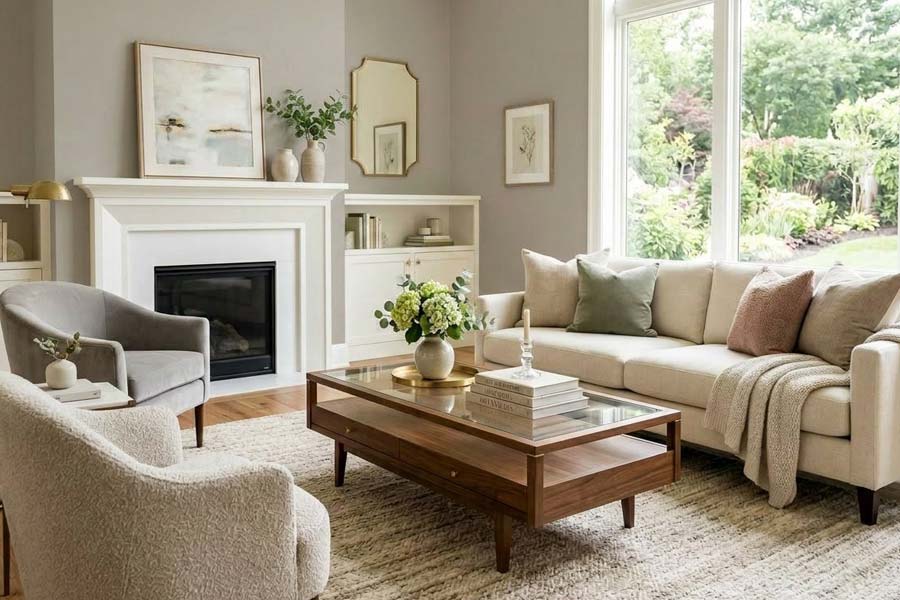
Styling Your Coffee Table for Everyday Use and Display
Thoughtful styling transforms a coffee table from a piece of furniture into a reflection of your personality.
The most enduring arrangements tend to rely on odd numbers of objects, varied heights, and layered textures, a stack of books beside a ceramic vessel beside a small plant, for instance.
Five Universal Styling Principles
- Ground the arrangement with a tray to create defined, intentional zones.
- Mix organic materials like wood, stone, and linen with harder elements for contrast.
- Leave negative space, as overcrowding only diminishes visual impact.
- Include one taller element to draw the eye upward.
- Rotate personal objects seasonally to keep the surface feeling fresh.
Integrating Coffee Tables with Broader Living Room Harmony
A coffee table rarely exists in isolation.
Its material should echo, not necessarily match, other surfaces throughout the room.
A marble tabletop, for example, might be balanced by a stone coaster set or a marble-effect lamp base nearby.
Thoughtful color coordination across upholstery, rugs, and accent furniture creates cohesion without feeling rigid or overly curated.
Multifunctional designs with integrated storage or lift-top mechanisms address the realities of modern living without sacrificing style.
Interior designers consistently point out that negative space around and beneath a table also influences how light moves through a room, a subtle detail that has an outsized effect on overall balance.
Creating a Cohesive and Adaptable Living Room Palette
Timeless living rooms are built on deliberate, layered decisions: the right material, a shape suited to daily life, and styling that can evolve with your personal taste over time.
Start by honestly assessing your household’s needs, how the space is actually used, who uses it, and what feeling it should convey.
From there, I’d suggest sketching a rough layout, from soft floor accents on up to the walls.
Visualizing proportions on paper before committing to purchases is a simple habit, but one that consistently leads to more harmonious, enduring results.
Leave a comment