
Most of us are asking our rooms to do more than they used to.
The living room is the office on Tuesdays and the guest room when family visits.
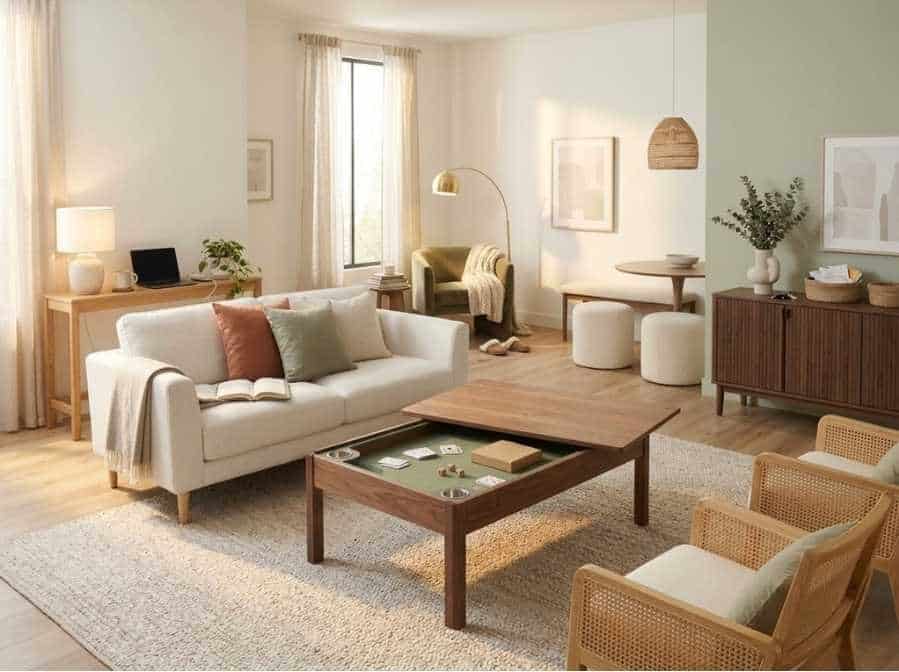
On Fridays, it’s where game night happens.
That’s a lot of jobs for one space.
The challenge is keeping your hard-working room from looking like a storage unit with a sofa in it.
I’ve found that the rooms that handle this best share a few habits, and none of them require a renovation.
Decide What Each Zone Is Really For
Before you move a single piece of furniture, write down everything your room needs to do.
Then pick the one job it does most often.
That’s the room’s main use, and it gets the best light and the most floor space.
I let secondary uses fit around it.
A reading corner can borrow a window.
A desk can tuck into an alcove or sit behind your sofa.
Design idea: If two activities happen at the same time, like homework and cooking dinner, I’d keep them within sight of each other.
If they happen at different times, they can share the same spot.
Draw Invisible Walls with Rugs and Lighting
In an open room, I’ve found a rug does the work of a wall.
Everything that sits on it reads as one zone.
Size it so at least the front legs of each seat rest on it, and your grouping will feel anchored.
Lighting is the other boundary.
A pendant over a table marks a dining or work area, even in the middle of a large room.
A floor lamp beside your armchair turns that corner into a reading spot.
Pro tip: Put each zone’s lighting on its own switch or smart plug.
When your desk lamp goes off at night, the office part of the room goes with it.
Let Seating Move between Zones
Heavy, fixed seating locks your room into one arrangement.
A couple of lightweight chairs, a pouf, or a bench gives you seats that follow the activity.
I love how a bench along the wall can pull up to a table for dinner, then slide back for movie night.
Poufs tuck under a console when you need floor space and come out when friends arrive.
Pick Furniture That Can Change Jobs
In my experience, pieces that do two things are the backbone of a multi-purpose room.
A storage ottoman works as extra seating, a footrest, and a blanket bin.
A slim console behind your sofa can hold lamps by day and a laptop when you need one.
The coffee table may be the hardest-working surface in your house.
It holds drinks, remotes, puzzles, kids’ crafts, and the occasional takeout dinner.
For living rooms that host game night, board game coffee tables handle that load well.
One design I like has a lift-off top that hides a recessed, fabric-lined play area with eight cup holders.
Two soft-close drawers underneath hold games, cards, and dice.
Look for solid hardwood and clean lines.
With the top on, a good one reads as a modern wood coffee table, which matters if not everyone in your house plays.
Fit note: Check the size of the play area before you buy.
A 30-inch square suits card games and couch-sized board games better than sprawling ones.
Give Everything a Place to Disappear
A room can only switch jobs as fast as it can be cleared.
Open shelving looks lovely in photos, but I’ve noticed it puts every charger and game box on display.
I find closed storage is kinder to a shared room.
Baskets on a shelf, a cabinet with doors, or a sideboard with drawers keep each activity’s gear out of sight.
I like to give every use its own container, so office supplies never mingle with the toy bin.
Storage trick: Store things where they’re used.
Keep games near the play surface and chargers near your desk.
If putting something away means crossing the room, it won’t get put away.
Keep the Palette Calm so the Room Can Flex
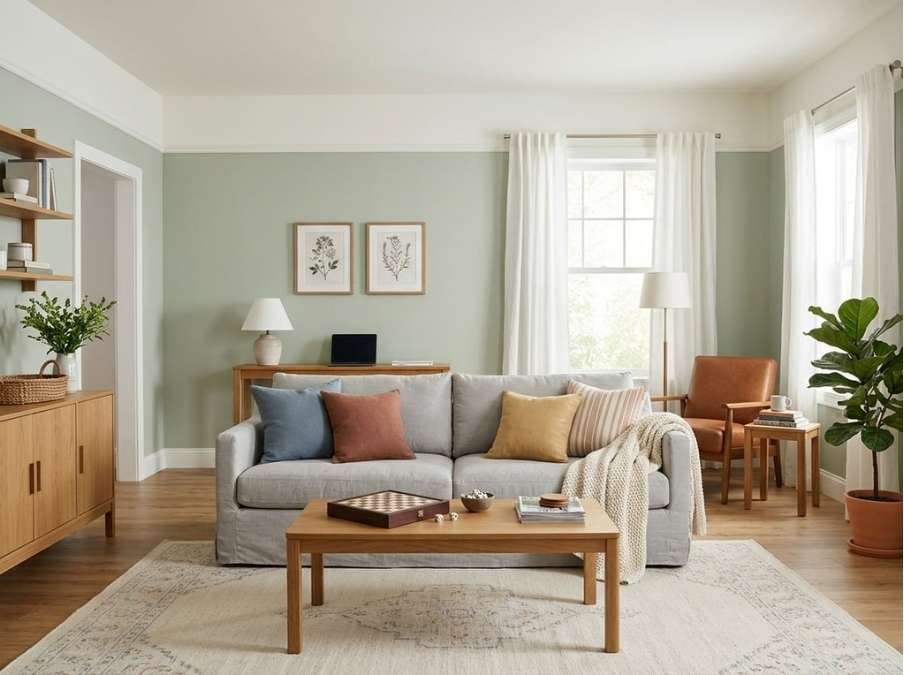
A room that changes jobs needs a backdrop that suits all of them.
Busy wallpaper or a saturated accent wall can feel great for movie night and tiring during your workday.
In my experience, soft neutrals, warm whites, and muted greens tend to work for both focus and relaxing.
If you’re choosing a wall color, our paint color reviews show how a shade behaves in different light.
Then let textiles carry the personality, since pillows and throws are easy to swap.
Wood tones help here, too.
Repeating one or two finishes across your furniture makes a room with many uses feel like it was planned together.
Plan the Reset
The handiest habit I know for a multi-purpose room is a quick changeover routine.
Pick a time, usually right before dinner, when your room goes back to its main job.
Laptops go in a drawer.
Games go back in their boxes, and the blanket gets folded over the sofa arm.
It takes about ten minutes, and it keeps your room from slowly becoming an all-purpose pile.
Don’t overlook: Make the reset a shared job.
When everyone knows where things live, the room stays usable for everyone who shares it.
Making a Multi-Purpose Room Feel Put Together
I think a room that does several jobs needs a clear main purpose and defined zones.
It also needs furniture that can switch roles and storage that hides each activity when it’s done.
A calm palette and a nightly reset hold it all together.
Start with the job your room does most often and design around it.
Then add one dual-purpose piece at a time, and the room will keep up with your household instead of fighting it.

Leave a comment