
A garage door that refuses to move late at night can cause stress and disrupt your plans.
Your house feels less secure, and the thought of leaving your car outside adds to the worry.

Knowing how to respond quickly helps you restore safety and peace of mind without waiting for professional help.
In this article, I’ll explain simple steps you can take to identify and fix common causes of nighttime garage door failures.
I’ll walk you through checking the power source, clearing sensor paths, testing your remote, and inspecting parts for visible damage.
Each step aims to make the process clear, safe, and easy to follow.
Check the Garage Door Opener’s Power Supply and Reset the Circuit Breaker if Needed
A garage door that stops mid-operation at night often points to a power issue.
Your opener might have lost power because of a tripped breaker or a loose plug.
You can start by checking if your opener’s outlet works.
Plug in a small device, such as a lamp, to confirm power flow.
If no power reaches the outlet, your circuit breaker may need attention.
Flip the switch connected to the garage off for a few seconds, then turn it back on.
This simple reset can restore power to your opener and bring the system back online.
If you still face power loss, you can look for help from 24/7 garage door repair services.
These professionals can inspect wiring, replace damaged parts, and confirm your opener operates safely.
I recommend regular checks of your outlets, cords, and breakers to prevent future nighttime problems.
Inspect and Clear Any Obstructions Blocking the Safety Sensors
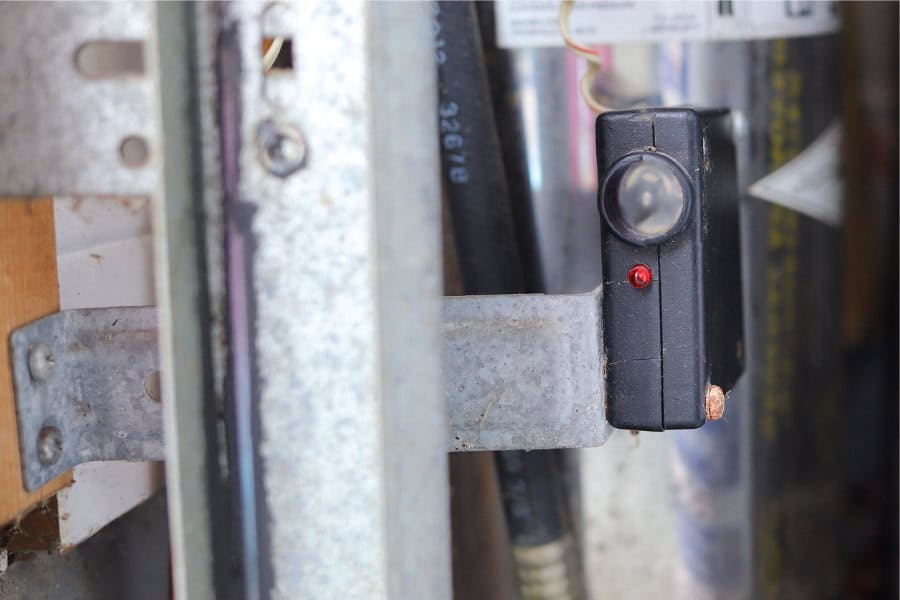
Your garage door sensors use light beams to detect objects in the door’s path.
If something blocks the beam, your door may stop or reverse before closing.
Dust, spider webs, or small items near the sensors can interrupt the signal and cause your door to malfunction.
First, you should check both sensors near the bottom of your door tracks.
Each sensor should face the other directly.
If one appears tilted or covered with dirt, it may not detect the beam correctly.
A soft cloth or tissue can remove debris without damaging the lens.
Next, make sure nothing sits between your sensors, such as tools, leaves, or boxes.
Even a small object can break the line of sight.
After clearing the area, you can test your door again to see if it closes smoothly.
If your sensors still show blinking lights or your door refuses to close, alignment may still be off.
I find that adjusting the sensors slightly until both indicator lights stay solid often solves the issue.
Replace the Remote Control Batteries and Make Sure You’re within Range
Your garage door remote often stops working because the battery has lost power.
The small coin cell or A23 battery inside may last a year or more, but it eventually weakens.
Replacing it usually restores normal function within minutes.
To replace the battery, you should open your remote’s back cover carefully.
The battery type is often printed inside the compartment or on the old battery itself.
After inserting a new one, your remote should close securely so the contacts stay tight.
If your door still does not respond, you should check the distance and obstacles.
Most remotes work best within a short range of the door opener.
Walls, metal objects, or parked vehicles can block the signal.
Standing closer and pointing your remote directly toward the opener often helps.
A quick test after each step confirms whether the issue came from the battery or the signal range.
This simple check can save you time before calling for service.
Manually Disengage the Opener and Try Lifting the Door to Check for Mechanical Issues
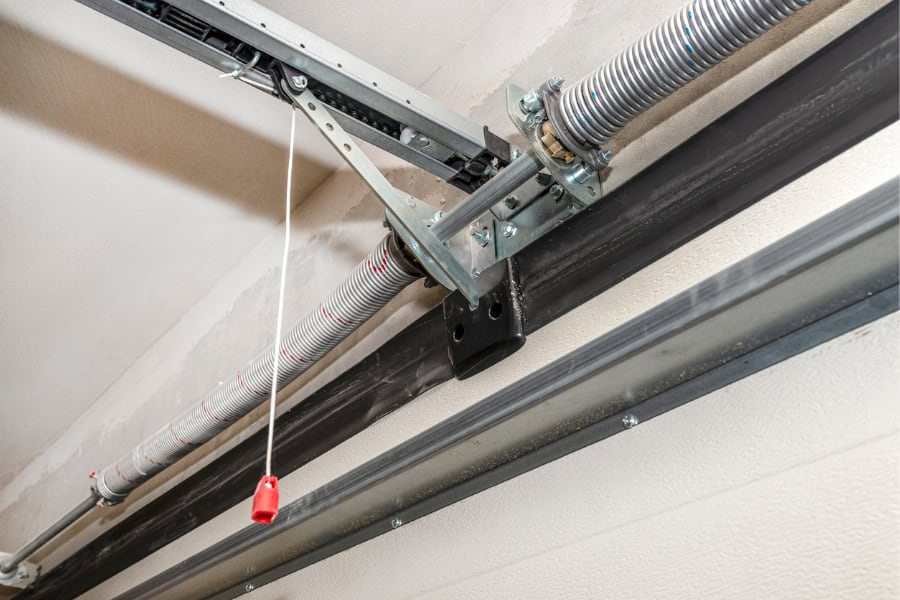
If your opener fails to respond, the next step involves disconnecting it from the door.
Most garage doors include a red emergency release cord attached to the opener’s trolley.
Pulling this cord separates your door from the motor, allowing manual operation.
After disconnecting the opener, you should lift your door by hand.
A properly balanced door should move smoothly and stay in place when raised halfway.
If your door feels heavy or sticks in certain spots, it may indicate problems with the springs, rollers, or tracks.
At this stage, I suggest inspecting your tracks for dents or debris that could block movement.
Worn rollers or frayed cables can also prevent proper lifting.
If anything appears damaged or unsafe, you should stop and contact a qualified technician for repair.
Attempting to force a jammed door could cause further damage or injury.
Examine the Door Springs and Cables for Visible Damage or Wear
A quick look at your door springs and cables can reveal why your garage door stopped working.
Springs help lift your door, so any break or gap means they may have failed.
A broken spring often causes your door to feel heavy or stay stuck in place.
Your cables also play a key role in movement.
Frayed strands, rust, or loose ends show that your cables may soon fail.
These signs should not be ignored because damaged cables can snap under pressure.
It helps to inspect both sides of your door under good light.
Any uneven tension or twisted cables point to a problem that needs attention.
If damage appears, your door should stay closed until a trained technician checks it.
Keep Your Garage Door Working Reliably Through Quick Action and Regular Care
A garage door that stops at night can cause stress, but simple checks often solve the issue.
You can test your remote batteries, inspect your sensors, and look for blocked tracks before calling for help.
These small steps may restore function quickly.
If your door still fails, a technician can identify deeper electrical or mechanical faults.
This prevents further damage and keeps your home secure.
I believe regular inspection, proper cleaning, and prompt repair help you avoid late-night surprises.
By staying alert to early signs of wear, you can keep your doors safe and dependable.