
The bathroom that inspires your renovation is often a photograph of an entirely different room.
It has generous proportions, perfectly placed windows, and a basin centered beneath a statement mirror.
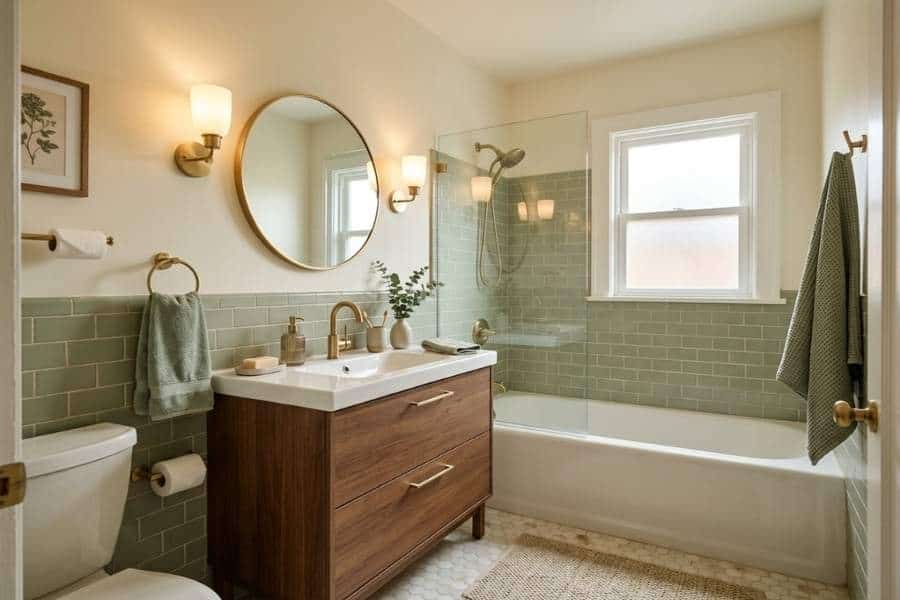
Bringing that image into your home can be costly if the plan depends on moving every fixture to match it.
I’ve found a better starting point is the bathroom you already have.
Its layout may work perfectly well, even if the finishes feel dated.
Keeping the basin, shower, and toilet in sensible positions leaves more room in your budget for changes you’ll see and enjoy every day.
The result can feel thoughtfully designed, and still comfortably familiar, without becoming a complete rebuild.
Find Out What Actually Feels Wrong
Before you choose tiles, I’d spend a few days noticing how the room is used and how it makes you feel during your morning and evening routines.
Maybe the shower is comfortable, but the lighting makes the whole bathroom feel gloomy.
Or the vanity has enough space, but its doors and handles make it look tired.
Those are different problems, and they call for different changes.
Make two lists: features that work and details you’d happily replace.
A solid layout, useful storage, and a shower with enough room to move may all be worth keeping.
Worn finishes, awkward mirror placement, and a lack of practical lighting can be fixed without automatically redesigning the floor plan.
It also helps to measure the room instead of relying on impressions.
A larger vanity might offer more storage but crowd the doorway.
A round mirror could soften the space without needing any change to the basin beneath it.
I find small decisions get easier once you know the limits of the room.
Take photos at different times of day before you settle on a color scheme.
A bathroom that looks bright in morning sunlight may feel dim by evening, when most of your household uses it and when you probably want the room to feel calm and restful.
Testing a few paint samples beside your existing tiles can show you which colors work in the actual room, saving you the cost and frustration of repainting later.
Spend Where the Eye Goes First
A bathroom can look more polished when a few visible elements work well together.
The mirror, vanity front, faucets, and lighting tend to catch attention before anyone notices the exact shape of a floor tile.
Improving those details may have more impact than replacing every surface, especially in a guest bath where they’re the first thing your visitors notice.
Start with a simple palette.
In an older Adelaide home, I like how a warm neutral wall color and a timber-toned vanity can sit comfortably alongside existing tiles.
A more modern bathroom could use a gentle contrast between light surfaces and darker hardware.
Either approach works best when your finishes relate to one another without matching perfectly, which is what makes a room feel collected instead of bought all at once.
Paint, cabinet fronts, and accessories are natural places to try a hands-on refresh.
If your existing tiles are in good shape, styling around them may be more satisfying than removing them just because they’re no longer trendy.
The goal is to make the room feel intentional, not to make every piece new.
Let the Plumbing Shape the Plan
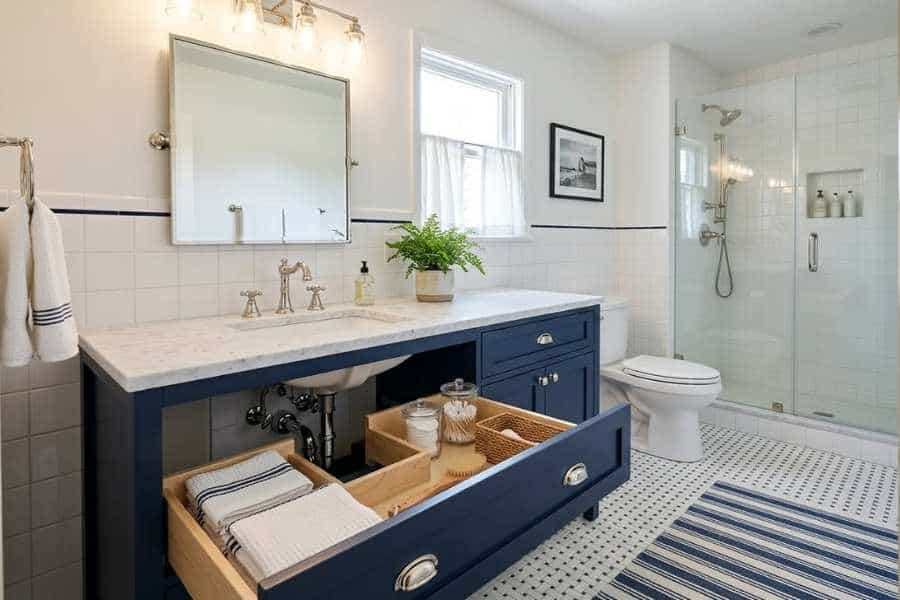
A new vanity can transform a bathroom, but its look is only part of the decision.
Check whether its drawers leave room for your existing pipework and whether the basin suits the available connections.
A unit that looks ideal in a showroom may need big changes once it reaches your house.
The same care applies to faucets and showers.
Replacing a tired fitting can sharpen the whole room, but the work behind the finish needs to be considered before you buy anything.
If the proposed design changes fixture positions or reveals an existing fault, speaking with an Adelaide plumber during planning can help establish what is practical.
Adelaide Expert Plumbing lists bathroom plumbing work among its local services, alongside general repairs and installations.
Getting that advice early protects your design budget and your peace of mind.
It’s much easier to adjust your choice of vanity or faucet before ordering it than to discover a conflict after cabinetry and finishes arrive.
A clear understanding of the work also helps you separate a modest cosmetic refresh from a larger renovation.
Keep DIY within the Right Boundaries
If you’re like most KnockOffDecor readers, you love making a room your own, and a bathroom offers plenty of opportunities.
Painting suitable surfaces, refreshing accessories, and choosing a new mirror can all change how the room feels.
Plumbing work needs a different approach because mistakes may stay hidden until water reaches a wall, floor, or adjoining room.
South Australia’s Consumer and Business Services advises homeowners to use a licensed plumber and to check that the person holds a licence for the type of work required.
Its guidance also separates a straightforward plumbing job from a major bathroom renovation, which needs someone with the right builder’s license to coordinate the project.
I find that distinction useful when you’re deciding whether your plan is still a refresh or has become a full renovation.
Ask for a clear description of the work before it starts, especially when a proposed change affects several trades.
This gives your decorating decisions a solid foundation and makes it easier to compare the cost of keeping a fixture in place with the cost of moving it.
After all, a bathroom only feels like a true retreat when you can relax in it without worrying about what’s behind the walls.
Build Character through Details
Bathrooms don’t need expensive statement materials to feel personal.
A well-proportioned mirror can make a narrow wall look considered, while a compact shelf gives everyday objects a place to live.
Matching towel hooks, a good-looking soap dispenser, and textiles in one soft color range can bring the room together and make it feel cared for.
Think about what you see from the doorway.
If your first view is a crowded vanity top, adding practical storage may improve the room more than buying new decor.
If the space feels flat, a different wall color or better lighting around the mirror may make its existing features look better.
A few deliberate choices can also help an older bathroom feel less pieced together.
If your existing basin and tiles have different undertones, I’d use one consistent metal finish and repeat a color from the tiles in the towels or artwork.
Those small connections give the eye a reason to read the room as a whole, even when its fixtures come from different decades.
Keep the details suited to a room used with wet hands and limited time.
A finish that needs constant polishing or a decorative object you move every morning will quickly lose its appeal.
I think the best choices make your bathroom pleasant to look at while keeping it comfortable to use, so rushed mornings and slow evening soaks both feel a little nicer.
Make the Bathroom You Already Have Feel Fresh, Personal, and Welcoming
A successful bathroom update doesn’t need to copy a photo from a larger house.
The character of your home, its proportions, and the way your household uses the space are a better guide.
When your existing layout works, keeping it can free up attention and money for the details that really need improvement.
Start with the room’s strongest features, check the practical limits of any fixture change, and choose finishes that make the whole space feel connected.
I love that your bathroom can look distinctly new while much of its working layout stays exactly where it belongs.

Leave a comment