
There’s a discipline that home designers and decorators don’t always think to look to for inspiration, probably because it doesn’t obviously fit into their world.
But architectural animation, the practice of bringing unbuilt spaces to life through motion, solves problems that are directly relevant to anyone who cares about atmosphere, visual storytelling, and making a space feel truly beautiful.
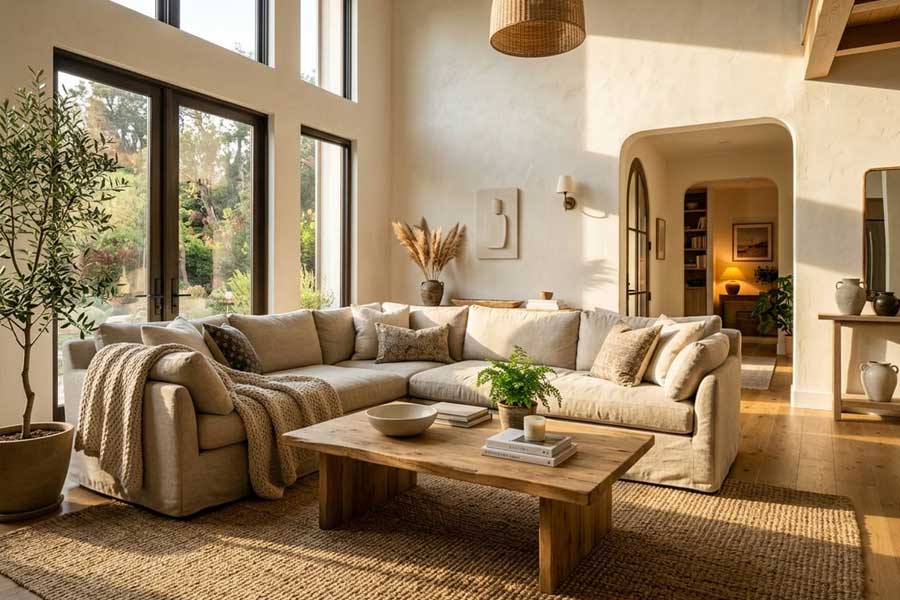
The questions it wrestles with are ones I think you’ll recognize.
How do you guide someone through a complex spatial idea without losing them?
How do you use movement and flow to build understanding rather than just create spectacle?
How do you make an environment feel warm, inhabited, and alive?
Architects and visualization artists have been working through these questions for years, and I find their answers genuinely useful for anyone thinking about how spaces look, feel, and come together.
Why Space Changes Everything About How We See a Room
Most of us experience a room as a still image, a photo on Pinterest or Instagram that either pulls us in or doesn’t.
But the truth is that space is something you feel as you move through it, and that’s exactly what architectural animation is designed to capture.
The animation has to communicate a physical environment: its scale, its flow, and how it changes as you move through it.
That’s not so different from what you’re doing when you style a room and want it to feel just as good in real life as it does in your head.
Motion isn’t just a visual flourish.
It helps viewers understand space, sequence, atmosphere, and point of view in ways that still images often can’t.
Where you place the camera, how fast it moves, what it reveals and when: all of these choices determine whether a viewer gets a genuine sense of the space or just a series of pretty images that don’t quite add up.
I think that distinction, between something that clarifies and something that merely decorates, is one that anyone who loves interior design will find familiar.
It’s the difference between a room that looks good in photos and one that actually feels wonderful to be in.
Camera Path as Narrative Tool
One of the clearest things architectural animators have worked out is that the path you take through a space is a storytelling device, not just a technical choice.
Moving through a room from a low angle emphasizes the scale of what’s above you.
Coming over a roofline before dropping into a courtyard creates a sense of reveal and arrival.
A slow drift across a surface gives you time to take in its texture, material, and proportion.
These are cinematic instincts, but they apply directly to how you experience a beautifully designed home.
Think about the last time you walked into a room that stopped you in your tracks.
Chances are the layout, the sightlines, and the way the space unfolded as you moved through it all played a role in that feeling.
The best architectural animators ask: what does the viewer need to understand at this moment, and what movement or angle serves that understanding?
I think that’s a great question to borrow when you’re arranging furniture, planning a gallery wall, or deciding where to place a statement piece.
The aesthetic outcome follows from the intention, rather than the other way around.
Pacing and the Logic of Reveal
You’re introducing a space that doesn’t yet exist, and the order in which you unveil its parts shapes how someone builds their understanding and excitement about it.
Good architectural animators think carefully about when to slow down and when to move.
A long, unhurried look at a material surface, whether that’s stone, timber, or polished concrete, gives the viewer time to register its texture and quality.
I’ve always believed that the same is true in a beautifully decorated home.
The details you linger on, a hand-thrown ceramic bowl, the grain of a reclaimed wood shelf, the weight of a linen throw, are often what make a space feel rich and considered rather than just put together quickly.
Moving quickly through a space communicates flow and connection.
A pause at a doorway or threshold, before continuing into the next room, creates anticipation.
The underlying idea is the same whether you’re editing a film or styling a home: give people what they need, for long enough to appreciate it, then move on.
Rush it and they miss things. Linger too long and the energy drops.
Architectural animation makes a strong case for slowness as a deliberate, intentional choice, and I think your home decor can too.
Light and Atmosphere as Active Elements
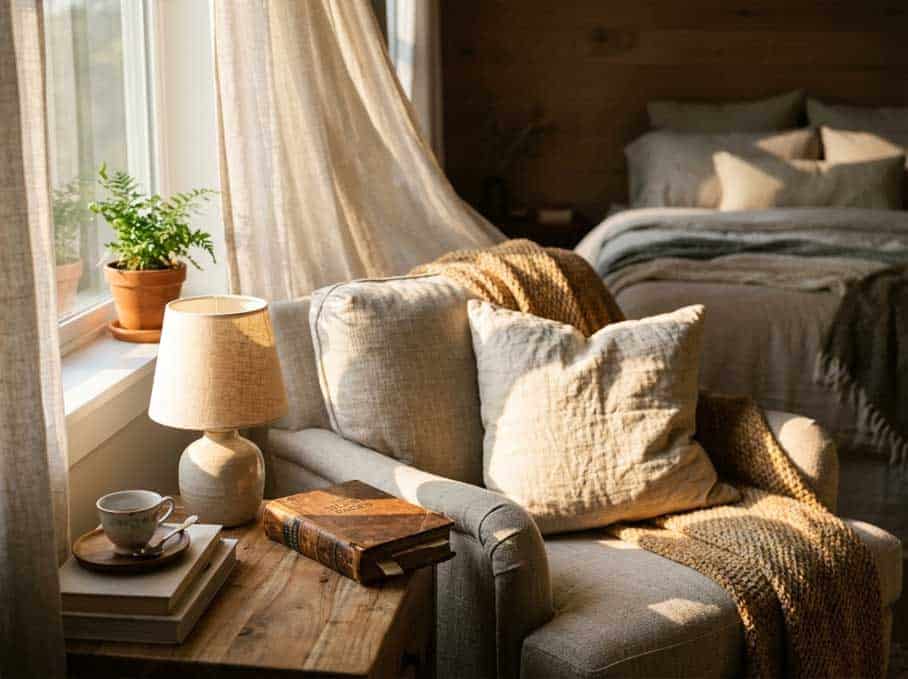
In this space, lighting isn’t an afterthought. It’s often the most important carrier of mood in the entire piece.
And I’d argue the same is true in your home.
The difference between a room lit with flat, even overhead light and the same room with directional natural light, soft shadows, and layered sources is enormous.
Not just visually, but in terms of how real, warm, and inviting the space actually feels.
Light creates depth, texture, a sense of time of day, and emotional atmosphere.
Architectural animators who do this well are essentially doing what great interior designers do: using light to shape how you feel the moment you walk in.
I’ve seen so many beautiful rooms that fall flat simply because the lighting wasn’t thought through.
A stunning sofa, a carefully chosen rug, hand-picked art on the walls: all of it can be undermined by a single harsh overhead bulb.
Think about the quality of your light sources, the warmth of your bulbs, where shadows fall, and how natural light moves through your space across the day.
That kind of care is exactly what architectural animators bring to their work, and it’s absolutely worth bringing to yours.
What This Looks Like at Home
These ideas aren’t locked away in the world of architecture or film. They translate beautifully into everyday home decorating.
The logic of reveal applies when you’re arranging a room: what do you want someone to notice first, second, and third when they walk in?
Pacing applies to how a home flows from one space to the next: does moving from your entryway into your living room feel considered and intentional, or abrupt?
Camera path thinking applies to furniture layout: are you creating natural lines of movement that feel good to follow, or is the room working against you?
And light, always light, is doing more work in your home than almost anything else you could change.
Borrow the Thinking, Not Just the Look
To be clear: this isn’t about making your home look like a sleek architectural render.
That polished, photorealistic aesthetic isn’t what most of us are going for in our living rooms.
What’s worth borrowing is the underlying way of thinking.
Space as something that unfolds and reveals itself over time.
Pacing as a deliberate choice about what you notice and when.
Light as the primary shaper of mood and atmosphere.
Movement and flow as something you design intentionally, not leave to chance.
These are principles that make any space more beautiful, more considered, and more genuinely lovely to be in.
And I find that whenever I look outside the usual sources of home decor inspiration, that’s often where the most useful ideas are hiding.
This one is well worth borrowing.

Leave a comment