
A backyard that looks great and actually functions well for the way you live is one of those things that seems simple in theory but takes a little planning to pull off.
Most yards I’ve seen tend to lean one way or the other.
Either they’re beautifully styled but not very practical, or they’re functional in a utilitarian way but don’t feel like an extension of the home.
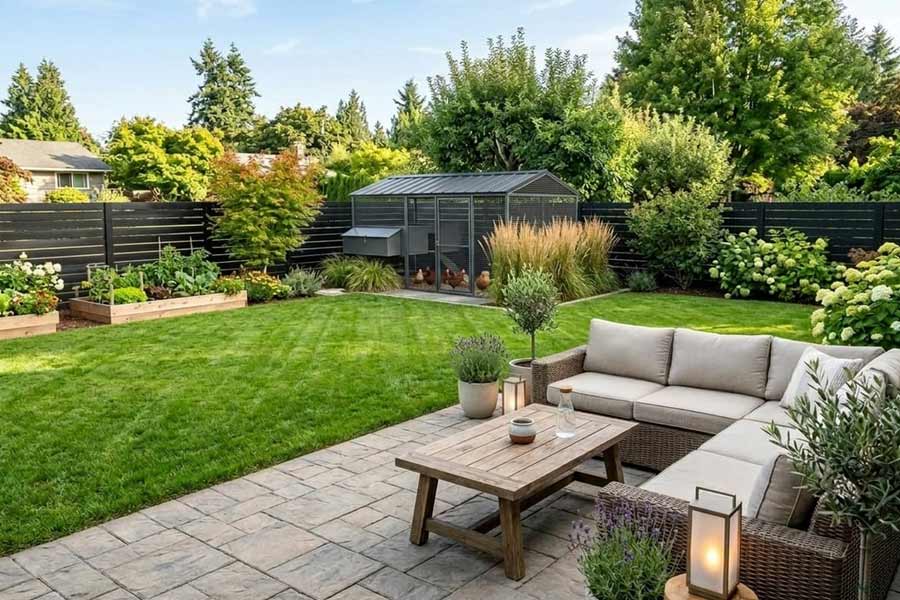
The good news is that with a little thought upfront, you can have both.
Whether you want a space for entertaining, growing your own food, letting kids and pets roam freely, or even raising a small flock of chickens, a well-planned backyard can handle all of it while still looking intentional and inviting.
Here’s how I’d approach it.
Start with Zones: The Secret to a Yard That Does Everything
The biggest mistake people make with backyard planning is treating the space as one big open area without any defined purpose.
Zoning your yard into distinct areas, even loosely, gives each part of the space a job to do and makes the whole yard feel more cohesive and intentional.
Think about how you actually use your outdoor space and work from there.
A few zones worth considering:
- An entertaining or lounging area close to the house with comfortable seating, shade, and maybe an outdoor dining setup.
- A garden zone for growing herbs, vegetables, or cut flowers, ideally with good sun exposure and easy access to water.
- A play or open lawn area if you have kids or pets that need room to move.
- A productive living zone further from the main entertaining area, which might include a compost setup, raised beds, or a chicken area.
You don’t need a large yard to zone it effectively.
Even a modest backyard benefits from having a clear sense of where one area ends and another begins, whether that’s defined by a low fence, a gravel path, a change in ground cover, or a row of plants.
Once those edges are mapped out, ordering in volume almost always costs less per yard than hauling home bag after bag.
Getting bulk landscape materials delivered to your door also saves the repeat trips and lets you finish the whole layout in one weekend.
Creating an Entertaining Area That Feels Like an Outdoor Room
Your entertaining zone is where most of your design energy is going to go, and it’s worth getting right.
Think of it less like a patio and more like an outdoor room with all the same considerations you’d bring to an interior space.
Anchor the area with a defined surface, whether that’s pavers, a deck, compacted gravel, or even a large outdoor rug over an existing concrete slab.
From there, layer in comfortable seating, a dining table if you have the space, and some form of shade like a pergola, sail shade, or a large market umbrella.
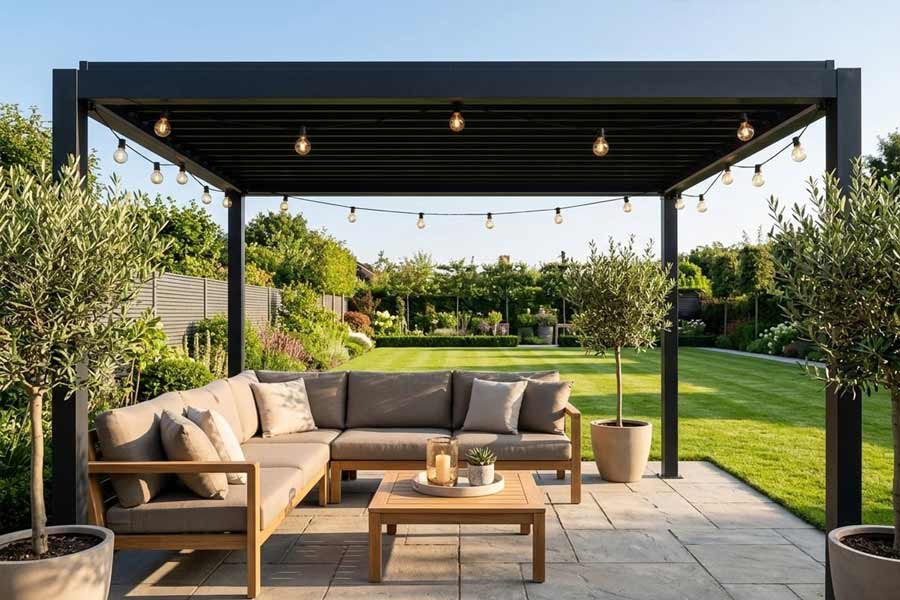
Lighting makes an enormous difference once the sun goes down.
String lights overhead, a few lanterns on the table, and some low path lighting around the edges of the space can completely transform how your backyard feels in the evening.
Plants and greenery are what really pull an outdoor entertaining area together.
Large potted plants on either side of a seating area, a climbing vine on a trellis, or a hedge along a fence line adds that lush, finished quality that makes a backyard feel truly designed rather than just furnished.
Adding a Garden Area for Beauty and Function
A garden zone adds so much to a backyard, both visually and practically, and it doesn’t have to be complicated to look great.
Raised garden beds are one of my favorite additions to a well-designed backyard.
They look tidy and structured, they’re easier on your back than in-ground planting, and they give you a natural way to create visual separation between zones in your yard.
For a backyard that leans into the productive and beautiful balance, I’d suggest mixing ornamental plants with edibles.
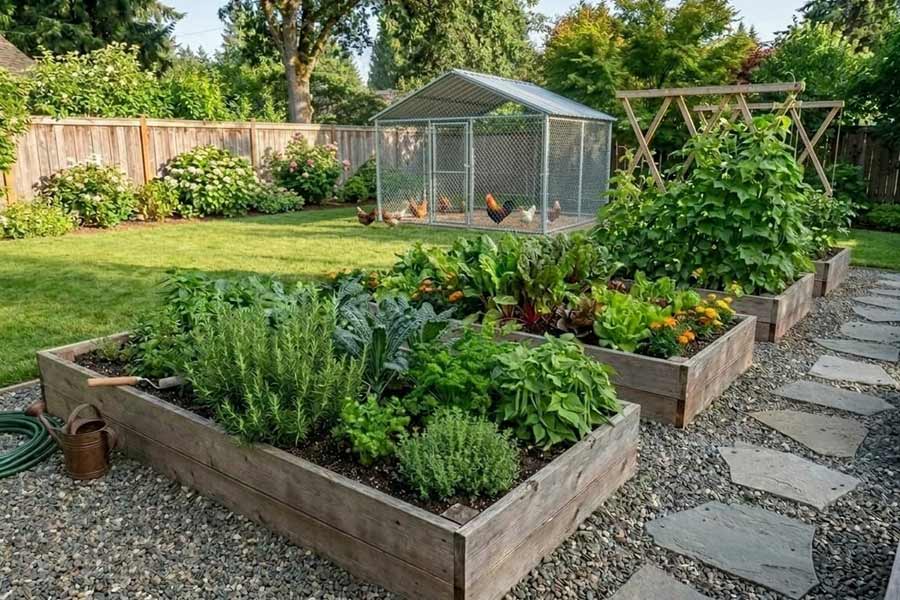
Herbs like rosemary, lavender, and sage look gorgeous in a border and are endlessly useful in the kitchen.
Flowering vegetables like rainbow chard, kale, and climbing beans add color and texture while still being genuinely productive.
Keep your garden zone close enough to the house that you’ll actually use it regularly, but positioned so it doesn’t crowd your entertaining or lawn areas.
A simple gravel or mulch path leading to it adds a lovely sense of arrival and keeps the mud out of your main living areas on rainy days.
Setting Up a Chicken Area That Looks Like It Belongs
If you’ve ever thought about raising backyard chickens, you’re not alone.
More and more homeowners are discovering that a small flock is surprisingly manageable, genuinely rewarding, and a really fun addition to a productive backyard setup.
The key to making a chicken area work in a well-designed yard is placement and presentation.
Tuck the coop and run toward the back or side of your yard, away from your main entertaining zone, and frame it with some intentional landscaping so it feels like a considered part of the overall design rather than an afterthought.
Hardy ornamental grasses, a low picket or wire fence with a gate, and some gravel or mulch ground cover around the perimeter go a long way toward making the whole area look pulled together.
Raised garden beds nearby can also create a cohesive productive garden zone that blends the chickens naturally into the landscape.
When it comes to choosing the actual coop, I’d strongly recommend going with metal over wood, especially for a first-time setup.
Metal coops for chickens arrive with pre-cut panels, pre-drilled holes, and standardized hardware, which removes the need for cutting or custom fitting and makes the whole assembly process far more predictable than a DIY wood build.
For most people setting up a metal chicken coop for the first time, the realistic assembly window falls between two and eight hours.
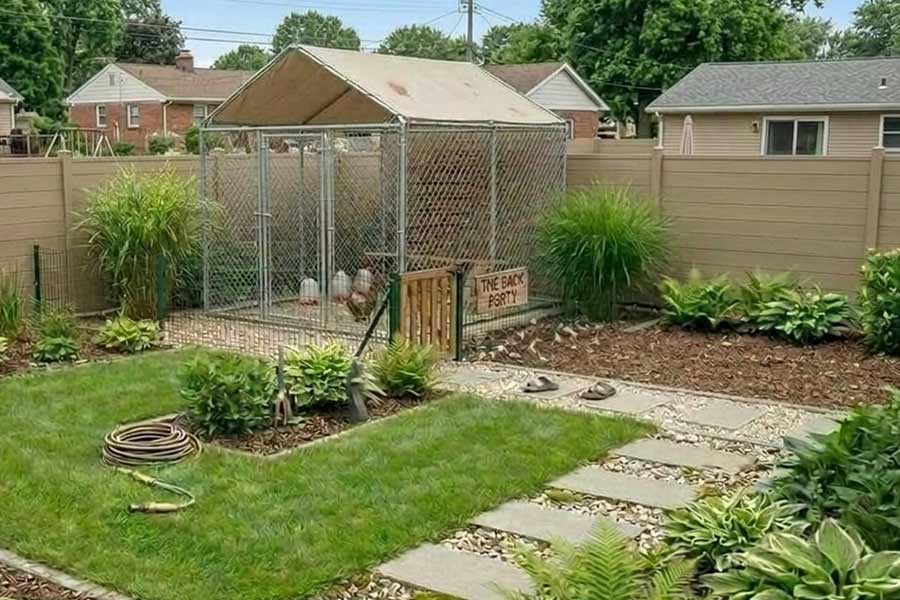
A compact coop designed for four to six chickens can often be put together in two to four hours with one or two people.
Larger walk-in models with separate runs, roosting bars, nesting boxes, and ventilation panels can stretch to a full day.
Before you start assembling, make sure your chosen site is level and has good drainage.
Uneven ground causes alignment problems during assembly and drainage issues for your chickens down the line.
Read the full instructions before you pick up a single panel, sort all your hardware into small containers before you start, and bring in a second person if you can.
Certain steps, like holding a wall panel upright while threading bolts through pre-drilled holes, are genuinely difficult to manage solo.
Budget a full day for your first setup even if the manufacturer claims two hours, and you’ll finish feeling ahead of schedule rather than stressed and rushed.
Once the coop is standing and your chickens are settled in, I think you’ll be genuinely surprised by how naturally the whole setup blends into the backyard when it’s been thoughtfully placed and landscaped around.
Pulling It All Together with Paths, Lighting, and Finishing Touches
The details are what take a backyard from nice to really special, and a lot of them are more affordable and achievable than you might think.
Paths are one of the most functional and visually impactful things you can add.
A simple gravel or stepping stone path that connects your entertaining area to your garden zone and chicken area gives the whole yard a sense of flow and makes it feel intentionally designed from end to end.
Lighting deserves more attention than most people give it in a backyard setting.
Solar path lights along your garden border, string lights above the entertaining area, and a simple wall-mounted light near the coop for evening checks all add both function and atmosphere.
Fencing and screening can also do a lot of heavy lifting in a backyard.
A consistent fence line, even a simple one, makes the whole space feel contained and finished.
Climbing plants like jasmine or honeysuckle on a fence or trellis add fragrance, privacy, and beauty all at once.
And finally, don’t underestimate the power of a few well-chosen large pots or planters.
Grouped near a gate, flanking your entertaining area, or dotted along a path, they add color, softness, and a sense of care that makes a backyard feel genuinely lived in and loved.
Your Backyard Can Be Beautiful and Hardworking at the Same Time
A multi-purpose backyard doesn’t have to look busy or compromised.
With thoughtful zoning, a few well-chosen materials, and some attention to how each area connects to the next, your outdoor space can be a genuinely beautiful extension of your home that also grows food, houses chickens, and gives your family room to enjoy being outside.
I’ve found that the backyards that feel the most special are the ones where every corner has a purpose and everything looks like it was meant to be there.
That’s absolutely something you can create, and it starts with a little planning before you dig the first hole or order the first panel.

Leave a comment