
Orchids have an undeserved reputation for being difficult.
In reality, these elegant plants can bloom for months, even years, with surprisingly little intervention once you understand what they actually need.
The secret isn’t complex rituals or obsessive tending.
It comes down to one biological truth: orchids are epiphytes. These plants naturally anchor to trees, drawing moisture from the air instead of dense, waterlogged soil.
Once that insight clicks, orchid care stops feeling like an anxious guessing game and becomes a genuinely rewarding routine built around light, water, healthy roots, and consistent habits.
Understanding Orchid Basics for Thriving Plants
Because orchids evolved clinging to bark and branches high above the forest floor, they need loose, airy growing conditions where their roots can breathe freely.
Packing them into standard potting soil is almost a guaranteed path to rot.
When you’re selecting high-quality potted orchids, I recommend choosing varieties like Phalaenopsis (moth orchids) as the best starting point for most growers.
They’re tolerant of typical indoor temperatures and forgiving enough to survive the occasional lapse in care.
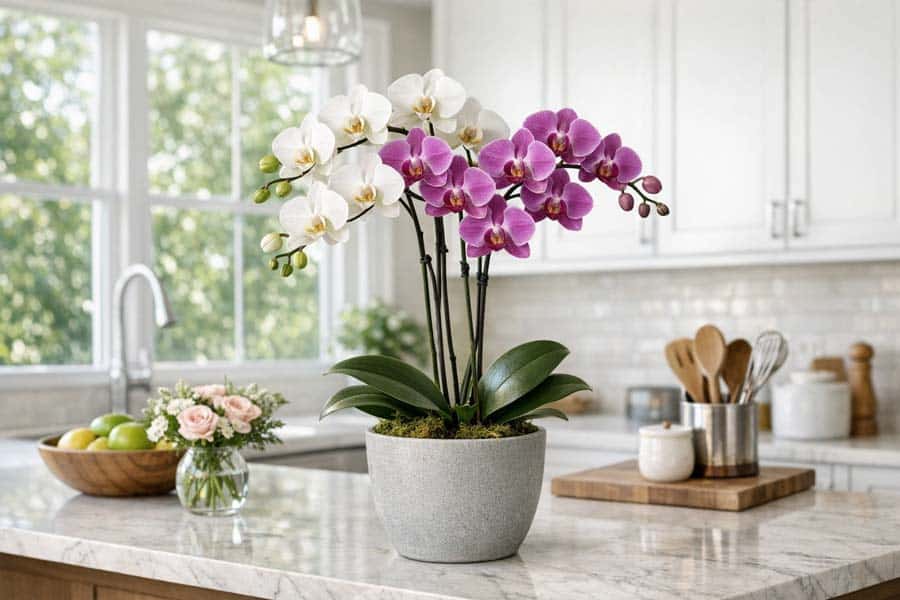
Their architectural blooms also make them perfect statement pieces for entryways, dining tables, or bathroom vanities where you want to add instant elegance.
One of the most reliable indicators of plant health is the root system itself.
Plump, green roots signal a well-hydrated, thriving plant, while roots that look silvery and slightly shrunken are simply signaling thirst, not distress.
Keeping an eye on your roots regularly takes all the guesswork out of watering.
Ideal Light and Placement
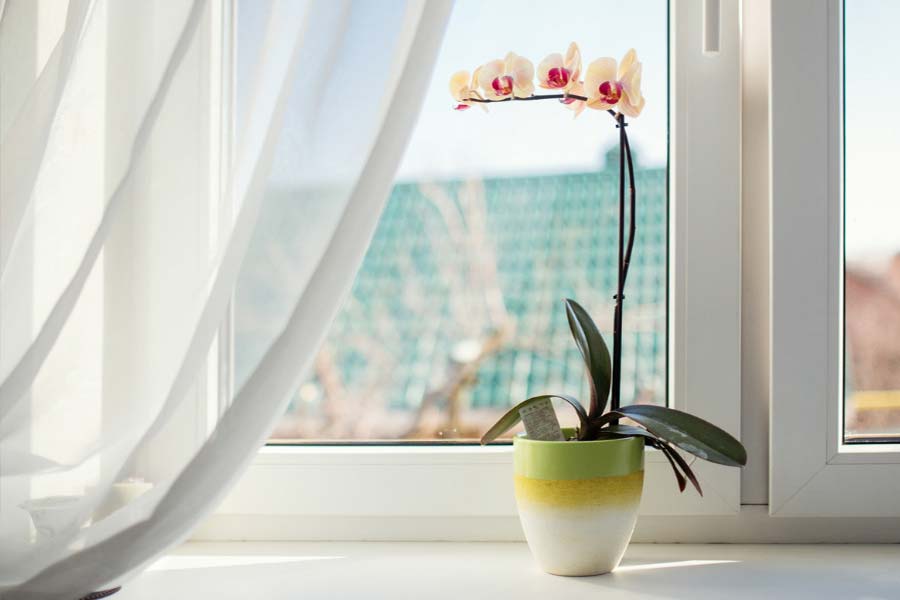
Your orchids do best in bright, indirect light, making east or west-facing windowsills ideal spots.
Direct sun will scorch the leaves, while too little light produces dark, limp foliage and prevents flowering altogether.
A useful visual cue: healthy leaves should be a medium, grassy green.
Red-tinged leaves point to too much sun. Deep, glossy green suggests not enough.
Rotating your pot weekly encourages even, balanced growth, and grow lights can compensate well in darker homes.
Consider grouping several orchids on a console table or floating shelf to create a striking focal point that draws the eye upward and adds vertical interest to your room’s design.
Temperature and Humidity Essentials
Most orchids are comfortable between 15–30°C (59–86°F) during the day.
One often-overlooked detail: a nighttime temperature drop of 10–15°C is frequently what triggers a new flower spike to form.
Standard household humidity is generally adequate, though setting your pot on a pebble tray filled with water adds a helpful boost of moisture to the surrounding air.
This setup also creates a beautiful layered display when you use decorative stones or smooth river rocks that complement your home’s color palette.
I suggest avoiding positioning plants near heating vents, air conditioning drafts, or cold windowpanes.
Consistency matters far more than chasing perfect conditions.
Watering Techniques to Avoid Root Rot
Overwatering is the single most common cause of orchid death.
Aim to water roughly once a week, but always check your roots first.
Silvery roots mean it’s time. Green roots mean wait.
Use lukewarm, ideally filtered water, and flush your pot thoroughly.
An effective technique is to run water through the pot three times at the sink, allowing full drainage between each pass. This helps oxygenate the root zone.
Never leave your orchid sitting in a saucer of standing water.
Choosing the right setup, such as plants housed in clear plastic nursery pots with a coarse bark mix, makes root monitoring easy and helps prevent common pitfalls like rot quietly developing beneath the surface.
For a more polished look in your living spaces, you can slip the nursery pot inside a decorative cachepot that matches your interior style, whether that’s minimalist ceramic, rustic woven baskets, or modern metallics.
Feeding and Pruning for Continuous Blooms
During the active growing season, feed your orchids with a diluted, orchid-specific fertilizer, typically at half the recommended strength.
Once the blooms drop, prune the flower spike just above a healthy node rather than cutting it all the way to the base.
This often encourages a secondary spike and a second round of flowers.
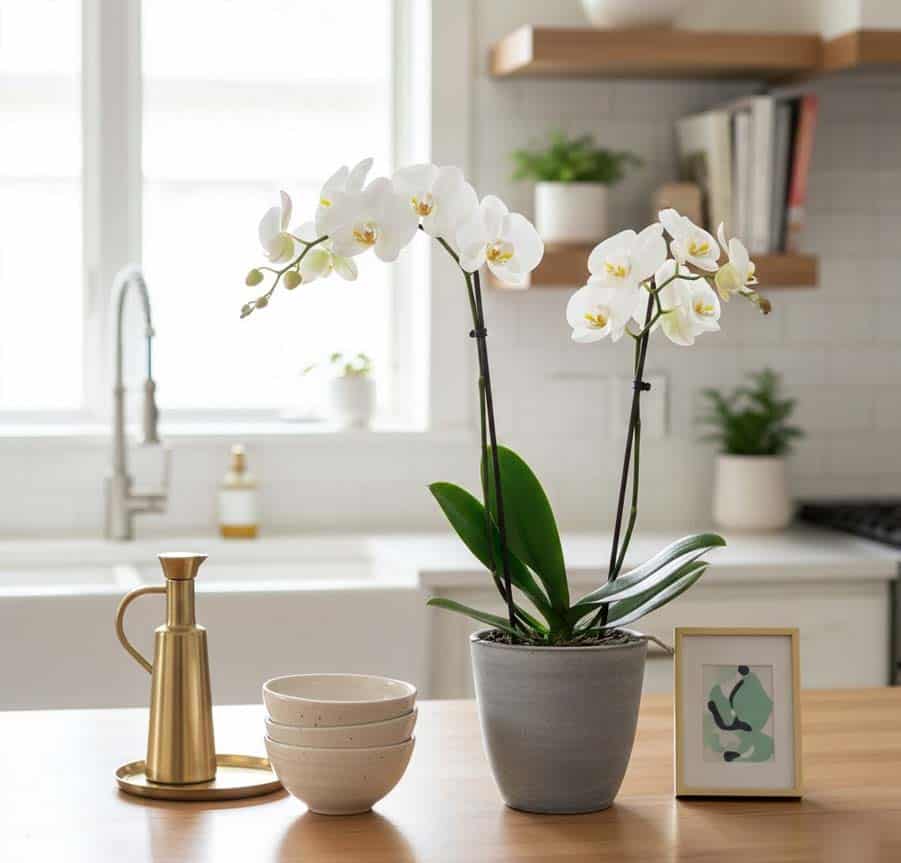
Tall spikes are worth staking with a bamboo cane to prevent snapping.
A well-maintained Phalaenopsis can realistically rebloom twice within a single year, giving you almost continuous color that refreshes your space far longer than cut flowers ever could.
Repotting Mastery for Long-Term Health
Plan to repot every three to four years, or sooner if the bark mix has broken down into a dense, moisture-retaining mass.
Trim away any dead or mushy roots, position the crown just above the fresh medium, and choose a pot only slightly larger than the root ball.
Snug containers actually encourage more vigorous growth.
If root rot is severe, downsizing to a smaller pot with fresh bark gives your plant its best chance at recovery.
Ready to expand your collection?
Propagating is straightforward. Simply detach offshoots, called keikis, once they develop their own roots.
Then, pot them into bark and keep them warm and bright until established.
Building your own orchid collection lets you create coordinated displays throughout your home, establishing visual rhythm from room to room with repeating blooms in complementary colors.
Troubleshooting Common Issues
Even attentive growers run into problems from time to time.
Here are quick fixes for the most frequent ones:
Yellow leaves:
Usually a sign of overwatering or a light imbalance.
Check your drainage and consider repositioning your plant.
Wrinkled roots:
A sign of underwatering.
Revive your plant with a one-hour soak in lukewarm water.
No flowers:
Make sure your plant is experiencing nighttime temperature drops, and prune old spikes to encourage reblooming.
Pests (scale, mealybugs):
Remove them manually with an alcohol-dampened cotton swab, and always quarantine new plants before introducing them to your existing collection.
Applying these root-focused, low-stress principles consistently is what separates orchids that fade after a single bloom cycle from those that reward you with color season after season.
Watch your roots, respect the light, and adjust one variable at a time.
The results will follow naturally.
Why Orchids Are Worth Your Attention
I’ve found that orchids teach patience and observation in ways few other houseplants can.
When you learn to read your plant’s signals, the care routine becomes intuitive rather than stressful.
Your orchid will reward your consistent attention with months of stunning blooms and healthy growth that keeps giving year after year.
Orchids offer more than just beauty. They bring a unique sense of refinement and intentionality to any home.
They can transform ordinary spaces into curated environments, feeling both lived-in and thoughtfully designed.

Leave a comment