
You know that feeling when you step into a space and instantly relax?
Where the air feels lighter, and you can actually breathe?
That’s not by accident.

It’s the result of smart design choices that work together to create an open, airy vibe.
And the best part?
You don’t need a massive renovation budget to pull it off.
Whether you’re working with a cramped apartment or trying to refresh a larger home, a few intentional changes can completely transform how your space feels.
So let’s dig into the design moves that I’ve found will flood your home with light and make every room feel more spacious.
Start with Color: It’s Your Foundation
Light shades are your best friend when you want a room to feel bigger and brighter.
Soft whites, warm beiges, pale grays (they all work like mirrors, bouncing natural light around instead of absorbing it).
Think about the difference between walking into a room painted deep charcoal versus one in creamy white.
The light room opens up, almost like the walls have stepped back.
And I can’t stress this enough: don’t forget your ceiling.
Paint it a shade lighter than your walls and watch the whole room lift.
It’s an optical illusion that works wonders, especially with standard 8-foot ceilings.
Does this mean your home has to look like a white box?
Absolutely not. You can still bring in personality with darker accent pieces.
A charcoal sofa, navy throw pillows, a black-framed mirror (these add depth without closing things in).
It’s all about balance.
Let the Sunshine Do Its Job
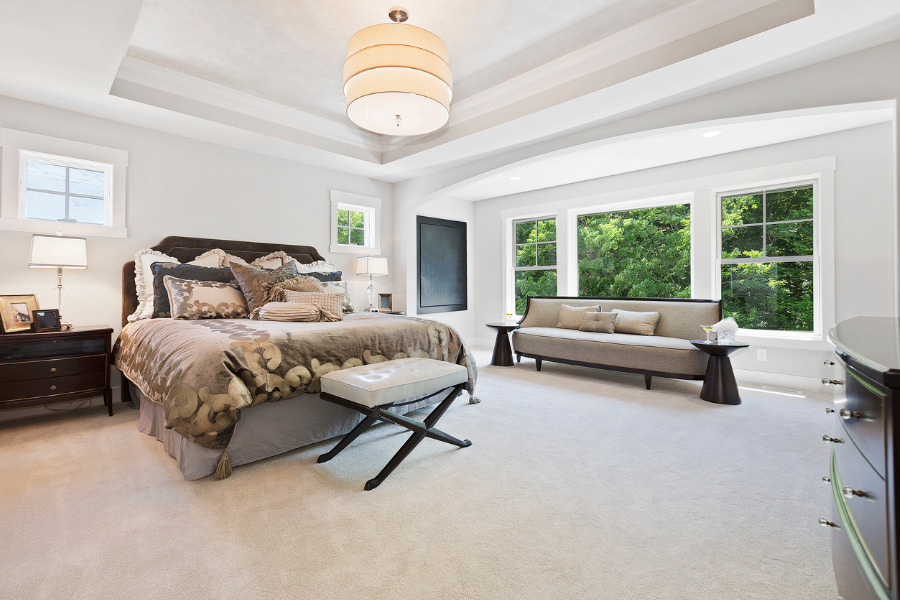
Natural light is basically free magic, and I’m always amazed at what it does.
It doesn’t just make a room brighter, it makes it feel bigger and more welcoming.
Start simple: clean your windows and swap heavy curtains for sheer linen or light-filtering blinds.
You’d be surprised how much difference this makes.
Got small windows? Hang a large mirror directly across from them and I promise you’ll watch it double the light.
Your furniture choices matter too. Pieces with legs (sofas that sit off the floor, glass-top tables) let light flow underneath and around them, keeping the whole room feeling airy.
Arrange Your Space Like You Mean It
Open floor plans make everything feel connected and spacious, but I know not everyone can knock down walls.
You can still create that open feeling with smart furniture placement.
Push your sofa away from the wall, because floating furniture actually makes a room feel more spacious.
Leave clear pathways of at least three feet so people can move through easily.
Multifunctional furniture is your ally here, and I’ve seen it work wonders.
Coffee tables with hidden storage, ottomans that double as seating, nesting tables you can tuck away.
Every piece needs to earn its keep, especially in smaller spaces.
Don’t Ignore What’s Underfoot

Your floor covers more square footage than anything else, so it’s shaping the vibe whether you realize it or not.
Ever wonder, “do dark floors make a room look darker“? They can actually make your space feel bigger when you pair them right.
Rich walnut or espresso-toned floors with light walls and ceilings create a beautiful contrast that draws your eye upward.
Wide planks running along the longest dimension create visual lines that stretch your space.
Light floors (think oak or maple) reflect more light, perfect for amplifying that airy vibe.
The downside? They show every speck of dust.
In smaller rooms like kitchens or bathrooms, I’ve found that dark floors paired with bright walls can actually make your space feel less cramped.
The contrast tricks your eye into seeing more depth.
Draw the Eye Upward
When you get people looking up instead of just around, you’re adding a whole dimension to your space.
Tall bookshelves, floor-to-ceiling curtains, vertical art galleries (these all pull the gaze skyward and create the illusion of higher ceilings).
Hang your curtain rods right below the ceiling line instead of just above the window frame.
Install floating shelves that climb the wall.
Even plants work for this, and I love using them.
A fiddle-leaf fig reaching toward the ceiling adds that upward movement while making your space feel more alive.
Multiply Everything with Reflection

A well-placed mirror doesn’t just reflect light, it reflects the entire room, basically doubling your visual space.
Lean a full-length mirror against a wall at a slight angle for instant depth.
Group smaller mirrors together in hallways to catch light from multiple angles.
Glass takes this further, and I’ll tell you why.
Glass coffee tables seem to disappear, making your living room feel less crowded.
Glass cabinet doors keep things feeling open while providing storage.
Even glass room dividers maintain that see-through quality that solid walls can’t offer.
Edit, Edit, Edit Some More
Here’s the uncomfortable truth: stuff makes rooms smaller.
Going minimalist doesn’t mean cold or unlived-in, it means being intentional.
Try this: one statement piece per zone, three accessories maximum on any surface.
This gives you personality without chaos.
Leave about 40% of your surfaces clear, and I’ve found it creates breathing room that makes everything else stand out more.
Your eye needs places to rest, not a constant barrage of things to look at.
Bringing It All Together

None of these ideas requires a complete home overhaul.
They’re layerable, so I recommend you start with one room, one change, and build from there.
Paint the ceiling this weekend. Rearrange your furniture next week.
Add a mirror the week after that.
The goal isn’t perfection, it’s progress toward a home that feels lighter, more open, and more inviting.
What’s your first move going to be? That dark bedroom that needs fresh paint?
Those heavy curtains you’ve been meaning to replace?
Pick one thing and start there.
Your brighter, more open home is closer than you think.
Sometimes all it takes is seeing your space with fresh eyes and being willing to make a few smart changes.