
When underfloor heating systems come up, people usually associate them with the warmth they deliver.
Your feet will no longer be cold during wintery mornings.
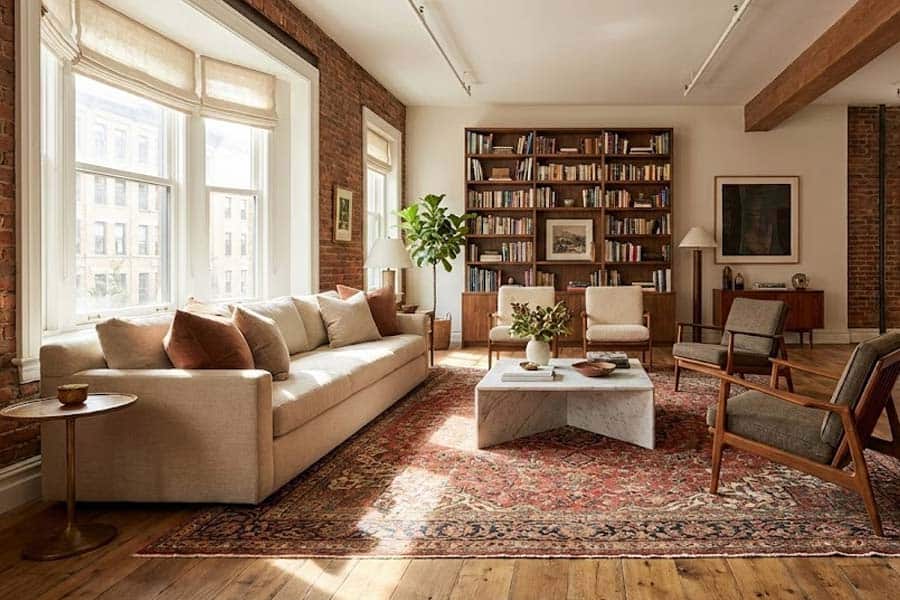
What people forget to consider, though, is how you’ll have a completely different room as soon as you no longer have radiators taking up space along your walls.
The design of your room becomes open to opportunities.
Most of us probably won’t think of all the ways an absence of radiators influences the design of our spaces until we start piecing the puzzles together again.
You’ll soon see how underfloor heating offers a clean slate for your furniture to roam again.
Heat will be delivered to a completely different part of the room, so your walls benefit from substantial usable real estate that radiators have occupied for decades.
Radiators Take Up All Your Wall Space
Even if your radiators don’t take up much floor space, they consume an enormous amount of usable wall space.
Let’s look at living rooms as an example.
A radiator will have already taken up prime real estate beneath your window area, where you typically can’t place a sofa to accommodate airflow and functionality.
Now, your wall space is available for anything you’d like.
The placement of radiators on what is usually one of the outer walls has eaten away at usable wall space in various rooms, creating a limitation for how you can design every space.
Every Room Benefits from Usable Wall Space
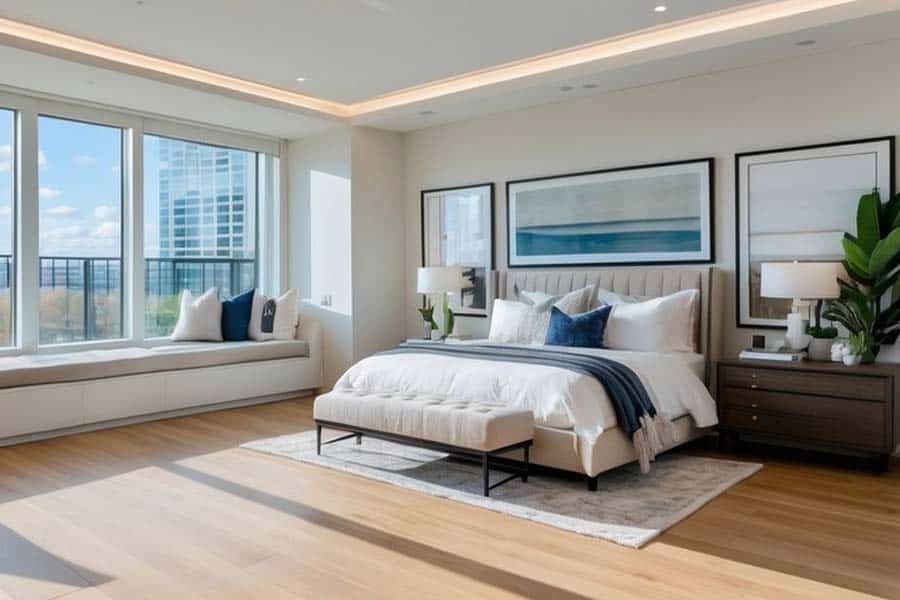
When it comes to bedrooms, there’s been a significant limitation on which wall you can place your bed against.
I find that designs for all kinds of furnishings become much easier when you don’t have to worry about where items go around radiators.
Most home offices have this issue too.
Radiators take up space where a more functional layout would be appreciated.
Kids’ rooms also benefit greatly from space that would’ve usually been limited by radiator placements in the corners.
Even open shelving units and room dividers will now find an easy home thanks to underfloor heating installations.
Where you would have had to consider radiators during initial placements, these structures will now only be placed according to good design.
The Visual Design of Your Room Benefits Too
Radiators influence more than just the functional arrangements of furniture in your space.
They also take away from the beauty of your walls and their overall look.
Radiators take up visual space regardless of their design.
Most rooms display a pretty version of these heaters, but they still take away usable wall space that radiators don’t occupy physically.
I’ve found that beautiful designs are much easier to achieve when they’re not interrupted by radiators on your floors and exterior walls.
Less interruption means better architectural flow and a cleaner overall design.
Buildings with lovely period features will also fare better without intrusive heating systems nowadays.
The proportions people have missed as a result of their battle with modern radiators can now be restored once you install an underfloor heating system.
Challenging Designs for Newer Builds Become Effortless Again
Maintaining a specific design feel in homes seems difficult when older building designs need to contend with more contemporary heating systems.
This battle becomes easier once you have underfloor heating systems in place.
Radiators have also influenced the way people treat colored and textured walls for years.
With radiators warming their rooms, few people would have wanted to apply different textures or colors to wall spaces behind radiators.
Radiators might have encouraged the same color palette to flow throughout your home since homeowners likely felt that making changes would be too much hassle.
With underfloor heating systems, however, your home has a free pass again.
You’re open to using any color anywhere.
Floor Designs Open Up Another Dimension
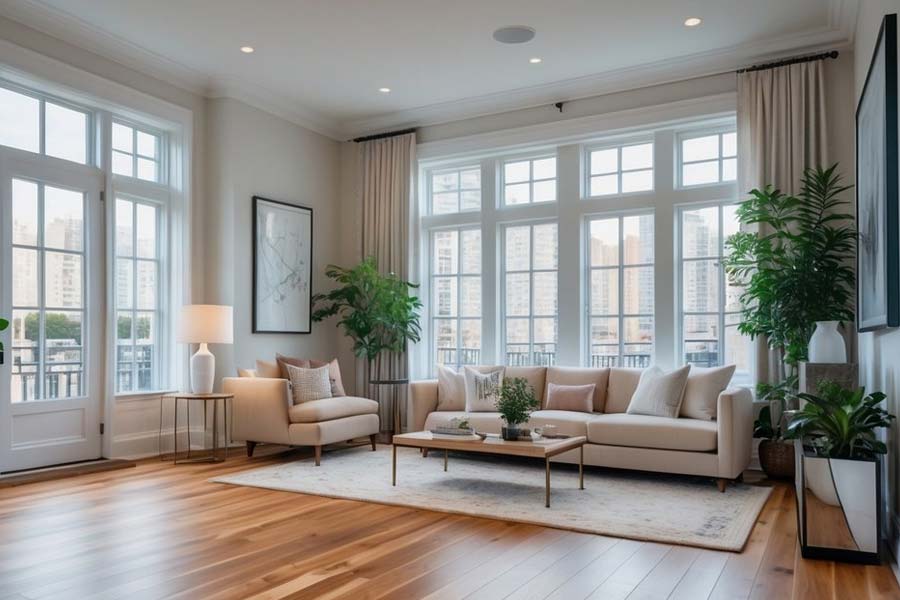
When underfloor heating systems occupy your floor instead of radiators, there are a few floor design considerations you should keep in mind.
Tile and stone work well with underfloor heating systems.
These materials don’t feel cold on your feet compared to other heating systems.
Heat naturally warms these surfaces, so tile and stone will no longer feel like a flooring mistake with underfloor heating systems.
Wood flooring requires a little more thought.
Solid wood doesn’t behave well in moisture-rich environments.
There is constant moisture with underfloor heating systems, so standard wood should not be considered since this type won’t hold up to wear and tear.
I recommend paying careful attention to choosing engineered wood flooring that fits the bill for great home designs while still doing its job effectively.
Pay careful attention to choosing engineered wood flooring that fits the bill for great home designs and still being able to do its job effectively. Radiator Outlet suggests that this is usually acceptable.
Carpet also works well with underfloor heating designs, although slightly less efficiently than hard floor surfaces.
That said, you need to be careful with carpeting choices so thicker carpets don’t insulate the heat once it’s been distributed throughout these spaces.
This doesn’t mean carpets aren’t a potential floor covering for bedroom spaces.
Standard padding can work well for bedrooms without blocking heat with an underfloor heating system lying beneath your feet.
Room Functionality Influences Layout Designs as Well
Radiators have influenced the workspace designs of other rooms too.
Your bathrooms will no longer have to harbor limitations on how their spaces look.
Radiators alter the way we think of unit designs in these important spaces in terms of showers and vanities.
Without towel railings or wall-mounted heaters dictating utility layouts in these rooms, you can now place units anywhere and let them act as a design feature instead.
Radiators also impact the systems in kitchens where units become an issue.
All kitchens are now free to be custom-cabinet-free zones again without issue.
Open Floor Plans Become Easier to Design
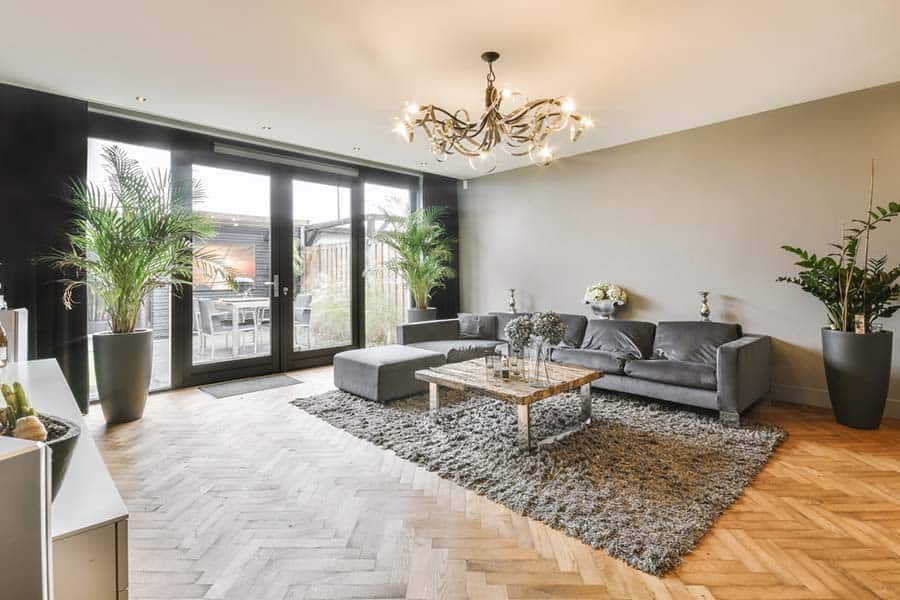
Underfloor heating systems work beautifully in common areas when compared to designs under a radiator system that awkwardly impacts circulation.
Radiators impact the layout functionality of open-plan areas by taking away usable floor plans.
Multi-purpose spaces suddenly don’t need to be redesigned after changing the purposes of their rooms.
Your room is still ready and open to new uses thanks to the warmth of an underfloor heating system.
Room Designs Become Much Easier
If you’re designing rooms in and around your home today, there’s no need to think about radiators before doing anything else.
Those days are gone when you constantly need to think about the role radiators play in the functionality of floor layouts.
The placement of your furniture will no longer be limited after you finish these designs, and your designs will be much easier without that influence.
When planning a room, it won’t be a challenge anymore wondering what to do with radiator placement.
As far as I can see, it’s impossible to ignore how an underfloor heating system makes our lives easier.
We no longer have to pay attention to radiators during house renovations or when we create designs to accommodate new goals for our homes.
We can finally focus on the design itself.