
You’ve chosen the tile. You’ve planned the layout.
You’re ready to see your bathroom remodel come together.
But there’s one step that can make or break everything…

Before a single tile goes down, your plumbing needs to be completely ready.
I’ve seen what happens when this step gets rushed!
Torn-out tile. Unexpected costs. Weeks of frustration.
Once your tile is installed, accessing pipes means breaking through your beautiful new surfaces and starting over.
In this guide, I walk you through the plumbing checks that keep your remodel on track.
And the exact steps I recommend before laying that first tile.
What Happens When You Overlook Plumbing Before Tiling
Tile installation represents a commitment point in a bathroom remodel.
Overlooking plumbing readiness at this stage often affects not just the remodel itself, but the long-term performance and value of the space.
Here’s how.
Increased Renovation Costs
Once installers lay tile, reaching plumbing requires tearing through finished surfaces.
For instance, crews must break tile, scrape mortar, remove waterproofing layers, and cut into backer boards to reach concealed areas.
This work takes time and precision, and it often damages surrounding materials that were not part of the original issue, increasing the scope of repair.
Replacement materials add another layer of cost.
Tile and stone rarely survive removal, and matching existing materials can prove difficult if the product is discontinued or came from a specific dye lot.
Contractors may need to replace entire sections of tile to maintain visual consistency, turning a minor correction into a much larger and more expensive repair.
One of the ways I recommend to reduce these costs is by hiring an expert.
A licensed and insured plumber performs crucial inspections to ensure rough plumbing meets local codes and withstands daily use under pressure.
Project Delays and Extended Downtime
When problems surface late in a remodel, progress stops immediately.
Contractors must diagnose the issue, determine responsibility, and plan corrective work before moving forward.
These interruptions disrupt schedules, especially when trades have already committed to other projects and cannot return right away.
Delays can affect daily life in homes with limited bathroom access.
You may need to adjust routines, share facilities, or rely on temporary solutions for extended periods.
As days stretch into weeks, inconvenience grows, and the remodel begins to feel unmanageable rather than controlled.
Compromised Workmanship and Finish Quality
Late-stage repairs force the team to work around completed finishes instead of open framing.
Restricted access limits tool movement and reduces precision, even for skilled professionals.
Installers often must adapt their methods to reduce further damage, which can affect how materials fit together.
Visible inconsistencies can remain after repairs!
For instance, tile edges may not align perfectly, grout lines may vary slightly, and patched areas may reflect light differently than surrounding surfaces.
These details stand out in a space designed to appear seamless, drawing attention away from the intended design.
Reduced Confidence in the Finished Remodel
Recurring issues after completion cause you to question the reliability of the work.
Even when repairs appear successful, uncertainty can linger about what remains hidden behind walls or beneath floors.
This doubt can change how the space feels and how confidently you use it.
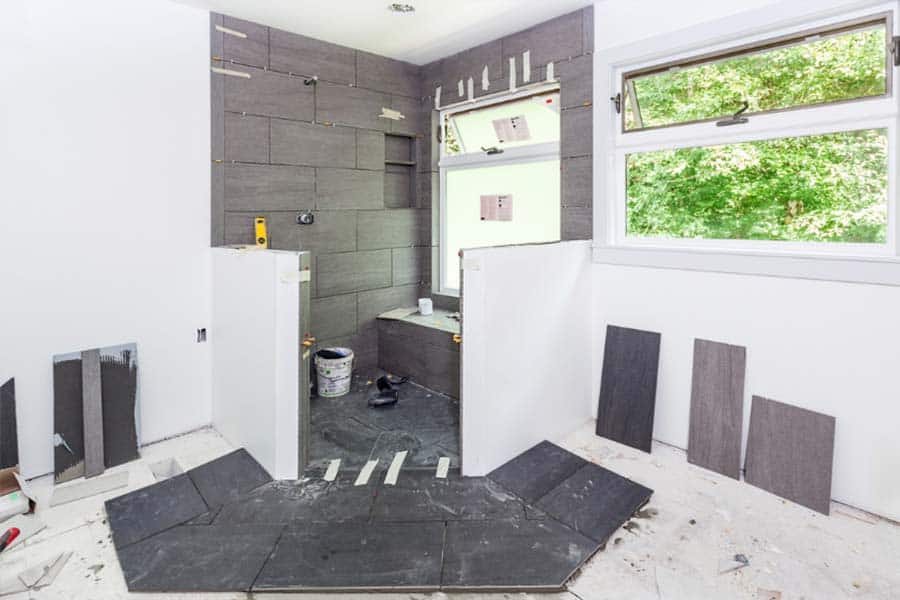
4 Plumbing Checks to Complete Before Laying Bathroom Tile
A bathroom remodel is one of the most impactful upgrades you can make to your home, improving both daily comfort and long-term value.
Here are four essential plumbing checks I recommend you complete first.
1. Inspect and Update Rough Plumbing
Rough plumbing comprises supply lines, drainpipes, and fittings hidden behind walls and beneath floors.
It forms the foundation of your entire bathroom remodel!
I suggest you examine pipe materials, joint connections, routing, and support to confirm everything is sound, code-compliant, and suitable for long-term use, especially in older homes where aging or incompatible materials may still be present.
2. Verify Drain Placement and Proper Slope
Drain placement and slope play a critical role in how well your bathroom functions.
Position drains precisely where fixtures will sit and set them at the correct height to account for the full buildup of backer board, thinset, and tile.
Proper slope is just as important as placement.
Pitch drain lines correctly so water flows smoothly toward the main waste line without slowing, pooling, or backing up.
3. Pressure-Test Supply Lines and Shutoff Valves
Water supply lines operate under constant pressure, and even minor weaknesses can develop into leaks once your bathroom is in daily use.
I find that pressure testing exposes problems that visual inspections often miss, such as poorly crimped fittings, loose threaded connections, or hairline fractures in pipes.
This step involves pressurizing the system and monitoring it to confirm that pressure remains stable, indicating that the lines can handle normal operating conditions.
Shutoff valves also require close attention at this stage.
Each fixture should have a functioning shutoff that fully stops water flow without dripping or binding.
4. Confirm Fixture Depths and Clearances
Fixture rough-ins must account for the exact thickness of the finished walls and floors, not just the framing.
Tile, backer board, mortar, and waterproofing layers all add depth, and failing to factor them in can leave valves, flanges, and pipe stub-outs either recessed too far or protruding awkwardly.
Shower mixing valves must sit at a precise depth, so trim plates seal correctly against the tile, while tub spouts and shower arms require accurate placement to avoid leaks at the wall connection.
Toilet flanges and vanity connections also demand careful measurement.
A toilet flange set too low can cause rocking and seal failure, while one set too high can prevent the toilet from sitting flush on the tile.
Vanity supply lines and drain pipes must line up with the cabinet layout to avoid unnecessary cutting or forced bends in the plumbing.
I’ve found that proper clearances ensure fixtures connect cleanly, operate correctly, and fit the finished space without stress on pipes or visible installation flaws.
Plumbing Sets the Foundation
Plumbing work sets the foundation for every successful bathroom remodel, and tile should only go down once that foundation is secure.
For example, I recommend completing plumbing checks early to reduce the risk of having to remove tile, waterproofing, and fixtures later to access hidden issues.
Those things can significantly increase repair costs and disrupt finished surfaces.
Additionally, confirming plumbing readiness before tiling helps keep your remodel on schedule by preventing work stoppages when teams uncover problems during installation.